

Opinions, analysis and commentary
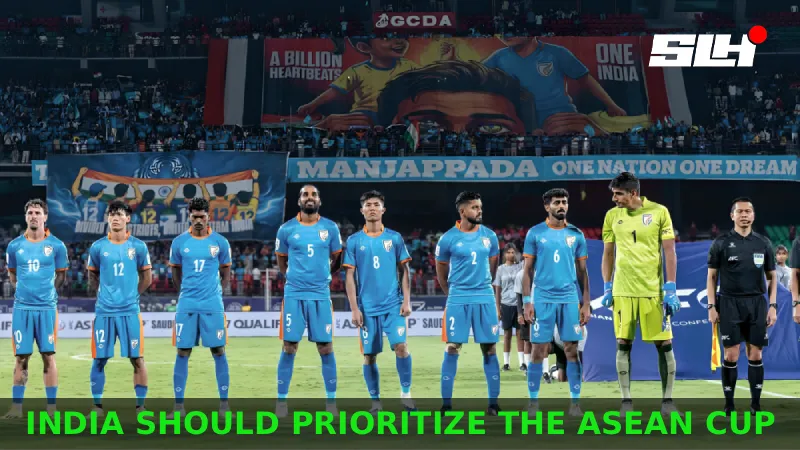


India should have kept its ASEAN Cup 2026 place instead of swapping three or four competitive matches for one exhibition against Brazil. A tournament run against Indonesia, Malaysia and Singapore builds knockout composure that a friendly, however famous the opponent, cannot replicate. AIFF president Kalyan Chaubey defended the switch as a rare chance to host a five-time world champion at Salt Lake Stadium, and the commercial appeal is real. But Indian football needs competitive minutes more than a marquee occasion, and this trade favors spectacle over development.
India were drawn into Group A of the inaugural FIFA ASEAN Cup alongside hosts Indonesia, Malaysia and Singapore, with the tournament final scheduled for October 3. That date collided directly with the Brazil friendly already being planned for Kolkata, leaving AIFF unable to satisfy both commitments with one senior squad. AIFF asked FIFA whether an Under-23 squad or a second-string team could represent India in the tournament instead, but FIFA insisted on full senior participation for every single match of the competition. Faced with fielding the senior team twice on the same day in two different countries, AIFF chose the friendly and walked away from the tournament.
Also read:-
Chaubey explained the thinking behind the call by pointing out that India had already faced Singapore and Malaysia four times across the last three years, while a fixture against Brazil comes around far less often for Indian football. That reasoning treats familiarity with regional opponents as a reason to skip them altogether, rather than proof India needed the repetition to close the gap. FIFA’s regulations do leave room for such an exit, but only at a cost. Article 5.2 of the tournament rules sets a minimum fine of CHF 15,000 for any team pulling out at least 30 days before the opening match, a number AIFF is hoping to avoid after informing FIFA Secretary General Mattias Grafstrom of its plans.
Laid out side by side, the trade looks even more lopsided. One column offers a genuine tournament rhythm across multiple competitive matches against sides India is meant to measure itself against. The other offers a single evening of prestige and nothing beyond it once the final whistle blows. The numbers make the calculation plain.
| Factor | ASEAN Cup 2026 (Withdrawn) | Brazil Friendly (Chosen) |
| Match Type | Competitive tournament, FIFA-sanctioned | Official friendly, ranking points offered |
| Matches | Three group games, possible final | One match, October 3, 2026 |
| Opposition | Indonesia, Malaysia, Singapore | Brazil, five-time world champions |
| Development Value | Competitive pressure, tournament environment | Global exposure, commercial revenue |
| Risk | Withdrawal managed through FIFA | No penalty, CBF commitment confirmed |
India’s FIFA ranking currently sits between 125 and 130, a position that only moves with competitive results rather than friendly outcomes against bigger names. Three or four ASEAN Cup matches, win or lose, would have offered ranking points that a friendly against Brazil simply cannot provide regardless of the eventual scoreline. AIFF has said it plans to fill the window with two friendlies against higher-ranked opposition, which sounds productive enough on paper. Those games, though, remain exhibitions too, and none of them carry the tournament pressure or the stakes India just gave up.
None of this ignores what Brazil brings to Salt Lake Stadium. A five-time world champion arriving on Indian soil for the first time is a broadcast and sponsorship event on a scale the ASEAN Cup could never generate, and AIFF’s finances need exactly that kind of night. Filling the stadium, the broadcast numbers and the sponsorship interest around Brazil’s biggest names are not small considerations for a federation still building its commercial base.
But financial sustainability and competitive development are not the same project, and treating them as interchangeable is where this decision falls short. The India-Brazil friendly ASEAN Cup 2026 withdrawal saves AIFF a headline occasion at the cost of the matches that build a team capable of deserving one. A federation trying to grow the sport long term should be choosing minutes over moments, and that choice looks harder to defend the longer it sits.
Do you think AIFF made the right call by choosing prestige over a competitive tournament, or should India have pushed to honour its ASEAN Cup commitment instead? Tell us which matches you would have prioritized in the comments.
As football fans globally search for the most reliable platforms to witness history unfold—especially with Argentina currently attempting to join this exclusive list in the 2026 World Cup Final—Sports Live Hub (SLH) emerges as the ultimate destination for premium sports broadcasting.
Finding a secure, uninterrupted broadcast during major international tournaments can be incredibly frustrating due to complex regional restrictions and geo-blocks. The hub sports live stream feature available on SLH operates as a state-of-the-art intelligent aggregator. It seamlessly maps your location and automatically routes you to verified, official regional broadcast feeds. This ensures that fans can watch every crucial moment of the World Cup in stunning high-definition, completely free from the irritating buffering issues and dangerous malware threats associated with illegal, unverified streaming websites.
Modern football enthusiasts demand a highly analytical and interactive viewing experience. The sport hub live streaming interface on SLH serves as an elite second-screen companion for dedicated fans. As you watch the world’s best teams compete for international glory, the platform provides dynamic, real-time digital overlays. Viewers gain instant access to advanced tactical data, including live Expected Goals (xG), detailed passing networks, and comprehensive player heatmaps, empowering them to dissect the beautiful game just like a professional television pundit.
During monumental events like a World Cup Final, internet searches for how to watch Sports live for free inevitably skyrocket. SLH proactively solves this challenge by maintaining a meticulously curated, fully localized directory of legal, free-to-air (FTA) broadcasting networks. By specifically highlighting public broadcasters that legally air these premium matches without requiring expensive subscription paywalls, SLH guarantees that the unparalleled excitement of international football remains completely accessible, safe, and entirely legal for millions of passionate fans worldwide.
Will India actually withdraw from the FIFA ASEAN Cup 2026?
Yes, India has officially withdrawn from the tournament. AIFF president Kalyan Chaubey confirmed the decision on August 13 and formally notified FIFA of the exit.
What penalty could FIFA impose on India for pulling out?
FIFA can fine AIFF a minimum of CHF 15,000. Article 5.2 of the ASEAN Cup regulations applies this fine for any withdrawal made at least 30 days before the opening match.
When is the India versus Brazil friendly being played?
The friendly is scheduled for October 3, 2026. That is the exact date FIFA had set for the ASEAN Cup final, creating the direct scheduling clash.
Why is Brazil playing a friendly against India in Kolkata?
CBF confirmed the fixture at Salt Lake Stadium as a landmark occasion. It marks the first time Brazil have played a match on Indian soil.
Does FIFA allow teams to send weakened squads to tournaments?
No, FIFA requires full-strength senior squads in sanctioned competitions. It rejected AIFF’s request to field an Under-23 or second-string team for the ASEAN Cup matches.
 football
 football
 football