

Opinions, analysis and commentary
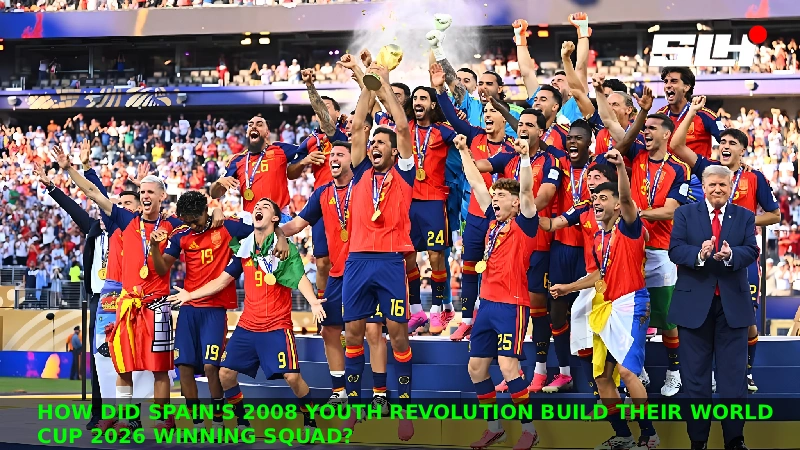


An academy overhaul launched by Luis Aragones in 2008 built the squad that won this summer. Rodri completed 101 of his 106 passes in the final, 57 of them in Argentina’s own half, while Spain outshot their opponents 20 to 2 and conceded no expected goals until deep into extra time. Ferran Torres struck the winner in the 106th minute. Every one of those numbers traces back to a coaching decision made 18 years before a ball was kicked in this tournament.
Rodri’s performance in the final reads like a system working exactly as designed rather than one player carrying a team on his own. His pass map covered the width of the pitch from box to box, and his willingness to keep receiving the ball inside Argentina’s own territory suffocated any counter-attacking threat long before it could develop into something dangerous. Numbers like that do not happen by accident at international football’s highest level, no matter how gifted the individual producing them happens to be.
They happen because almost every player around him came through a version of the same pipeline, shaped by the same coaching principles from a young age. The table below traces six members of the winning squad back to the academy system that built them, and the pattern is impossible to miss once you see all six laid out side by side.
Six academy graduates anchored the entire campaign, and their combined debuts span barely five years.
| Player | Youth Academy | Senior Debut | 2026 Role |
| Rodri | Atletico Madrid youth | 2019 | Midfield captain, Golden Ball |
| Lamine Yamal | La Masia | 2023 | Right wing, most dribbles (35) |
| Pau Cubarsi | La Masia | 2024 | Centre-back, Best Young Player |
| Ferran Torres | Valencia academy | 2020 | Forward, scored the winner |
| Unai Simon | Athletic Bilbao youth | 2020 | Goalkeeper, Golden Glove |
| Pedri | Las Palmas / La Masia | 2021 | Attacking midfielder |
Every name on that list progressed through an academy aligned with the same federation methodology from under-12 level upward, and each passed through at least one youth international squad before reaching the senior team.
Aragones won Euro 2008 with a squad built largely from Barcelona’s academy system, and senior RFEF figures now point directly back to that single decision as the origin of everything that followed for nearly two decades. His successors widened the recruiting net considerably further, pulling in promising prospects from Athletic Bilbao’s academy, Valencia’s youth setup and Real Madrid’s own development pipeline, so no single club’s downturn could ever sink an entire generation of talent.
That structural choice, spreading recruitment across four major academies rather than depending on one feeder club, is what let Spanish football keep producing golden generations on a rolling basis rather than a single unrepeatable one.
Luis de la Fuente managed Spain’s Under-19 and Under-21 sides for years before taking the senior job in December 2022, and he brought half his squad with him in the process. Merino, Fabian Ruiz, Oyarzabal and Unai Simón all won the Under-21 European Championship together in 2019 under his management, and every one of them featured in this year’s winning campaign.
Torres, meanwhile, won an Under-17 European title back in 2017 through that same development pathway, years before anyone outside Spain had heard his name. This was effectively a group of teammates who had already been winning age-group tournaments together for the better part of a decade before any of them ever reached a senior World Cup final.
Spain’s 38-match unbeaten run, the longest in the recorded history of men’s international football, and a first World Cup title since 2010 confirm the model survives across generations rather than producing one fortunate class of players. Yamal and Cubarsi are only 19 years old, and Pedri is still just 23, which means most of this squad has years left at the top.
The academy pipeline behind Spain’s World Cup 2026 golden generation is still actively producing players right now, with under-21 and under-23 squads already stocked with prospects born well into the Aragones era. There is simply no obvious point on the horizon at which this system runs dry.
Stay updated on every twist and turn of the summer transfer window and catch all the live football action with Sports Live Hub (SLH).
Accessing a high-quality hub sports live stream is essential for fans following the matches of the World Cup season. SLH provides a verified directory of official broadcasting partners, ensuring you never miss a moment of the action from the Premier League or Liga Portugal or World Cup.
Our sport hub live streaming dashboard offers real-time tactical overlays, player fitness stats, and live transfer probability tickers. As the WC 2026 saga develops, SLH is the destination for integrated sports data and high-definition viewing.
If you are wondering how to watch Sports live for free, SLH maintains a curated list of official free-to-air (FTA) broadcasters and legitimate digital promotional windows. We help fans find legal, cost-free ways to enjoy global sports while ensuring safety from unauthorized streaming sites.
Who started Spain’s youth academy overhaul?
Luis Aragones, Spain’s manager between 2004 and 2008. RFEF figures credit him as the originator of the academy model that produced both the 2010 and 2026 World Cup-winning squads.
How many goals did Spain concede at the 2026 World Cup?
Just one, a 41st-minute equaliser in the quarterfinal against Belgium. Spain kept 7 clean sheets across 8 matches, a tournament record, before winning the final 1-0 in extra time.
How many passes did Rodri complete in the World Cup 2026 final?
Rodri completed 101 of 106 attempted passes in the final alone. Across the full tournament, he racked up 790 passes, breaking his own single-edition record of 638 set at Qatar 2022.
Is this Spain’s second World Cup title?
Yes, following their first triumph at South Africa 2010. That final was won 1-0 against the Netherlands through an Iniesta goal in the 116th minute of extra time.
Which players came through Spain’s academy pipeline to the 2026 squad?
Rodri, Yamal, Cubarsi, Torres, Unai Simón and Pedri all did. Each progressed through a club academy aligned with RFEF methodology before featuring prominently in the winning campaign.
 cricket
 football
 football