
Opinions, analysis and commentary
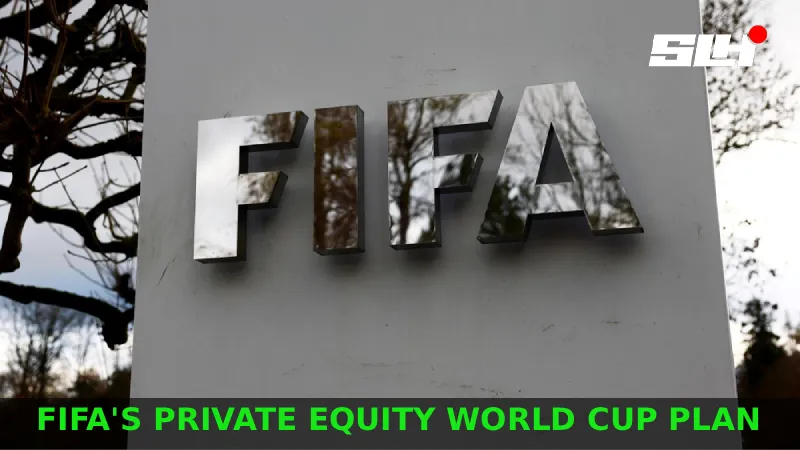


It means very little in practice, because the plan collapsed within days of being announced to the public. FIFA scrapped its proposed investment scheme on 1 August, barely a week after unveiling it, once UEFA threatened a full boycott of every future FIFA competition. The bigger story is what the collapse exposed about FIFA’s own internal governance. A senior adviser resigned, a top executive was later sacked, and Europe’s biggest leagues are now openly questioning Infantino’s leadership heading into next year’s presidential vote in Rabat.
On 28 July 2026, FIFA president Gianni Infantino unveiled FIFA Forward Enterprise, a proposed new subsidiary to house the World Cup’s broadcasting, sponsorship, ticketing and licensing rights under a single roof. FIFA would keep majority control throughout, but outside investors could buy minority, non-controlling stakes at a $20 billion valuation for the business.
That structure could have raised up to $4.2 billion, with the named lead investor being Thrive Eternal, a fund launched by Joshua Kushner, brother of Jared Kushner. In return, each of FIFA’s 211 member associations would have received $20 million in development funding for 2027-2030, up from $8 million previously. Infantino set a mid-September deadline for a member vote on the proposal.
UEFA called an emergency meeting of its 55 members on 30 July and voted to boycott every FIFA competition, including future World Cups, unless the plan was scrapped entirely and permanently.
| Confederation | Stated Position | Key Objection or Support Reason |
| UEFA | Rejected in full; boycotting all FIFA competitions | Called the plan conceived in secret, putting football’s governance up for sale |
| CONCACAF | Publicly rejected the proposal | Questioned why private equity was needed after the most profitable World Cup in history |
| AFC | Rejected; stood in solidarity with UEFA and CONCACAF | Demanded an urgent review of FIFA’s governance and consultation process |
| CAF | Deferred; opened internal discussion rather than outright rejection | Weighed development-funding upside against loss of long-term commercial control |
| CONMEBOL | No formal public statement issued | Stayed publicly neutral while the vote math turned against the plan |
CONCACAF and the AFC followed UEFA with formal rejections of their own within days. Senior adviser Carlos Cordeiro resigned over the plan, and chief operating officer Kevin Lamour said FIFA’s own administration had been misled by the proposal’s backers. Facing a bloc large enough to defeat any vote, Infantino confirmed on 1 August that the plan would not proceed.
FIFA framed FFE as a funding mechanism rather than a prize-money lever, with the extra revenue earmarked for the Forward development programme rather than World Cup prize pots directly.
Critics saw a different structural risk entirely in that same arrangement. Once a private investor holds a genuine commercial stake, its return expectations could eventually shape future scheduling, sponsorship and expansion decisions that indirectly affect how much money eventually flows into prize funds down the line.
Europe’s top leagues were not direct parties to FFE, but their objections were financial as much as ideological in nature. Premier League chief executive Richard Masters said the League had never entertained outside investment like this, even during the pandemic, because its own media-rights model already worked extremely well without outside help.
His concern echoed across UEFA more broadly than just one league. A private stake in FIFA’s commercial engine could eventually compete with domestic leagues and continental competitions for the same sponsorship and broadcast money, reshaping the value clubs extract from their own separately negotiated commercial deals.
FFE did collapse, but the fallout has continued well beyond the announcement itself. FIFA sacked Lamour on 17 August, weeks after he had criticized the plan publicly, prompting UEFA vice-president Laura McAllister to call the decision deeply troubling for FIFA’s internal culture.
On 19 August, Masters said Infantino had pressed football’s self-destruct button and called for a unity candidate to challenge him in next year’s presidential election. Governance reform is now the central demand from UEFA, the AFC and CONCACAF, and the entire FIFA World Cup private equity plan episode has become the defining issue of Infantino’s fourth-term campaign before it has even properly begun.
Should European clubs get a direct seat at FIFA’s table before any future investment plan is even proposed? Tell us what you think below.
While the politics of the boardroom dominate the headlines, the heart of football remains firmly on the pitch. For millions of dedicated supporters who prioritize the beautiful game over administrative disputes, having a dependable, high-quality digital viewing platform is an absolute necessity. Sports Live Hub (SLH) is expertly engineered to bring the world’s most exciting premium football action directly to your fingertips, bypassing the off-field drama.
Navigating through complex regional geo-restrictions and scattered broadcast rights can often ruin the weekend matchday experience. The hub sports live stream ecosystem on SLH actively eliminates these frustrations by aggregating officially verified, high-definition broadcast feeds from around the globe. Whether you are tracking crucial World Cup qualifiers or domestic league showdowns, SLH delivers an ultra-low latency viewing experience. The streamlined platform guarantees that you catch every blistering strike, dramatic penalty, and historic victory the exact second it happens, completely uninterrupted.
For the deeply analytical football fan who demands more than just a standard video feed, the Sport Hub live streaming interface operates as a sophisticated, interactive match center. SLH seamlessly integrates real-time performance analytics, live player tracking heatmaps, and dynamic possession graphics right alongside the main broadcast. This immersive dual-screen integration empowers viewers to analyze tactical formations, passing accuracy, and defensive momentum shifts with the exact same professional precision utilized by elite football pundits and data analysts worldwide.
A massive priority for international digital audiences is discovering how to watch Sports live for free securely and reliably. SLH proactively addresses this massive global demand by maintaining a strictly curated, constantly updated directory of legal Free-to-Air (FTA) networks, official regional channels, and legitimate ad-supported platforms. By exclusively routing users to authorized digital portals, SLH guarantees that premium football content remains highly accessible, budget-friendly, and completely secure from the severe digital risks associated with unauthorized, illegal streaming websites.
What is FIFA’s private equity plan for the World Cup?
It was FIFA Forward Enterprise, a proposed subsidiary structure. It would have sold minority stakes in FIFA’s commercial rights at a $20 billion valuation before collapsing.
Why did UEFA boycott FIFA over the investment plan?
UEFA said the plan was conceived in secret without consultation. It voted to boycott all FIFA competitions unless the proposal was scrapped entirely and permanently abandoned.
How much money was FIFA trying to raise from investors?
Up to $4.2 billion was the target raise for FIFA. That figure was based on a $20 billion valuation of the proposed FFE subsidiary structure.
Which confederations opposed Infantino’s World Cup investment plan?
UEFA, CONCACAF and the AFC all publicly rejected the plan. CAF opened internal discussion instead of rejecting it outright, while CONMEBOL never issued any formal public statement on the matter at all.
What happened after FIFA scrapped the private investment plan?
FIFA sacked a senior executive who had criticized the plan. Premier League chief executive Richard Masters then publicly called for a new presidential candidate and governance reform.