


Opinions, analysis and commentary
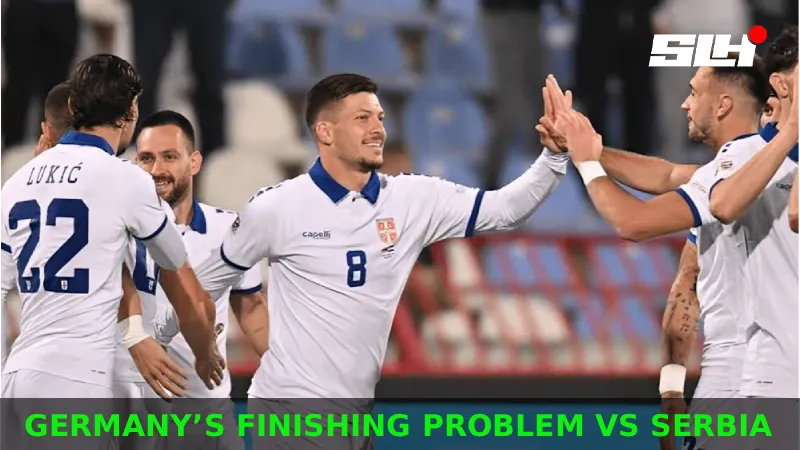


It matters because finishing is the only thing standing between Jürgen Klopp and his first win. Germany host Serbia at the Allianz Arena on 1 October 2026, having created plenty of chances and scored once in two games. Serbia have lost both matches and conceded four goals, while Germany sit third in Group A2 and Klopp’s side have had the ball and the shots. Injuries dominate the previews, but the numbers point elsewhere: this tie turns on whether Germany can turn territory into goals.
Klopp took charge in July after Germany’s last-32 World Cup exit against Paraguay. His debut in Amsterdam ended 1-1, with Felix Nmecha’s 32nd-minute opener cancelled by Cody Gakpo’s stoppage-time volley. Three days later, Greece won 1-0 in Augsburg.
Germany sit third in Group A2 with one point, above only Serbia. Klopp named a 44-man squad across two camps, and just six players from the first group remain. Jamal Musiala (torn thigh fibres) and Kai Havertz (muscle strain) left early, yet the bigger worry sits in front of goal. That is a lot of churn for a manager still learning his group, and it helps explain why the attack looks unsettled.
Germany had about 75% possession and 16 shots against Greece, five on target, worth roughly 1.3 expected goals (xG). They scored none. Half those shots came from outside the box, and their only big chance, Younes Ebnoutalib’s, was missed. Shooting from range with so much of the ball is a choice, and it handed Greece a result the chances barely justified.
Greece managed eight shots, one on target: Dimitrios Kourbelis’s 74th-minute strike, deflected off Joshua Kimmich. It was Greece’s first win over Germany in 11 meetings.
Across two matches, Germany generated about 2.84 xG and scored once. The Netherlands game was close to par at 1.50 xG and one goal, so Greece is where the finishing failed most badly.
Serbia have lost both games and conceded four goals. Greece had 26 shots, nine on target, winning 2-1 with a 94th-minute Tasos Douvikas header. The Netherlands then had 25 shots, eight on target, and won 2-1 through a Mexx Meerdink brace.
Serbia have faced 51 shots and roughly 5.2 xG, yet they do score. Andrija Živković opened the scoring against Greece, and Luka Jović equalised against the Netherlands one minute after coming on at half-time, finishing with six shots, three on target and 0.91 xG.
This is where the match is decided: Serbia concede chances, and Germany have not converted theirs. Jović’s 0.91 xG shows Serbia carry a threat of their own, but a back line that has absorbed 51 shots in two games gives Germany a real opening.
| Player | Shots | Shots on Target | Goals | Expected Goals |
| Germany (2 games) | 26 | 7 | 1 | 2.84 |
| Adeyemi (v Greece) | 3 | 1 | 0 | 0.32 |
| Jović (v Netherlands) | 6 | 3 | 1 | 0.91 |
Jonathan Burkardt has three goals and an assist in four Bundesliga games for Eintracht Frankfurt, yet managed one shot on target and was saved, after coming on against Greece. Florian Wirtz entered at the same minute and also failed to score. Burkardt’s lone shot being saved is the story of Germany’s opening games in miniature: the right player in the right place with little to show for it.
Burkardt, Wirtz, Serge Gnabry and Nick Woltemade are Klopp’s forward options for this game. Club form hasn’t travelled yet, and the choice up front may matter less than the quality of service behind it. Service matters more than the name on the teamsheet.
First, shot quality: more entries into the box and fewer speculative efforts from range. Second, end product: roughly 1.4 xG per game is enough to beat Serbia if it becomes goals. Neither fix needs a new system, just better choices in the final third. Third, balance: the Netherlands created 3.12 xG against Germany, so pressing high still carries risk. Klopp admitted his new group needs patterns to break down a deep defence.
Against Serbia’s record, that chance should come, and the Germany vs Serbia UEFA Nations League finishing problem will be settled by whoever takes it.
Will Klopp’s Germany finally convert their chances against Serbia, or is a second straight home shock coming? Tell us your scoreline in the comments.
Following international ‘A’ team tours, bilateral series, and domestic red-ball fixtures require dependable broadcast access. Sports Live Hub (SLH) has established itself as the ultimate digital aggregator, delivering seamless, high-definition sports streaming directly to fans worldwide without technical friction.
Finding clean, uninterrupted video feeds for overseas developmental fixtures can often prove challenging. The hub sports live stream framework on SLH solves this by aggregating verified, ultra-high-definition broadcast links from official sports networks globally. Whether you are tracking Towhid Hridoy’s historic double-century march or following South African domestic pitches, SLH ensures a low-latency, buffer-free connection. The intuitive interface utilizes simple and easy text navigation, enabling users to find active match links instantly.
Modern cricket enthusiasts expect deep analytical tools alongside live video feeds. The sport hub live streaming interface on SLH operates as an advanced interactive match center. While streaming live fixtures, users can access real-time statistical overlays, including ball-by-ball commentary, wagon wheels, projected run-rates, and batting partnership graphs. This comprehensive digital environment empowers fans to analyze player milestones and team strategies with absolute clarity.
A primary concern for international cricket fans is discovering legitimate methods for how to watch Sports live for free without encountering cybersecurity risks. SLH actively addresses this by maintaining a strictly vetted directory of authorized Free-to-Air (FTA) regional channels and official ad-supported streaming platforms. By directing users exclusively to safe, legal portals, SLH guarantees that premium cricket coverage remains completely budget-friendly, legal, and protected from malicious software.
Who will win Germany vs Serbia in the UEFA Nations League?
Germany are narrow favourites, having won 16 of 29 meetings including West Germany and Yugoslavia. Serbia have conceded four in two games, but Germany lost to Greece despite 16 shots, so finishing decides it.
Why did Germany lose to Greece in the Nations League?
Germany could not score despite dominating possession and firing 16 shots. Dimitrios Kourbelis’s deflected 74th-minute effort, Greece’s only shot on target, settled a 1-0 result.
What time does Germany vs Serbia start in IST?
Kick-off is 12:15 AM IST on Friday, 2 October 2026, for Indian viewers. That is 8:45 pm CEST on Thursday, 1 October, at the Allianz Arena.
Who is the manager of Germany?
Jürgen Klopp, the former Liverpool manager, is Germany’s head coach. He took charge in July 2026 after the side’s last-32 World Cup exit against Paraguay, and Serbia is his third match.
Is Jamal Musiala playing against Serbia?
No, Musiala is out injured. He tore muscle fibres in his right thigh before the Netherlands game and left camp on 25 September, with three to four weeks reported.
 football
 football