


Opinions, analysis and commentary
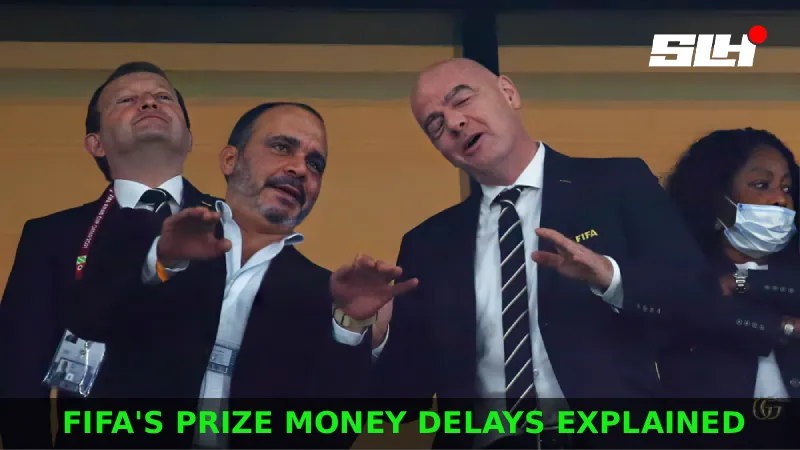


Jordan’s national federation went public with a blunt blackmail accusation, and the money arrived two days later. That sequence alone tells you everything about how this payment actually got released. The $4.2 million had sat unpaid for roughly eight months after Jordan finished runner-up at the 2025 Arab Cup in Qatar. Prince Ali says the delay was tied to his refusal to publicly endorse FIFA leadership, and going public with the accusation was what finally moved the payment after months of silence through official channels.
Prince Ali bin Al Hussein, Jordan’s federation president and a former FIFA presidential candidate, posted publicly in early August accusing FIFA of withholding Arab Cup prize money as pressure over his personal endorsement of the organisation’s leadership. He described being told verbally during the World Cup that publicly endorsing that leadership would help his federation’s situation considerably going forward.
Jordan made its World Cup debut this year, giving the small federation unusually high visibility at exactly the moment this payment dispute became public knowledge. FIFA did not respond to multiple requests for comment on the accusation before the payment eventually landed two days later without any accompanying public statement or explanation.
The 2025 Arab Cup final in Qatar, played in December, carried a $4.2 million prize for the runner-up. Jordan ultimately lost that final to Morocco and received nothing for close to eight months afterward, despite repeated requests through official channels that Prince Ali says went largely unanswered for months at a time.
| Federation | Tournament | Prize Money | Delay | Resolution |
| Jordan | 2025 Arab Cup final, runner-up to Morocco | $4.2 million | ~8 months | Paid two days after public accusation |
| Other AFC nations | Various FIFA events | Not confirmed | Prince Ali called it a wider pattern | No named cases confirmed publicly |
Prince Ali framed Jordan’s case as symptomatic of difficulties facing federations across the continent, though no other specific federation has confirmed a similar delay by name so far, leaving the broader claim difficult to independently verify beyond his own public statement on the matter.
No publicly specified contractual window governs exactly when Arab Cup runner-up prize money must actually be distributed to a winning federation. That absence of a hard deadline left Jordan dependent on a request process rather than an automatic payment schedule built directly into the tournament structure itself from the outset.
Prince Ali also raised a separate financial burden tied to Jordan basing its World Cup training camp inside the United States rather than in Canada or Mexico, which generated tax obligations he says FIFA never equalised fairly across competing nations that chose to base their camps elsewhere on the continent.
No other federation has been named publicly in connection with a similar prize money delay during this particular period of intense scrutiny across the sport. Prince Ali’s framing implies the issue extends well beyond Jordan alone, describing it as symptomatic of difficulties many smaller federations quietly face without ever going public about it themselves.
FIFA holds well over five billion dollars in financial reserves, meaning capacity was never realistically the obstacle behind this particular delay in getting Jordan its money. Reserves of that size make an eight-month wait for a runner-up prize considerably harder to explain away as simple bureaucracy. The decision to withhold appears to have been a deliberate choice rather than any kind of administrative oversight or accounting backlog inside a genuinely large and complex global organisation.
For federations without the institutional weight carried by Europe’s or Africa’s largest associations, no guaranteed distribution mechanism leaves smaller nations structurally exposed to exactly this kind of prolonged delay and uncertainty. Jordan’s case adds payment timing as a specific new pressure point inside football’s broader governance concerns, alongside longstanding complaints about transparency and accountability at the top.
Prince Ali welcomed the payment once it finally arrived, while making clear it wouldn’t change his underlying concerns about FIFA leadership more broadly. That distinction matters because it shows a single payment doesn’t resolve the FIFA prize money delay Jordan Arab Cup dispute at its actual root, even though the immediate financial pressure on his federation has now clearly eased.
Should FIFA publish fixed payment windows for every tournament prize going forward? Say where you land in the comments.
As football fans globally search for the most reliable platforms to witness history unfold—especially with Argentina currently attempting to join this exclusive list in the 2026 World Cup Final—Sports Live Hub (SLH) emerges as the ultimate destination for premium sports broadcasting.
Finding a secure, uninterrupted broadcast during major international tournaments can be incredibly frustrating due to complex regional restrictions and geo-blocks. The hub sports live stream feature available on SLH operates as a state-of-the-art intelligent aggregator. It seamlessly maps your location and automatically routes you to verified, official regional broadcast feeds. This ensures that fans can watch every crucial moment of the World Cup in stunning high-definition, completely free from the irritating buffering issues and dangerous malware threats associated with illegal, unverified streaming websites.
Modern football enthusiasts demand a highly analytical and interactive viewing experience. The sport hub live streaming interface on SLH serves as an elite second-screen companion for dedicated fans. As you watch the world’s best teams compete for international glory, the platform provides dynamic, real-time digital overlays. Viewers gain instant access to advanced tactical data, including live Expected Goals (xG), detailed passing networks, and comprehensive player heatmaps, empowering them to dissect the beautiful game just like a professional television pundit.
During monumental events like a World Cup Final, internet searches for how to watch Sports live for free inevitably skyrocket. SLH proactively solves this challenge by maintaining a meticulously curated, fully localized directory of legal, free-to-air (FTA) broadcasting networks. By specifically highlighting public broadcasters that legally air these premium matches without requiring expensive subscription paywalls, SLH guarantees that the unparalleled excitement of international football remains completely accessible, safe, and entirely legal for millions of passionate fans worldwide.
Why did FIFA delay paying Jordan’s prize money?
No official explanation was ever given publicly for the eight-month delay. Prince Ali alleged it was tied to pressure over his endorsement, a claim FIFA never addressed directly.
What did Prince Ali allege about FIFA’s conduct?
He accused FIFA of using unpaid prize money as pressure over him personally. He said endorsing FIFA’s leadership was suggested as a way to help his federation during the World Cup.
How much prize money did Jordan win at the Arab Cup?
Jordan earned $4.2 million as runner-up at the 2025 Arab Cup final. The tournament was held in Qatar in December, and Jordan lost the final to Morocco.
Has FIFA delayed prize money to other federations before?
No other specific federation has been confirmed publicly during this same period. Prince Ali described the delay as symptomatic of difficulties he believes many smaller federations face quietly.
Did FIFA pay Jordan after the public accusation was made?
Yes, the full $4.2 million arrived just two days after the accusation. Prince Ali thanked FIFA publicly while insisting his broader concerns about leadership remained unresolved.
 football
 football
 football