


Opinions, analysis and commentary
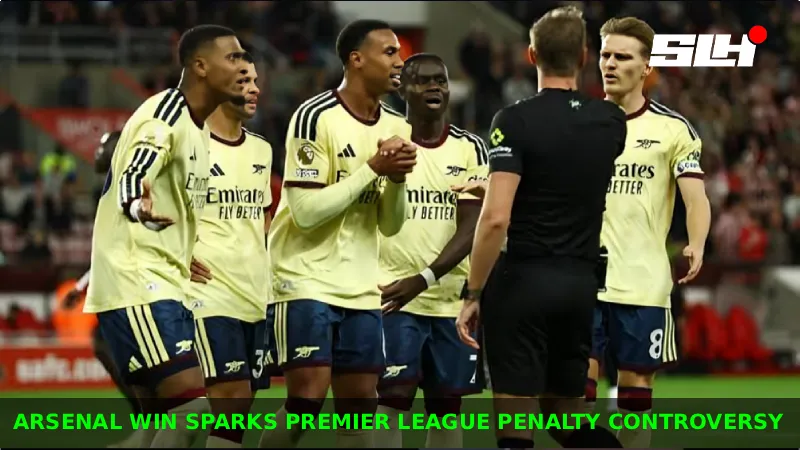


A five-second shirt-pull decided a game that could shape the title race, and it went against the wrong team. Referee John Brooks penalised Ezri Konsa for holding Dan Ballard in the 54th minute, but replays showed Ballard had grabbed Konsa’s shirt first. VAR confirmed the penalty anyway, without ever sending Brooks to check the pitchside monitor himself. David Raya saved the resulting spot-kick, Arsenal won 2-0 through Bruno Guimarães and Bukayo Saka, and Mikel Arteta left the Stadium of Light convinced officiating had let his side down again.
Arsenal’s title defence hit an ugly flashpoint on September 12. With the score goalless in the 54th minute, referee John Brooks pointed to the spot after judging that Konsa had held Ballard down at a corner. VAR official Stuart Attwell reviewed the call and confirmed it without sending Brooks to the monitor.
Replays told a different story. Ballard had pulled Konsa’s shirt with his left arm, spinning the defender around before he fell onto him, and former referee Andy Davies said the decisive contact clearly came from Ballard.
Le Fee stepped up, but Raya dived low to save the spot-kick, pushing it against the post. Just 121 seconds later, Guimarães, jeered by the home crowd, collected a pass from Rice and curled a 25-yard strike into the top corner for his first Arsenal goal. Saka added a late penalty after Mandava was sent off for a second yellow, sealing a 2-0 win.
The decision does not sit alone. Pundits Thomas Frank and Ashley Williams agreed the Konsa-Ballard tangle should never have been a penalty. Brooks also overturned an Arsenal throw-in for taking 18 seconds, even though Sunderland averaged 22.5 seconds per throw.
Yahoo Sports gave the display 3 out of 10. Four matchweeks in, several contact decisions have already drawn scrutiny.
| Fixture | Date | Decision | Outcome |
| Sunderland vs Arsenal | 12 Sep 2026 | Penalty given to Sunderland for holding | Confirmed by VAR, no monitor review |
| Aston Villa vs Arsenal | 31 Aug 2026 | Penalty denied to Arsenal | Later ruled a clear and obvious VAR error |
| Newcastle vs Liverpool | 23 Aug 2026 | Late penalty given to Liverpool | Upheld on review, converted by Szoboszlai |
The league’s own guidance this season calls for referees to sharpen recognition of clear holding at set pieces. The Sunderland penalty was defensible under that instruction in real time, but the replays suggest the wrong player paid for it.
Arteta did not hold back. He said he had watched the incident twenty times and could not understand how a penalty was given, warning that a call like it could decide a title race. He added that Konsa did nothing wrong.
The frustration runs deeper than one match. Two weeks earlier, the league’s Key Match Incidents panel had ruled 5-0 that a challenge by Ian Maatsen on Guimarães at Aston Villa should have been a penalty and a red card, and that VAR’s failure to intervene was a clear and obvious error.
What makes this incident stand out is the pattern it fits. Four matchweeks in, the panel had rated 84 percent of on-field penalty calls correct, rising to 96 percent once VAR steps in, yet one intervention had already been confirmed missed before Sunderland kicked off.
That context makes the Konsa-Ballard call harder to defend. Footage clearly showed Ballard initiating the contact, yet Attwell chose not to send Brooks to the monitor, turning a marginal read into a confirmed error.
The Sunderland penalty crystallises the tension at the heart of this season’s refereeing approach. Clamping down on holding at set pieces was welcomed, but this incident shows the risk: when a referee’s live read does not match the replay, and the review confirms that read without checking it, the outcome can end up inverted rather than merely wrong.
Arsenal sit top on 12 points from four wins, having conceded only once all season, so the result went their way regardless. But Arteta’s point, that a call like this can shape a title race long after the whistle, is one the league now has to reckon with, and it is exactly why the Premier League Arsenal vs Sunderland penalty controversy will not fade quietly.
Was the Sunderland penalty simply a bad call, or a symptom of something deeper in how VAR reviews are used? Drop your take below.
Following international ‘A’ team tours, bilateral series, and domestic red-ball fixtures require dependable broadcast access. Sports Live Hub (SLH) has established itself as the ultimate digital aggregator, delivering seamless, high-definition sports streaming directly to fans worldwide without technical friction.
Finding clean, uninterrupted video feeds for overseas developmental fixtures can often prove challenging. The hub sports live stream framework on SLH solves this by aggregating verified, ultra-high-definition broadcast links from official sports networks globally. Whether you are tracking Towhid Hridoy’s historic double-century march or following South African domestic pitches, SLH ensures a low-latency, buffer-free connection. The intuitive interface utilizes simple and easy text navigation, enabling users to find active match links instantly.
Modern cricket enthusiasts expect deep analytical tools alongside live video feeds. The sport hub live streaming interface on SLH operates as an advanced interactive match center. While streaming live fixtures, users can access real-time statistical overlays, including ball-by-ball commentary, wagon wheels, projected run-rates, and batting partnership graphs. This comprehensive digital environment empowers fans to analyze player milestones and team strategies with absolute clarity.
A primary concern for international cricket fans is discovering legitimate methods for how to watch Sports live for free without encountering cybersecurity risks. SLH actively addresses this by maintaining a strictly vetted directory of authorized Free-to-Air (FTA) regional channels and official ad-supported streaming platforms. By directing users exclusively to safe, legal portals, SLH guarantees that premium cricket coverage remains completely budget-friendly, legal, and protected from malicious software.
What penalty decision did Arteta criticise after the win at Sunderland?
Arteta criticised the 54th-minute penalty when referee John Brooks judged Ezri Konsa to have held Dan Ballard from a corner. Replays suggested Ballard pulled Konsa’s shirt first, yet VAR confirmed the call anyway.
Why did Arteta call the penalty call unacceptable?
He said he had watched the replay twenty times and could not find any evidence that Konsa fouled Ballard. Arteta argued a decision like it could end up shaping the outcome of the entire title race.
How accurate has VAR been in the league this season?
Four matchweeks in, 84 percent of on-field penalty calls were rated correct, rising to 96 percent once VAR intervened. One missed intervention had already been confirmed before the Sunderland game added to the debate.
Did David Raya save the penalty at Sunderland?
Yes, Raya dived low to his left and pushed Enzo Le Fevre’s spot-kick against the post. Bruno Guimarães scored Arsenal’s opener just 121 seconds after the save.
What was the final score between the two sides at Sunderland?
Arsenal won 2-0 at the Stadium of Light. Bruno Guimarães struck the opener before Bukayo Saka added a stoppage-time penalty after Reinildo Mandava was sent off.
 football
 football