



Opinions, analysis and commentary
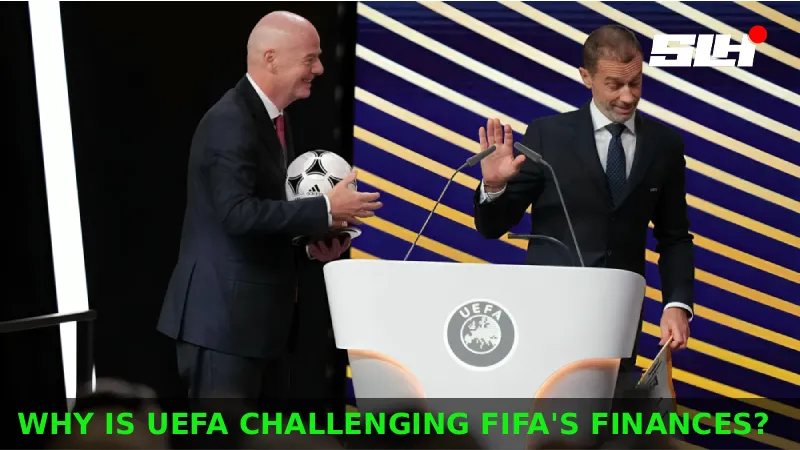


UEFA is accusing FIFA of two separate failures, not one. The August 1 statement welcomed Gianni Infantino’s decision to scrap the FFE investment plan, then went further, declaring UEFA had lost confidence in him without calling outright for his resignation. Behind that headline sits a sharper financial argument: FIFA’s reserves have passed $5 billion, and UEFA says none of the surplus has gone back into the game itself. Carlos Cordeiro and CONCACAF have made almost identical points in the days beforehand, adding institutional weight UEFA didn’t have alone.
FIFA withdrew the FFE plan on Saturday, August 1, a $20 billion subsidiary structure built around selling a 20 percent stake in World Cup revenue for roughly $4.2 billion to outside investors. The plan collapsed only after UEFA, CONCACAF and the AFC pushed back within the same week.
UEFA’s response could have stopped at relief that the deal was gone. Instead, its statement contained two distinct accusations layered on top of each other: a transparency failure tied to how the FFE plan was built in secret, and a separate, older complaint about how FIFA has handled money it already controls. That second complaint is the one with the longer memory attached to it.
UEFA’s statement reached back to pledges Infantino made when he first ran for the FIFA presidency in 2016, when he promised to be transparent and to treat FIFA’s money as belonging to its member associations rather than to the organisation itself.
UEFA said he had failed on both counts. The FFE process, negotiated behind closed doors, was the transparency failure. The funds argument goes further and is harder to walk back: with reserves standing at over $5 billion, UEFA argues Infantino has not used that money for the benefit of the sport that generated it in the first place.
FIFA has not challenged UEFA’s $5 billion figure, and the trend behind it is documented well enough across three funding cycles to make that silence notable rather than accidental.
| Period / Trigger Event | FIFA Financial Reserves | FIFA Forward Distribution Structure |
| 2019-2022 (Forward 1.0 and 2.0) | Approximately $2.4 billion to $2.8 billion in total funding made available globally | $6 million total per member association across the four-year cycle |
| 2023-2026 (Forward 3.0) | Approximately $2.7 billion, confirmed by official financial audits | $8 million total per member association, capped at $2 million a year for operational and specific projects |
| Post-FFE Collapse (August 2026) | Unchanged, remaining at standard audited levels | The proposed $20 million per-member Fast Forward bonus is frozen following the FFE collapse |
Reserves climbed from roughly $3.8 billion in the 2019-2022 cycle to over $5 billion by 2026, driven largely by record revenue from the expanded 2026 World Cup. Member association funding grew far more slowly across the same stretch, the gap UEFA’s statement is built around.
Carlos Cordeiro’s resignation letter, filed the day before UEFA’s statement, made nearly the same argument in blunter terms, pointing out that FIFA already sits on extraordinary reserves and carries no debt to justify a rushed scheme. CONCACAF’s own August 1 statement added that the FFE plan advanced outside every established governance channel, without transparency, consultation or due process. Between Cordeiro, CONCACAF and UEFA, three separate voices reached the same conclusion inside roughly 48 hours, which is why the reserves argument now carries far more weight than a single federation’s complaint would on its own.
UEFA didn’t stop at criticism. Its statement promised to begin working immediately with federations and stakeholders across the sport to propose a different way of distributing FIFA’s resources through the existing Forward programme rather than a new investor-led one.
Norwegian federation president Lise Klaveness added that international football’s cooperative framework had been put at risk unnecessarily in pursuit of individual interests, a line several other federations, including the Dutch, German and Australian associations, have echoed in their own separate statements this week. None of that changes the reserve figures on their own, but it turns the UEFA FIFA misusing funds reserves argument into a live policy fight rather than a one-off complaint that fades once the FFE headlines do.
Does a $5 billion war chest that nobody can agree on how to spend do more damage to FIFA than the FFE plan itself did? Say where you land in the comments.
As football fans globally search for the most reliable platforms to witness history unfold—especially with Argentina currently attempting to join this exclusive list in the 2026 World Cup Final—Sports Live Hub (SLH) emerges as the ultimate destination for premium sports broadcasting.
Finding a secure, uninterrupted broadcast during major international tournaments can be incredibly frustrating due to complex regional restrictions and geo-blocks. The hub sports live stream feature available on SLH operates as a state-of-the-art intelligent aggregator. It seamlessly maps your location and automatically routes you to verified, official regional broadcast feeds. This ensures that fans can watch every crucial moment of the World Cup in stunning high-definition, completely free from the irritating buffering issues and dangerous malware threats associated with illegal, unverified streaming websites.
Modern football enthusiasts demand a highly analytical and interactive viewing experience. The sport hub live streaming interface on SLH serves as an elite second-screen companion for dedicated fans. As you watch the world’s best teams compete for international glory, the platform provides dynamic, real-time digital overlays. Viewers gain instant access to advanced tactical data, including live Expected Goals (xG), detailed passing networks, and comprehensive player heatmaps, empowering them to dissect the beautiful game just like a professional television pundit.
During monumental events like a World Cup Final, internet searches for how to watch Sports live for free inevitably skyrocket. SLH proactively solves this challenge by maintaining a meticulously curated, fully localized directory of legal, free-to-air (FTA) broadcasting networks. By specifically highlighting public broadcasters that legally air these premium matches without requiring expensive subscription paywalls, SLH guarantees that the unparalleled excitement of international football remains completely accessible, safe, and entirely legal for millions of passionate fans worldwide.
How much money does FIFA currently hold in reserves?
FIFA’s reserves have passed $5 billion. UEFA cited that exact figure in its August 1 statement, and FIFA has not disputed or challenged the number in any response since.
What is the FIFA Forward programme?
It’s FIFA’s fund that channels money to national federations across four-year cycles. The current Forward 3.0 cycle, running 2023 to 2026, provides up to $8 million total per member association.
Did FIFA actually cancel its private investment plan?
Yes, FIFA withdrew the FFE plan on August 1. It would have sold a 20 percent stake in World Cup revenue through a subsidiary valued at nearly $20 billion.
What did UEFA say about Infantino’s transparency record?
UEFA said Infantino failed to honour a 2016 promise of transparency. It declared it had lost confidence in him, though it stopped short of formally demanding his resignation over it.
Who is currently serving as UEFA’s president?
Aleksander Čeferin has led UEFA since 2016. He directed both the July 31 boycott vote against FIFA competitions and the sharper August 1 statement on its unspent reserves.
 football
 football
 cricket