


Opinions, analysis and commentary
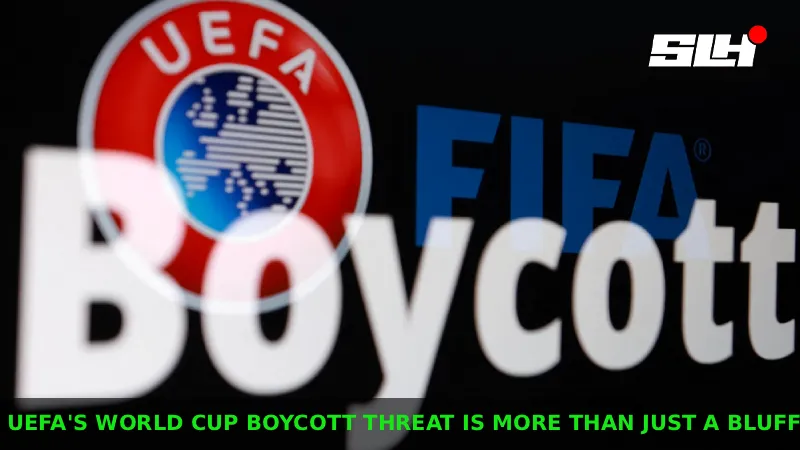


When UEFA’s 55 member associations voted unanimously to walk away from every FIFA competition, most headlines treated it as dramatic noise inside a fast-moving governance fight. Few asked the harder question: is this real leverage, or a confederation-sized version of a strongly worded letter? The numbers behind that vote, and the institutional weight now lined up against Gianni Infantino, suggest this is no ordinary bluff, and the coming months will test just how far a united confederation is willing to go.
On July 30, 2026, UEFA held an emergency online meeting of all 55 member associations after FIFA unveiled plans for the FIFA Forward Enterprise, a $20 billion subsidiary that would sell up to a 20% stake in World Cup commercial rights to private investors. The vote to boycott was unanimous, and UEFA’s statement left no room for interpretation: the World Cup cannot be treated as an investment product, and no part of it should ever be surrendered to private investors.
When Infantino abandoned the plan on August 2, UEFA did not stand down. It declared it had lost confidence in his leadership and said no option should be off the table.
The weight behind this threat becomes clear once you look at the sporting and commercial data. UEFA nations supplied six of the eight World Cup quarterfinalists and three of the four semifinalists, and Spain lifted the trophy. Six of the top ten men’s world rankings belong to UEFA associations, and the pattern repeats in the women’s game.
The four most valuable squads at the tournament, France, England, Spain, and Portugal, are all European, and the Premier League alone is the richest domestic competition on the planet, underpinning much of FIFA’s global broadcasting revenue. A World Cup without European nations isn’t an alternative tournament. It is a fundamentally smaller one, which is exactly why the threat cuts both ways but hurts FIFA more.
Here is where the major federations stand as of mid-August.
| Confederation / Federation | Public Stance | Stated Reason |
| UEFA (55 members) | Oppose / Boycott | Secrecy of FFE plan; no consultation |
| CONCACAF (41 members) | Oppose | Rejected FFE; called for governance reckoning |
| AFC | Oppose | Backed UEFA and CONCACAF stance |
| CONMEBOL | Neutral | Wants a full 211-member electoral vote |
| CAF | Neutral | Insists election, not pressure, must decide |
| England FA | Oppose | Withdrew support for re-election |
| Mexico Football Federation | Support | Broke with CONCACAF; backed Infantino |
| Qatar FA | Support | Welcomed FFE withdrawal |
The pattern is telling. Public backers of Infantino cluster around nations with near-term stakes in FIFA infrastructure, while opposition keeps growing across Europe and spreading into North America.
When the global players’ union steps into a FIFA governance fight, it signals a different order of seriousness. FIFPRO, representing more than 70 national player associations, called the FFE plan a profound abuse of presidential power in a formal statement on August 7. It described the scheme as conceived in secrecy and negotiated behind closed doors before the FIFA Council, member associations, or players even knew it existed.
In a direct letter to FIFA’s Secretary General, FIFPRO wrote that the presidency exists to protect institutions, not circumvent them, and that the World Cup is not the personal asset of any president. That kind of language from the sport’s largest labour body makes any future FIFA competition politically harder to stage, even without a formal boycott in place.
No body as powerful as UEFA has ever formally voted to boycott the World Cup before. Earlier boycotts, like South American nations sitting out the 1930 and 1934 tournaments, or the 15 African nations withdrawing from 1966 qualifying, came from smaller blocs with narrower leverage, and they worked because FIFA eventually gave ground. This standoff is structurally different.
It is a commercial shutdown threat backed by the sport’s richest nations and wealthiest clubs. CONCACAF’s 41 associations rejected the FFE outright, and the AFC aligned publicly with that opposition, meaning the combined weight of UEFA, CONCACAF, and AFC covers a majority of FIFA’s commercial base. Just 43 federations can call an emergency congress, and 106 votes there would remove Infantino, which is exactly why the FIFA World Cup boycott threat 2026 carries real teeth rather than empty theatre.
Is UEFA bluffing, or will this standoff actually reshape FIFA’s leadership? Share your read in the comments.
As football fans globally search for the most reliable platforms to witness history unfold—especially with Argentina currently attempting to join this exclusive list in the 2026 World Cup Final—Sports Live Hub (SLH) emerges as the ultimate destination for premium sports broadcasting.
Finding a secure, uninterrupted broadcast during major international tournaments can be incredibly frustrating due to complex regional restrictions and geo-blocks. The hub sports live stream feature available on SLH operates as a state-of-the-art intelligent aggregator. It seamlessly maps your location and automatically routes you to verified, official regional broadcast feeds. This ensures that fans can watch every crucial moment of the World Cup in stunning high-definition, completely free from the irritating buffering issues and dangerous malware threats associated with illegal, unverified streaming websites.
Modern football enthusiasts demand a highly analytical and interactive viewing experience. The sport hub live streaming interface on SLH serves as an elite second-screen companion for dedicated fans. As you watch the world’s best teams compete for international glory, the platform provides dynamic, real-time digital overlays. Viewers gain instant access to advanced tactical data, including live Expected Goals (xG), detailed passing networks, and comprehensive player heatmaps, empowering them to dissect the beautiful game just like a professional television pundit.
During monumental events like a World Cup Final, internet searches for how to watch Sports live for free inevitably skyrocket. SLH proactively solves this challenge by maintaining a meticulously curated, fully localized directory of legal, free-to-air (FTA) broadcasting networks. By specifically highlighting public broadcasters that legally air these premium matches without requiring expensive subscription paywalls, SLH guarantees that the unparalleled excitement of international foot
Will UEFA boycott the FIFA World Cup?
The boycott threat remains active, and UEFA has not backed down. Its unanimous vote on July 30 was not rescinded even after Infantino withdrew the FFE plan on August 2.
Why is UEFA threatening to boycott FIFA?
UEFA objects to Infantino’s attempt to sell up to 20% of World Cup commercial rights to private investors. The plan, called FIFA Forward Enterprise, was drawn up without consulting member associations, the FIFA Council, or players.
Which countries support Gianni Infantino?
Qatar, Morocco, Mexico, and Argentina have publicly backed Infantino since the crisis began. CONMEBOL and CAF have avoided direct opposition, insisting his future should be settled at the ballot box instead.
What is FIFA’s twenty billion dollar subsidiary plan?
FIFA Forward Enterprise was a proposed subsidiary that would have sold up to 20% of World Cup rights to private investors. The lead backer was a New York firm founded by Joshua Kushner, withdrawn on August 2.
What did FIFPRO say about FIFA’s proposal?
FIFPRO called the FFE plan a profound abuse of presidential power. The players’ union, representing over 70 national associations, said it was conceived in secrecy and demanded binding governance reforms.
 football
 football
 football