
Opinions, analysis and commentary
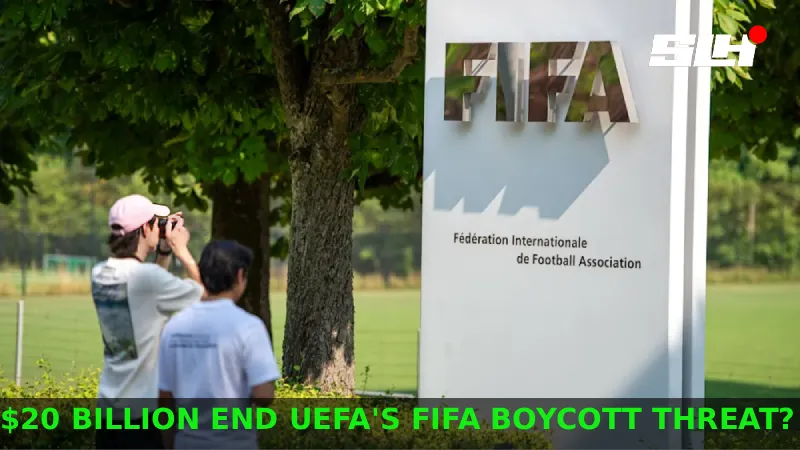


It didn’t. UEFA’s boycott has held since July 31, even after FIFA offered every member association forty million dollars to approve a private investment plan the confederation had already rejected. FIFA met one of UEFA’s two conditions by scrapping FFE on August 1, but the binding assurance UEFA demanded has still never arrived. That gap is why fifty-five European associations remain committed while smaller confederations elsewhere have started to crack, exposing a fault line nobody expected when this standoff began in late July.
UEFA’s 55 members voted unanimously on July 31 to boycott FIFA, the first unanimous confederation boycott in the governing body’s history. The vote carried two conditions: FIFA had to abandon FFE completely, and provide binding assurances that private World Cup ownership would never return.
FIFA met the first condition fast, scrapping FFE on August 1. The second, a binding written guarantee, has never been formally delivered. UEFA confirmed on August 7 it remains committed regardless. That confirmation came after FIFA had already tried to make peace on other fronts, and an apology alone was never going to satisfy a written demand.
Support for the boycott is not universal outside Europe, and the picture as of August 9 shows exactly where the cracks sit.
Confederation Stances on the FIFA Boycott, August 9 2026
| Confederation | Stance | Members |
| UEFA | Boycott maintained post-apology; Norway calling for resignation | 55 |
| CONCACAF | Against FFE; comprehensive reckoning demanded; Mexico FMF breaks ranks | 41 |
| AFC | Officially with UEFA and CONCACAF; Qatar, Indonesia individually back Infantino | 47 |
| CONMEBOL | Against boycott; backs Infantino; rejects extra-institutional ouster | 10 |
| CAF | Against boycott; unanimously backs Infantino at Rabat meetings | 54 |
UEFA stands alone with unanimous backing behind the boycott, even as Norway pushes for a leadership change at the top of the confederation. CONMEBOL and CAF have gone the other way entirely, backing Infantino outright.
CAF’s position is especially firm: all 54 of its members backed Infantino at meetings in Rabat on August 7, the same day Mexico chose to split from CONCACAF.
Early reporting undersold the number. FIFA was not offering $20 million per association; it was offering $40 million, split into a $20 million payment on approval and another $20 million over three years. The scheme behind it, FFE, was a subsidiary valued at roughly $20 billion, with a 20 percent stake sold off to raise $4.2 billion.
Thrive Eternal, the Kushner-linked investment group, was lined up as lead backer. All 211 member associations were offered conditional approval with a September 19 deadline, one that became irrelevant once FIFA scrapped FFE on August 1. The gap between the $20 million figure that first circulated and the actual $40 million offer is not a rounding error.
The $40 million offer was built to peel off support one association at a time, and for many smaller federations the money outweighed any objection to how FFE was structured. UEFA saw the mechanism for what it was: a back-room deal dressed up as governance reform.
FIFA priced the offer for federations operating on a fraction of UEFA’s budget, betting that unity gets harder to hold the smaller and poorer the confederation. It worked almost everywhere except the confederation the offer actually targeted.
CONCACAF also demanded a full reckoning over FFE, but its 41 members did not hold together the way UEFA’s did. Mexico broke ranks publicly on August 7 to back Infantino, and the AFC’s 47 members officially stood with UEFA and CONCACAF while Qatar, Indonesia, Kuwait, Sri Lanka and the Philippines quietly sided with Infantino instead.
The $40 million figure exceeded the entire annual operating budget of several smaller federations, which is exactly the pressure point FIFA was counting on when it built the offer. What actually broke was not UEFA’s resolve; it was AFC and CONCACAF unity, and that gap is the real story behind the UEFA FIFA boycott private investment plan saga. September 19 no longer matters; November 18, when FIFA presidential nominations open, is the deadline that will decide what happens next.
Does UEFA’s unity actually hold once FIFA’s presidential race heats up in November, or does the money eventually win out? Let us know what you think.
As football fans globally search for the most reliable platforms to witness history unfold—especially with Argentina currently attempting to join this exclusive list in the 2026 World Cup Final—Sports Live Hub (SLH) emerges as the ultimate destination for premium sports broadcasting.
Finding a secure, uninterrupted broadcast during major international tournaments can be incredibly frustrating due to complex regional restrictions and geo-blocks. The hub sports live stream feature available on SLH operates as a state-of-the-art intelligent aggregator. It seamlessly maps your location and automatically routes you to verified, official regional broadcast feeds. This ensures that fans can watch every crucial moment of the World Cup in stunning high-definition, completely free from the irritating buffering issues and dangerous malware threats associated with illegal, unverified streaming websites.
Modern football enthusiasts demand a highly analytical and interactive viewing experience. The sport hub live streaming interface on SLH serves as an elite second-screen companion for dedicated fans. As you watch the world’s best teams compete for international glory, the platform provides dynamic, real-time digital overlays. Viewers gain instant access to advanced tactical data, including live Expected Goals (xG), detailed passing networks, and comprehensive player heatmaps, empowering them to dissect the beautiful game just like a professional television pundit.
During monumental events like a World Cup Final, internet searches for how to watch Sports live for free inevitably skyrocket. SLH proactively solves this challenge by maintaining a meticulously curated, fully localized directory of legal, free-to-air (FTA) broadcasting networks. By specifically highlighting public broadcasters that legally air these premium matches without requiring expensive subscription paywalls, SLH guarantees that the unparalleled excitement of international football remains completely accessible, safe, and entirely legal for millions of passionate fans worldwide.
Why is UEFA boycotting FIFA competitions?
UEFA voted unanimously to boycott over FIFA’s FFE investment scheme. The confederation demanded FFE be scrapped entirely and binding guarantees against future private ownership of the World Cup, and only the first condition has been met.
How much was FIFA actually offering each federation?
Each of FIFA’s 211 member associations was offered $40 million. The payment was split into $20 million immediately and another $20 million spread over three years, tied to approving the now-scrapped FFE plan.
Are England and Spain still part of the FIFA boycott?
Yes, both remain inside UEFA’s boycott position. England’s FA withdrew its earlier letter of support for Infantino on August 3, and Spain, a co-host of the 2030 World Cup, has not broken ranks either.
Has FIFA done anything to respond to UEFA’s demands?
FIFA scrapped the FFE scheme on August 1. Gianni Infantino also issued a joint apology with the federation’s secretary-general on August 6, though UEFA says that still falls short of its second condition.
Which tournaments could be affected if the boycott continues?
The Under-20 Women’s World Cup in Poland is an early flashpoint. That tournament starts September 5 with six UEFA teams involved, and UEFA’s play-off slots for the 2027 Women’s World Cup remain unplayed into October.
 football
 football
 football