




Hand-picked stories you can't miss
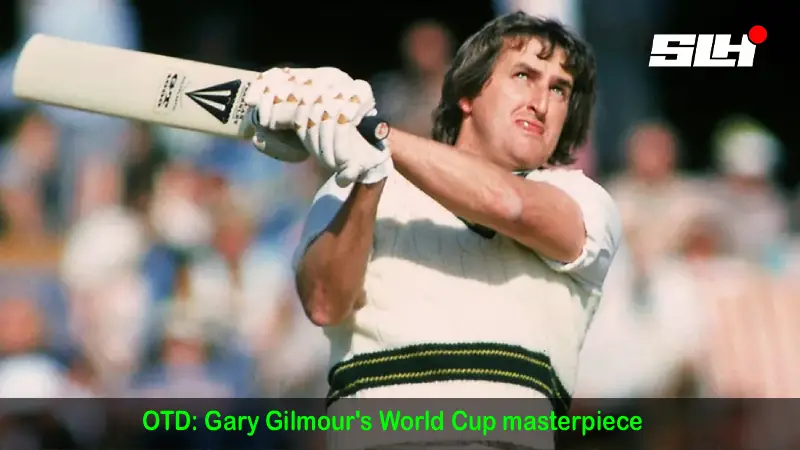


June 26 marks the birth anniversary of Gary Gilmour, one of Australian cricket’s most gifted yet least celebrated all-rounders. Born in 1951, the left-arm fast-medium bowler and aggressive left-handed batter produced one of the greatest individual performances in the history of the ODI World Cup. Although his international career lasted only 15 Tests and five One-Day Internationals, Gilmour ensured that his name would remain part of cricket’s history through a remarkable spell during the inaugural World Cup in England in 1975.
Australia had not selected Gilmour during the group stage of the tournament. Conditions at Headingley for the semi-final against England changed that calculation. Under overcast skies and on a surface offering generous assistance to seam bowlers, Australia handed him his chance. What followed remains one of the finest displays of swing bowling ever witnessed in limited-overs cricket.
Opening the attack alongside Dennis Lillee, Gilmour dismantled England’s batting with relentless accuracy and late movement. He claimed 6 for 14 from 12 overs, reducing the hosts to 36 for 6 before they eventually folded for 93. Five of his six wickets came through deliveries that curved sharply into right-handers, while his dismissal of Tony Greig with an away-swinger produced one of Rodney Marsh’s finest catches behind the stumps. At the time, those figures were the best in ODI history and they remain among the greatest bowling performances seen in a World Cup knockout match.
The contest, however, was far from over. Australia stumbled badly in pursuit of the modest target and slumped to 39 for 6. Gilmour walked in with the match hanging in the balance. Displaying the same composure that had defined his bowling, he struck an unbeaten 28 from 28 deliveries and shared a decisive partnership with Doug Walters. Australia recovered to secure victory by four wickets and advance to the final. Gilmour’s contribution with both bat and ball made him the undisputed player of the match.
Three days later at Lord’s, he produced another outstanding bowling effort in the final against West Indies. His figures of 5 for 48 helped restrict the defending total after Clive Lloyd’s famous century had lifted West Indies to 291. Although Australia fell short in the chase, Gilmour finished the tournament as its leading wicket-taker despite playing only the semi-final and final. His return of 11 wickets from just two matches remains one of the most extraordinary statistical achievements in World Cup history.
Injuries prevented Gilmour from building on that success. Persistent foot problems curtailed a career that promised much more, limiting his opportunities at the highest level despite his obvious ability with both bat and ball. Yet the brevity of his career has never diminished the impact of those unforgettable days in June 1975. More than five decades later, Gary Gilmour’s Headingley heroics continue to stand as a reminder that sporting greatness is sometimes measured not by longevity, but by the ability to seize a single opportunity and produce a performance that generations never forget.
 cricket
 cricket
4 hours ago
4 hours ago
4 hours ago