




Opinions, analysis and commentary
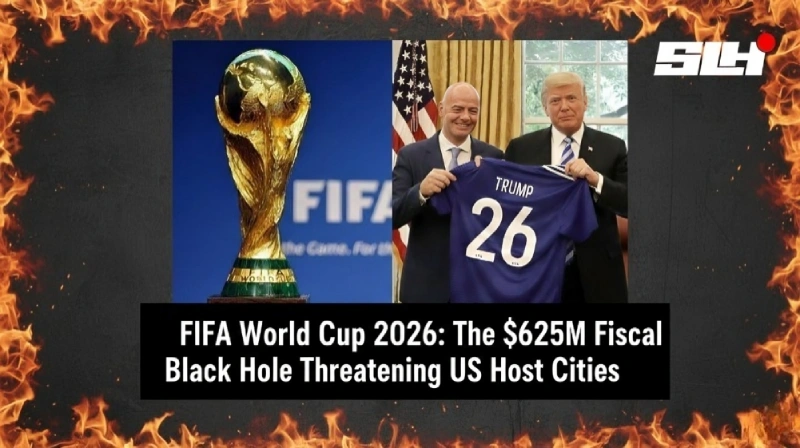


The countdown to North America’s largest sporting experiment is accelerating. Yet, behind the polished marketing reels, a massive financial fissure has begun to widen. Recent data points toward a staggering $625 million funding deficit across several primary US host cities. While FIFA continues to market a “transformative” global event, local organizers are left scrambling to bankroll the security, transit, and infrastructure mandates that the governing body demands but largely refuses to fund.
National security protocols for an event of this scale are frankly terrifying in their complexity. Major hubs like New York/New Jersey and Los Angeles are currently grappling with exploding costs related to police overtime, counter-terrorism units, and sophisticated cybersecurity shields. Unlike the Olympic Games, where federal grants follow a more established structure, the World Cup often leaves local taxpayers on the hook.
Cities are finding that “essential” safety measures are exceeding original budgets by tens of millions of dollars. It appears to indicate a systemic underestimation of what it actually takes to protect a multi-city tournament in the modern era.
Moving millions of fans through sprawling suburban stadium districts and dense urban centers remains a logistical nightmare. In places like Dallas and Atlanta, the existing transit infrastructure appears woefully insufficient. These cities require immediate, massive capital injections for shuttle fleets and rail expansions just to avoid total gridlock. This shortfall could easily transform a supporter’s “trip of a lifetime” into a grueling exercise in navigating traffic jams. The math simply doesn’t add up for cities relying on aging bus lines to service 80,000-seat arenas.
FIFA’s technical stipulations—particularly regarding grass pitch consistency and media facilities—are absolute. NFL stadiums, which are built for a different kind of violence, are currently undergoing expensive, often temporary, structural renovations. With that $625M deficit looming, local governments are starting to question whether these one-off upgrades offer any real long-term value. It’s a point of friction that highlights the disconnect between local public interest and FIFA’s high-stakes requirements.
Also Read More: Ramadan Kareem in Football 2026: Chelsea, Liverpool Messages & How Premier League Fixtures Adapt During Holy Month
If the budget crisis makes the trek to the stadium feel like a lost cause, the action can still come to you. Sports Live Hub (SLH) remains the definitive home for every second of World Cup drama.
Don’t miss a single goal. Experience the 2026 World Cup Live on SLH!
This $625 million hole is more than just a math error; it reveals a systemic tension in global sports. There is a glaring gap between FIFA’s grand ambitions and the fiscal realities facing local municipalities. The tournament will proceed, of course. However, the quality of the “ground-level” fan experience—the ease of the trains, the safety of the fan zones—hinges on how these cities fill the void. For most supporters, this likely translates to fewer free public festivities and a surge in local “tourist taxes” as cities try to balance their books.
Will the $625M deficit lead to match cancellations?
It seems highly unlikely that matches will be moved or canceled. Instead, expect cities to gut their budgets for “Fan Fests” and street entertainment to ensure the stadiums and security lines remain operational.
Is FIFA contributing to these local costs?
Generally, they aren’t. While FIFA pulls in billions from broadcasting and high-level sponsorships, they tend to expect host cities to absorb the vast majority of local operational and security overhead.
Which cities are feeling the most heat?
Reports suggest that the New York/New Jersey region (MetLife Stadium) and Los Angeles (SoFi Stadium) face the most difficult climbs. These areas have high baseline costs and incredibly complex security needs that make a $625M gap feel even more precarious.
How do I keep track of World Cup logistics?
Check Sports Live Hub (SLH) regularly. We provide updated financial breakdowns, squad news, and official links for the live broadcasts.
Will ticket prices go up because of this shortfall?
FIFA controls the face value of tickets, but the “hidden” costs for fans—such as hotel surcharges, local transit fees, and restaurant taxes—are almost certain to spike as local governments try to recoup their spending.
 football
 football
 cricket