
Opinions, analysis and commentary
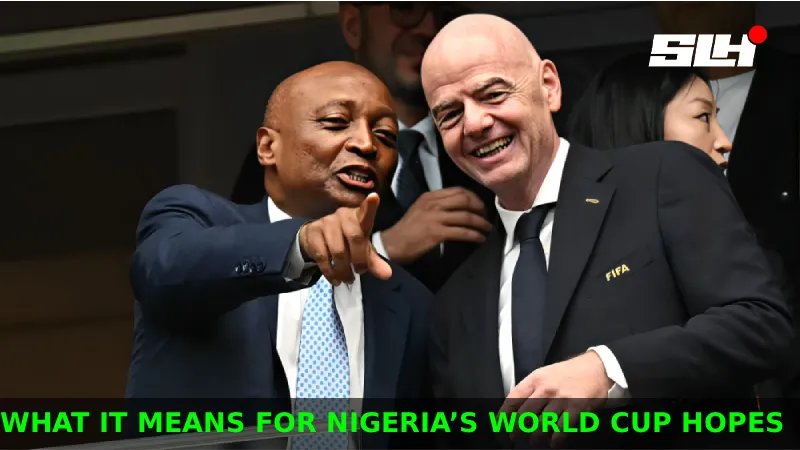


Nothing yet, and that uncertainty is precisely the point. FIFA and CAF have frozen every electoral step the NFF was about to take, launching a governance investigation instead of letting a new leadership election proceed on schedule. The federation’s entire Executive Committee resigned on August 27, days before the review began, after a season in which the Super Eagles missed the World Cup and the Super Falcons missed theirs too. Until the review concludes, nobody- not the players, not the fans- knows who actually runs Nigerian football right now.
Nigerian football is fighting two battles simultaneously. Internationally, FIFA and CAF have frozen the electoral process and launched a formal governance investigation. Domestically, the Federal Government’s National Sports Commission applied pressure that contributed to the mass resignation of NFF president Ibrahim Musa Gusau, general secretary Mohammed Sanusi, and the entire Executive Committee on August 27, 2026, just 31 days before a planned leadership election.
Behind both crises sits the same root cause: a federation that failed to qualify the Super Eagles for the World Cup and, weeks later, oversaw the Super Falcons’ first-ever failure to reach a Women’s World Cup since 1991. For players like Victor Osimhen, Ademola Lookman and Wilfred Ndidi, all in prime international years, the administrative chaos now matters more than either result on the pitch.
In a letter dated September 7, 2026, FIFA Chief Member Associations Officer Elkhan Mammadov ordered an immediate halt to all electoral activities. The letter stated FIFA and CAF were assessing the legal, governance, administrative, and electoral implications of the situation, and that no further steps should be taken until the review concludes.
The directive killed the Elective Congress scheduled for September 27 in Lafia, Nasarawa State. FIFA and CAF also named Deputy General Secretary Emmanuel Ikpeme as the sole point of contact, bypassing any newly self-appointed leadership, and confirmed a joint assessment mission to Abuja that will meet NFF officials, member associations, electoral bodies, and Federal Government representatives, including the National Sports Commission itself.
The trigger was the scale and speed of the leadership collapse. Gusau resigned after three years and eleven months in office alongside Sanusi and the full Executive Committee, an unprecedented mass exit. A fact-finding committee had submitted a report on August 21 raising serious governance and financial concerns.
The EFCC and ICPC were already investigating how a 12 billion naira Federal Government intervention fund, released in 2024 to clear unpaid wages and bonuses owed to national team players, had been used. Players had revolted before the World Cup playoff too, boycotting training in Rabat ahead of the semifinal against Gabon over delayed bonuses spanning more than two years, shortly before the eventual penalty shootout defeat to DR Congo in the final.
The National Sports Commission reportedly gave the NFF leadership 24 hours to step aside, a claim it did not officially confirm but also did not deny. The Federal Government’s frustration is financial as much as sporting, having released the intervention fund in 2024 and received public apologies after both World Cup failures.
The EFCC has confirmed its fund investigation will continue regardless of leadership changes, meaning whoever leads the new NFF regime inherits active anti-corruption scrutiny from day one. The National Sports Commission had also separately moved to cancel the September 27 congress before FIFA formalised the same instruction days later. The dual pressure, from Abuja and from Zurich at the same time, leaves the federation almost no room to manoeuvre on its own terms.
FIFA was explicit that its September 7 directive isn’t a final ruling, and no conclusions have been reached yet. The joint assessment mission still needs to land in Abuja, hear from multiple stakeholders, and report back before any new election can even be structured.
Meanwhile, the EFCC and ICPC investigations run on their own independent timeline, and Nigeria’s Golden Eaglets have also failed to qualify for the Under-17 World Cup, stretching the governance failure across every age group. With no elected leadership and active criminal investigations into federation finances, this NFF crisis, FIFA suspension, and Super Eagles sanctions question can’t be answered until investigators in two different countries finish their work.
Should FIFA go further and formally suspend Nigeria over government interference in the NFF, or would that only punish the players further? Tell us your view.
Following international ‘A’ team tours, bilateral series, and domestic red-ball fixtures require dependable broadcast access. Sports Live Hub (SLH) has established itself as the ultimate digital aggregator, delivering seamless, high-definition sports streaming directly to fans worldwide without technical friction.
Finding clean, uninterrupted video feeds for overseas developmental fixtures can often prove challenging. The hub sports live stream framework on SLH solves this by aggregating verified, ultra-high-definition broadcast links from official sports networks globally. Whether you are tracking Towhid Hridoy’s historic double-century march or following South African domestic pitches, SLH ensures a low-latency, buffer-free connection. The intuitive interface utilizes simple and easy text navigation, enabling users to find active match links instantly.
Modern cricket enthusiasts expect deep analytical tools alongside live video feeds. The sport hub live streaming interface on SLH operates as an advanced interactive match center. While streaming live fixtures, users can access real-time statistical overlays, including ball-by-ball commentary, wagon wheels, projected run-rates, and batting partnership graphs. This comprehensive digital environment empowers fans to analyze player milestones and team strategies with absolute clarity.
A primary concern for international cricket fans is discovering legitimate methods for how to watch Sports live for free without encountering cybersecurity risks. SLH actively addresses this by maintaining a strictly vetted directory of authorized Free-to-Air (FTA) regional channels and official ad-supported streaming platforms. By directing users exclusively to safe, legal portals, SLH guarantees that premium cricket coverage remains completely budget-friendly, legal, and protected from malicious software.
Why did FIFA suspend Nigeria’s football elections?
FIFA and CAF suspended the September 27 election to conduct a joint governance assessment. The review followed the mass resignation of NFF president Ibrahim Gusau and the entire Executive Committee on August 27, 2026.
What happened to the NFF president?
Ibrahim Musa Gusau resigned as NFF president on August 27, 2026, after nearly four years in office. He stepped down alongside general secretary Mohammed Sanusi and the full Executive Committee amid ongoing EFCC and ICPC investigations.
Why did Nigeria fail to qualify for the World Cup 2026?
The Super Eagles lost the Africa Playoff Final to DR Congo on penalties in November 2025. It was Nigeria’s second straight World Cup absence, preceded by a players’ training boycott over unpaid bonuses.
Can FIFA suspend Nigeria from international football?
Yes, FIFA can suspend a member association over proven government interference in its football governance. The current assessment mission is examining exactly that question, though no suspension has been imposed as of September 14, 2026.
What is the Nigerian government’s role in the NFF crisis?
The National Sports Commission reportedly pressured NFF leadership to resign and moved to cancel the election. The EFCC and ICPC are separately investigating the federation’s use of a 12 billion naira intervention fund.
 cricket
 football