


Opinions, analysis and commentary
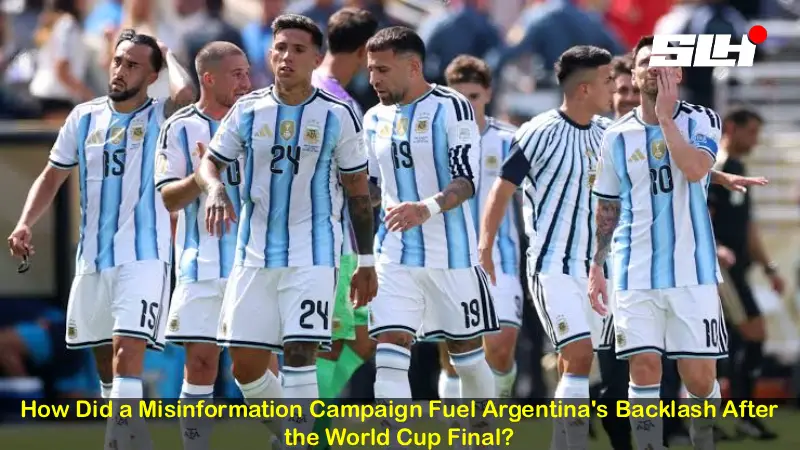


Argentina’s stunning fall from adored 2022 champions to one of football’s most resented teams by mid-2026 wasn’t organic. It was manufactured, piece by piece. Fabricated images, doctored quotes, and baseless conspiracy theories about a rigged final flooded social media after Argentina’s 1-0 extra-time loss to Spain on July 19, spreading online faster than any fact-check operation could realistically catch them. The federation has now traced that pattern methodically enough to threaten defamation lawsuits, treating the backlash not as organic fan anger but as evidence of a deliberate, coordinated operation.
Four years after ending a 36-year wait in Qatar, that same squad had become, in the words of multiple outlets, one of the most hated teams in recent memory. The shift wasn’t really about results. It was engineered and weaponised across social media through a coordinated wave of false content the federation is now determined to challenge in court.
The 1-0 extra-time loss to Spain, played at the New York New Jersey Stadium on July 19, was painful enough on its own. What followed online made the factual record far worse.
Reporting from Argentine outlet La Nación, later confirmed by journalist Fabrizio Romano, traced a coordinated disinformation effort that ran through the entire tournament and intensified sharply after the final whistle blew. Accounts across X, Instagram and TikTok spread false allegations, manipulated images and unverified claims against individual players and the federation itself, often within minutes of the match ending.
Legal staff began collecting screenshots, videos and posts as evidence almost immediately, with defamation suits explicitly on the table from the start. Crucially, the plan targets both major media outlets and small anonymous accounts equally, regardless of follower count or reach. The pushed narrative claimed FIFA had quietly rigged the tournament to hand a farewell title to its biggest remaining star.
Fact-checkers at Euronews and Fact Crescendo documented the fabrications carefully, one by one. An AI-generated image showed FIFA president Gianni Infantino appearing to inject performance-enhancing drugs into a player’s arm, and that fake circulated widely on X within hours. A separate doctored screenshot falsely claimed the match referee held financial ties to the winning team. A TikTok clip, liked over two million times, baselessly accused a player of offering payment for extra penalty kicks, while memes casting him as FIFA’s chosen favourite spread rapidly across every major platform.
During the final itself, Nicolas Tagliafico was falsely accused of faking an injury simply to distract officials from a red card shown to a teammate. A widely shared video appeared to show a fan being assaulted at a Madrid metro station, though Spanish police said no formal complaint had ever been filed and the footage’s timing was never confirmed. Even an authentic 2007 charity photo was falsely relabelled online as AI-generated.
The favouritism claims were addressed directly after a 2-1 comeback win over England in the semifinal, a result that had itself fed the conspiracy theories in the first place. The response was measured and confident: four years of consistent results proved the achievements were earned, not gifted, and the team had established itself among the world’s top two sides regardless of what anyone online chose to believe about it.
After the final loss, the reaction stood in sharp contrast to the chaos unfolding around it. While some teammates clashed with Spanish players in the immediate aftermath, this approach was noticeably different, walking calmly over to personally congratulate each opponent, a small gesture international media covering the closing ceremony noted and highlighted widely.
No nation previously targeted by similar favouritism claims has pursued formal defamation proceedings the way the federation now plans to. Legal staff is building cases around three separate categories: false accusations against individual players, manipulated or AI-generated images, and unverified claims spread without any supporting evidence. The scope is deliberately wide, treating major media outlets and small anonymous accounts with equal scrutiny throughout.
Reports of supporters facing harassment in Brazil, Spain, and Germany surfaced after the final, and that context matters. The Messi Argentina misinformation campaign World Cup 2026 story isn’t really about hurt feelings after a loss. It’s about a documented, evidence-gathered operation that crossed the line into defamation.
Should platforms bear more responsibility for letting fabricated content like this spread unchecked? Share your take.
Why did Argentina lose the World Cup final?
They fell 1-0 to Spain in extra time on July 19, 2026. Enzo Fernández was sent off in stoppage time, leaving the side a man down before Spain scored the winner.
What did Messi say about the online favouritism claims?
He said plainly that nothing had been handed to the team. Speaking after the semifinal win over England, he pointed to four years of results as proof the run was earned, not gifted.
Is the Argentine federation pursuing legal action over the backlash?
Yes, the AFA is preparing defamation lawsuits against accounts and outlets that spread false claims. Legal staff has been gathering screenshots, videos, and posts as evidence since the days after the final.
What was the FIFA rigging claim about?
An unsupported theory claimed referees and brackets were manipulated to hand the trophy to Argentina. Egypt’s federation had filed a separate complaint after a Round of 16 exit its coach called unjust, though no investigation confirmed wrongdoing.
How did fans in Buenos Aires react to the final loss?
Tens of thousands gathered at the Obelisk to mourn the defeat together. Local newspapers described it as the end of an era, questioning both the coach’s future and the captain’s international career.
 football
 football
 football