


Opinions, analysis and commentary
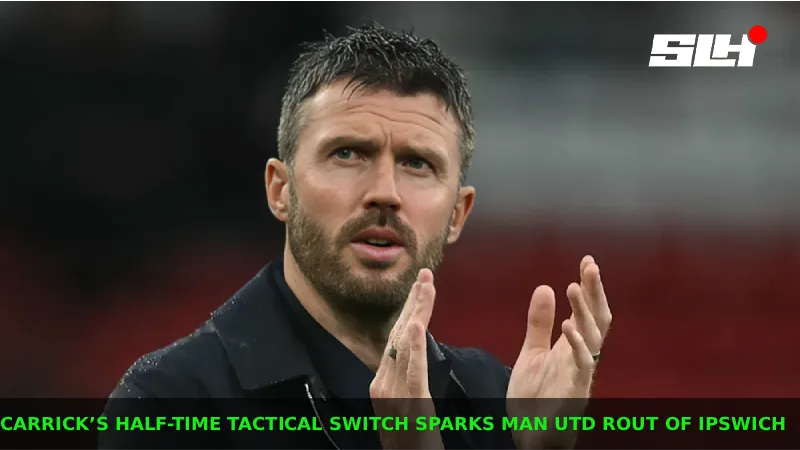


Two changes, not a team talk. Michael Carrick has pushed back publicly on the idea that spirit alone explains United’s second-half turnaround against Ipswich Town, and the data backs him up: he pushed Bruno Fernandes higher up the pitch and told Marcus Rashford to stop crossing and start driving straight at defenders instead. The result was four unanswered second-half goals in a 5-2 win that flipped a nervy Old Trafford afternoon into a rout. Here is the tactical breakdown behind it.
Seven days after a 2-0 opening-day defeat at Hull City, where two set-piece goals left Carrick bitterly disappointed, United arrived at Old Trafford under real pressure to respond. He had already dismissed suggestions that the problem was a lack of leadership or passion in the squad, insisting instead that the fix needed to be structural rather than emotional.
Old Trafford fell silent in the 29th minute when Leif Davis converted after Abdul Fatawu nutmegged Luke Shaw and whipped a cross to the back post. United’s exposed left flank had been a recurring concern, and Ipswich, arriving on five straight wins across all competitions, punished it immediately. By half-time United held 60 percent possession and an 11-6 shot advantage, yet still conceded from one of Ipswich’s cleanest entries into the box, with Rashford drifting wide and Fernandes operating too deep to threaten the penalty area.
Fernandes did rescue an equaliser in the 40th minute, capitalising on a Marcelino Nunez slip after Matheus Cunha’s counter, but the half ended 1-1. Plenty of the ball, not enough teeth.
| Half | Shots | Possession | xG (Full Match) | Goals |
| First Half | 11 | approx 60% | 0.74 | 1 |
| Second Half | 17 | 61% | 3.81 | 4 |
United’s full-match expected goals read 4.55 against Ipswich’s 2.01, a gap wide enough to show the scoreline was no fluke once the second-half shift kicked in and the chances kept arriving.
In the tunnel at the break, Carrick reduced the problem to two specifics. Fernandes had to push higher; against Hull he had been used deeper as a link player, and Carrick now wanted him operating inside the box rather than servicing it from distance. Rashford’s crossing, meanwhile, had produced zero clear chances in the first half, so the instruction was to take defenders on and play along the ground instead.
Carrick later described simply pointing out details and spaces the team could attack, adding that United went up a gear once the players came out with extra drive after the break. Harry Maguire backed that account, saying the message from half-time clearly landed in the dressing room and that United could have scored even more than they did.
The effect was almost instant. Within 12 second-half minutes, United had turned 1-1 into 3-1. Jacob Greaves deflected a Maguire effort into his own net in the 56th minute, chaos caused directly by Rashford’s low, driven delivery rather than an aimless first-half cross. A penalty followed for a foul on Cunha, and Fernandes sent the goalkeeper the wrong way in the 61st minute for his brace.
His third goal, in the 68th minute, illustrated the positional shift most clearly. Fernandes ghosted in behind the Ipswich backline unmarked, positioned higher than at any point in the first half, collected a loose ball off Mbeumo, and slotted home for his hat-trick. He then set up Mbeumo’s 82nd-minute chip with a lobbed through-ball, finishing the afternoon with three goals and an assist.
United move to one win and one loss for the season, level on points with Ipswich heading into Matchweek 3. The next assignment comes on September 6 at Goodison Park against Everton, a compact, low-block side that will invite United to break them down rather than exploit space in behind.
Carrick’s second-half blueprint against Ipswich is the obvious answer: Fernandes free to operate inside the box, Rashford driving at defenders along the ground rather than crossing blind. If Everton sit deep as expected, this Man United tactical turnaround Premier League 2026 story has already handed Carrick a proven template to break a stubborn defence open again.
Was that Ipswich fightback proof of a real tactical upgrade, or just one good half against a tiring side? Drop your verdict in the comments.
While the politics of the boardroom dominate the headlines, the heart of football remains firmly on the pitch. For millions of dedicated supporters who prioritize the beautiful game over administrative disputes, having a dependable, high-quality digital viewing platform is an absolute necessity. Sports Live Hub (SLH) is expertly engineered to bring the world’s most exciting premium football action directly to your fingertips, bypassing the off-field drama.
Navigating through complex regional geo-restrictions and scattered broadcast rights can often ruin the weekend matchday experience. The hub sports live stream ecosystem on SLH actively eliminates these frustrations by aggregating officially verified, high-definition broadcast feeds from around the globe. Whether you are tracking crucial World Cup qualifiers or domestic league showdowns, SLH delivers an ultra-low latency viewing experience. The streamlined platform guarantees that you catch every blistering strike, dramatic penalty, and historic victory the exact second it happens, completely uninterrupted.
For the deeply analytical football fan who demands more than just a standard video feed, the Sport Hub live streaming interface operates as a sophisticated, interactive match center. SLH seamlessly integrates real-time performance analytics, live player tracking heatmaps, and dynamic possession graphics right alongside the main broadcast. This immersive dual-screen integration empowers viewers to analyze tactical formations, passing accuracy, and defensive momentum shifts with the exact same professional precision utilized by elite football pundits and data analysts worldwide.
A massive priority for international digital audiences is discovering how to watch Sports live for free securely and reliably. SLH proactively addresses this massive global demand by maintaining a strictly curated, constantly updated directory of legal Free-to-Air (FTA) networks, official regional channels, and legitimate ad-supported platforms. By exclusively routing users to authorized digital portals, SLH guarantees that premium football content remains highly accessible, budget-friendly, and completely secure from the severe digital risks associated with unauthorized, illegal streaming websites.
How did Manchester United turn their form around under Carrick?
He made two specific tactical changes at half-time against Ipswich. Pushing Fernandes higher and telling Rashford to attack along the ground rather than cross produced four second-half goals in a 5-2 win.
What formation did Manchester United use against Ipswich?
United lined up in a 4-2-3-1 shape. Lammens started in goal behind Dalot, Maguire, Martinez and Shaw, with Tielemans and Mainoo screening a front four of Rashford, Fernandes, Cunha and Mbeumo.
Why was Manchester United struggling before the Ipswich win?
Their Matchweek 1 defeat at Hull City exposed defensive disorganisation from set pieces. That 2-0 loss also revealed Fernandes playing too deep and Rashford relying on crosses that were not creating chances.
Is Michael Carrick proving to be a good manager so far?
Early signs are encouraging based on how he handled the Hull setback. He identified a structural problem rather than blaming effort and produced a clear tactical fix within seven days against Ipswich.
What was the final score when Manchester United played Ipswich?
Manchester United won 5-2 at Old Trafford on August 30. Fernandes scored a hat-trick on either side of a Jacob Greaves own goal, with Mbeumo also scoring before Chuba Akpom’s late reply.
 football
 football
 cricket