


Opinions, analysis and commentary
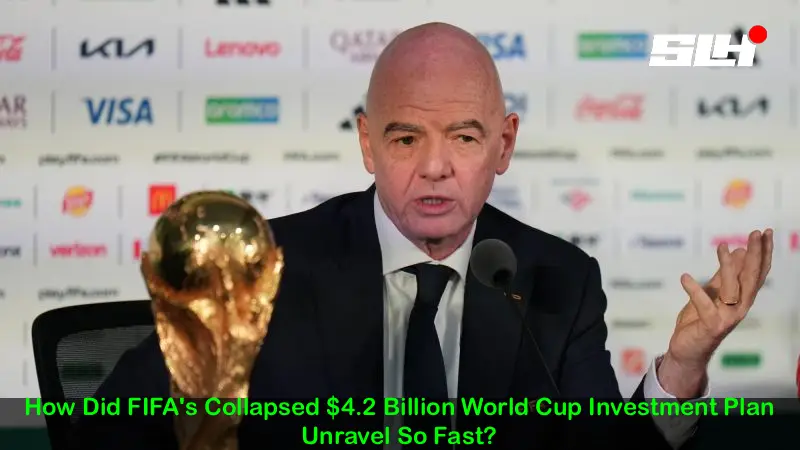


FIFA’s $4.2 billion World Cup enterprise plan collapsed in three days, and the process explains why. FIFA Forward Enterprise, a $20 billion subsidiary with World Cup commercial rights, launched July 29 with a 20% stake on offer and $40 million payments for all 211 member associations. Confederations learned about it from the media, not FIFA itself. UEFA voted unanimously to boycott within 48 hours, and FIFA scrapped the plan by August 1. What follows traces how a proposal pitched as commercial growth became a governance crisis FIFA hasn’t resolved.
FIFA Forward Enterprise carried a $20 billion valuation and held commercial rights to the World Cup. FIFA wanted to sell a 20% minority stake for $4.2 billion, with Thrive Eternal, the Kushner-linked group, as lead investor and JPMorgan advising. The pitch was framed as commercial expansion, not a rescue plan.
Each of the 211 member associations was offered $40 million tied to approval, split into $20 million immediately and $20 million over three years. The vote was set for September 19, and FIFA held more than $5 billion in reserves.
What angered confederations most wasn’t the money on offer; it was how the plan arrived. No confederation was consulted before the July 29 announcement, and several learned about it from media coverage rather than FIFA. CONCACAF described the process as advancing outside every established governance framework, without transparency, consultation, or due process.
FIFA’s own chief operating officer called it the project of one person. UEFA labeled the negotiations shabby and opaque. Germany’s federation characterized the conditional $40 million payment structure as coercive.
The collapse unfolded fast. Only two days separated the announcement from FIFA’s decision to scrap the entire structure, and confederations moved even faster than that. The timeline below shows exactly how quickly the plan fell apart.
| Date | Event | Key Reaction |
| July 29 | FFE announced: $20B subsidiary, 20% stake for $4.2B; Thrive Eternal lead investor; $40M per member; September 19 deadline | Confederations learned from media coverage, with no prior FIFA briefing |
| July 31 | UEFA votes unanimously to boycott FIFA competitions | Boycott conditions: FFE abandoned entirely, plus binding assurances required |
| August 1 | FIFA scraps FFE, calling it off the table | Grafstrom tells staff the situation was sad and reproachable, and the project permanently abandoned |
| August 3 | Wales and England formally withdraw their nomination letters for Infantino | Canadian Prime Minister Carney says he no longer has confidence in Infantino |
| August 6 | Infantino and Grafstrom send a joint apology letter to all 211 member associations | UEFA says the apology fails to meet its binding assurance condition; boycott stays in place |
| August 10 | UEFA, AFC, and CONCACAF issue a joint breach of trust letter | FIFA has not issued a formal response |
Every event in that timeline traces back to one cause: a proposal built and announced without confederation input. FIFA’s leadership treated the deal as settled before outsiders saw the terms. That assumption became the plan’s fatal flaw.
Infantino and Grafstrom sent a joint letter to all 211 member associations on August 6, acknowledging mistakes were made in the process. The letter committed FIFA to preventing a repeat, though it stopped short of binding language. UEFA confirmed on August 7 that the apology did not satisfy its binding assurance condition.
That distinction, a verbal commitment versus a legally binding assurance, kept the boycott alive. Three confederations, UEFA, AFC, and CONCACAF, escalated on August 10 with a joint letter accusing FIFA of a breach of trust. FIFA has not issued a formal response.
FIFA’s finances aren’t actually at risk. The organization still holds more than $5 billion in reserves, creating no cash shortfall. What disappears is the commercial upside FFE represented, since 2030 planning now leans on existing broadcast and sponsorship deals.
The higher cost is trust. Three confederations have accused FIFA of a fundamental breach, with football’s presidential election just seven months away in March 2027, and no challenger has yet filed against Infantino. Whatever happens next, the FIFA World Cup 2026 investment plan collapse has already reshaped how member associations view FIFA’s leadership heading into that vote.
FIFA framed this as commercial expansion, but three confederations are calling it a breach of trust seven months before an election with no declared challenger. Does Infantino survive the fallout? Share your prediction in the comments.
What was FIFA Forward Enterprise?
FIFA Forward Enterprise was a proposed $20 billion subsidiary built to hold and sell World Cup commercial rights. FIFA planned to sell a 20% stake for $4.2 billion before scrapping the entire project on August 1, 2026.
Why did confederations reject FIFA’s investment deal?
Confederations rejected the deal because FIFA announced it without any prior consultation. UEFA voted unanimously to boycott all FIFA competitions just two days after the July 29 announcement.
How much money did FIFA want to raise?
FIFA wanted to raise $4.2 billion by selling a 20 percent stake in its commercial rights subsidiary. Each of the 211 member associations was also offered $40 million tied to approving the plan.
Did Infantino apologize for the collapsed deal?
Yes, Infantino issued a joint apology letter with Grafstrom on August 6. UEFA said the apology was verbal and did not meet its binding assurance requirement, so the boycott continued.
Is FIFA facing a financial crisis after the collapse?
No, FIFA is not facing any financial crisis from the collapse. The federation still holds more than $5 billion in reserves, even as three confederations accuse it of breaching trust.
 football
 football
 football