
Opinions, analysis and commentary
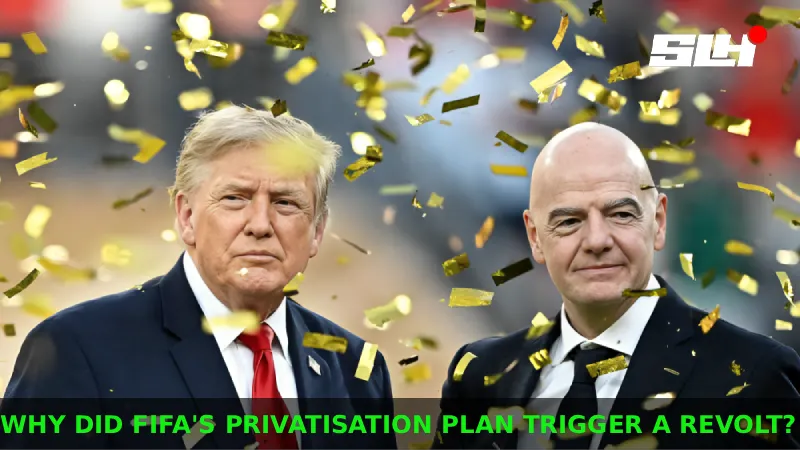


A twenty percent stake sale did it. FIFA’s plan to spin off a $20 billion commercial subsidiary and sell a slice to outside investors collapsed on August 1 after three confederations pushed back, and the fallout has only grown since. Wales became the first national association to formally withdraw its backing for Infantino’s re-election two days later, with England following within hours. What started as a funding proposal has turned into the sharpest governance crisis of his decade in charge, and it isn’t close to finished.
The Football Association of Wales confirmed on August 3 that it was withdrawing a previously submitted letter of support for Infantino’s re-election bid, becoming the first national association to do so officially. The Football Association in England followed within hours, writing its own withdrawal directly to FIFA the same day.
Both federations sit inside UEFA, which had already voted as a bloc to boycott FIFA competitions days earlier. The individual withdrawals carry symbolic weight precisely because they came from two of European football’s more prominent federations. Neither withdrawal changes a single vote by itself, since both federations carry only one FIFA vote each, but the timing sent an unmistakable signal to the rest of European football.
UEFA’s 55 members voted unanimously to boycott FIFA competitions on July 31, and the confederation has since written to Infantino confirming it is actively weighing legal action over how the stake sale was handled.
That letter instructs Infantino and FIFA to identify, locate and preserve all documents and electronically stored information connected to the plan. UEFA has stated plainly that it has lost confidence in his leadership, and the FA confirmed its full backing for that position.
| Association / Body | Confederation | Public Stance on Infantino (Post-FFE Collapse) |
| FAW (Wales) | UEFA | Withdrawn, first nation to officially do so, August 3, 2026 |
| FA (England) | UEFA | Withdrawn, written to FIFA on August 3 |
| UEFA (all 55 members) | UEFA | Lost confidence; considering legal action over FFE |
| German FA (DFB) | UEFA | Declined nomination letter, citing unilateral action without transparency |
| CAF (54 nations) | CAF | Unanimously agreed to support re-election prior to FFE collapse |
| Qatar FA, Morocco FA | AFC / CAF | Still backing Infantino as of August 3 |
The proposal itself, known internally as FIFA Forward Enterprise, would have created a $20 billion subsidiary from which outside investors could buy a 20 percent stake, raising as much as $4.2 billion. The lead investor group behind the deal was Thrive Eternal, tied to Joshua Kushner’s Thrive Capital.
Each national federation stood to receive up to $40 million, conditional on approval by September 19, and organisers claimed the structure would deliver $10 billion in football development funding over four years. None of that survived contact with confederation opposition, and the whole plan was scrapped on August 1.
The FAW’s statement stands as the sharpest national federation critique yet, pointing to failures across governance, process, leadership, values, stakeholder management, communications and judgement as reasons it no longer had confidence in Infantino remaining at the helm. The federation had written a letter of support before the stake sale was even announced.
UK Prime Minister Andy Burnham weighed in too, describing Infantino as the wrong man to keep leading FIFA. Germany had already declined to sign a nomination letter during the World Cup, while Norway and the Netherlands have since published their own critical statements, with more European federations expected to follow. That expanding list matters more than any single letter, since it signals defections spreading well past Wales and England inside Europe’s largest and most powerful confederation.
Reporting has indicated Infantino still retains backing from federations across Africa, the Middle East, Qatar in particular, and Morocco, and that he has been actively working those relationships in recent weeks.
The November 18 nomination deadline is the date that matters most now, ten years into an Infantino presidency he confirmed extending at the Vancouver Congress on April 30. Whether a serious challenger actually files by then, and whether Africa and Asia hold their ground, will determine how far this FIFA Infantino World Cup privatisation plan fallout actually travels before March.
Has Infantino’s stake sale plan already cost him a second term, or will African and Asian support carry him through anyway? Share your take in the comments.
As football fans globally search for the most reliable platforms to witness history unfold—especially with Argentina currently attempting to join this exclusive list in the 2026 World Cup Final—Sports Live Hub (SLH) emerges as the ultimate destination for premium sports broadcasting.
Finding a secure, uninterrupted broadcast during major international tournaments can be incredibly frustrating due to complex regional restrictions and geo-blocks. The hub sports live stream feature available on SLH operates as a state-of-the-art intelligent aggregator. It seamlessly maps your location and automatically routes you to verified, official regional broadcast feeds. This ensures that fans can watch every crucial moment of the World Cup in stunning high-definition, completely free from the irritating buffering issues and dangerous malware threats associated with illegal, unverified streaming websites.
Modern football enthusiasts demand a highly analytical and interactive viewing experience. The sport hub live streaming interface on SLH serves as an elite second-screen companion for dedicated fans. As you watch the world’s best teams compete for international glory, the platform provides dynamic, real-time digital overlays. Viewers gain instant access to advanced tactical data, including live Expected Goals (xG), detailed passing networks, and comprehensive player heatmaps, empowering them to dissect the beautiful game just like a professional television pundit.
During monumental events like a World Cup Final, internet searches for how to watch Sports live for free inevitably skyrocket. SLH proactively solves this challenge by maintaining a meticulously curated, fully localized directory of legal, free-to-air (FTA) broadcasting networks. By specifically highlighting public broadcasters that legally air these premium matches without requiring expensive subscription paywalls, SLH guarantees that the unparalleled excitement of international football remains completely accessible, safe, and entirely legal for millions of passionate fans worldwide.
Why did Wales withdraw its support for Infantino?
The FAW cited serious failures in governance, leadership and judgement tied to the scrapped stake sale plan. Wales had previously written a letter backing his re-election before the plan was even announced.
What was FIFA’s World Cup stake sale plan?
It was a proposal to sell a 20 percent stake in a new $20 billion commercial subsidiary to outside investors. The plan aimed to raise up to $4.2 billion before being scrapped on August 1.
Who could challenge Infantino for the FIFA presidency?
CONCACAF president Victor Montagliani is reportedly considering a run of his own. No official challenger has filed yet, with nominations due by November 18, 2026, the date that will finally clarify the field.
Which federations have criticised the stake sale plan?
Wales, England, Germany, Norway and the Netherlands have all issued critical statements. UEFA’s full 55-member bloc voted to boycott FIFA competitions over the plan on July 31.
When is the next FIFA presidential election?
The election is set for March 18, 2027, at the 77th FIFA Congress. That Congress will be held in Rabat, Morocco, with nominations closing on November 18, 2026.
 football
 football
 cricket