

Opinions, analysis and commentary
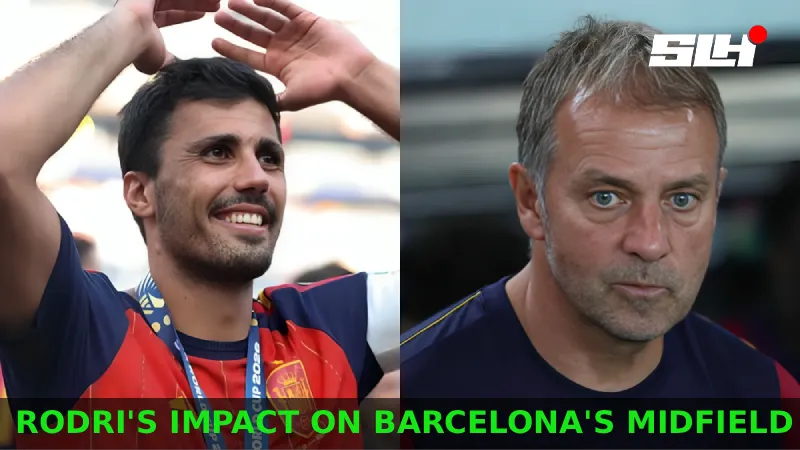


Barcelona have signed Rodri from Manchester City for an initial sixty million euros, a fee that could climb past seventy six million with add-ons, on a four year deal that saw him turn down Real Madrid. It is a statement signing, but also a tactical puzzle. Hansi Flick now has to fit the world’s best holding midfielder into a setup that was already functioning well without him, without wrecking the pressing structure that won the league title, and without souring a dressing room already stacked with midfield talent.
The reigning La Liga champions built their midfield around Pedri as the creative fulcrum, who logged 2,107 minutes last season with 2 goals and 9 assists. Fermin Lopez had his breakout campaign, playing 1,797 minutes across 30 league games with 6 goals and 9 assists, often filling in as a false pivot when Pedri and Frenkie de Jong were sidelined.
| Player | Position | Minutes Played (2025-26 La Liga) | Key Stat |
| Pedri | No. 8 / DM | 2,107 | 2 goals, 9 assists |
| Fermin Lopez | No. 8 / No. 10 | 1,797 | 6 goals, 9 assists |
| Marc Casado | Defensive Midfielder | 981 | 90.99% pass completion, 1 assist |
That left the club without a settled long-term answer at the base of midfield since Sergio Busquets departed, which is precisely the gap this new signing is meant to fill, and precisely why the fee raised so few eyebrows inside the boardroom.
He turns 31 in June and has agreed a deal that runs well past the point most clubs hand a defensive midfielder a long-term contract, a sign of how central he is meant to be. At his unveiling, he described the move as an important new chapter, while admitting it was hard to leave a City side that had given him everything.
With de Jong expected to miss the opening months of the new season through injury, he is likely to start immediately as the single pivot, freeing Pedri to push forward into the No. 8 role he has increasingly favored anyway.
Flick’s setup runs from a 4-2-3-1 built on relentless counter-pressing, a high defensive line pushed close to the halfway line, and rapid transitions rather than the patient circulation associated with earlier sides at the club. In the low build-up phase, Flick favors a back four supported by a single holding midfielder and two attack-minded No. 8s.
That is a very different profile from the deep-lying playmaker role the new arrival played under Pep Guardiola at Manchester City, where he operated as a genuine single pivot dropping between the center-backs and dictating tempo from deep. Turning a possession-controller into a counter-press trigger is the central challenge facing Flick this season, and it will likely take several months of live matches before the fit looks fully natural.
Marc Casado is the clearest casualty. He was already overtaken by Pedri, de Jong, and Bernal in the pivot role last season, and this signing pushes him further down the depth chart, with reports suggesting the club could be open to selling him.
Fermin Lopez’s situation is more nuanced. His breakout numbers came partly from covering deeper midfield roles during injuries, minutes that dry up once the new signing is fit and starting, though he remains competitive for the No. 10 spot alongside Dani Olmo. Pedri, by contrast, may benefit most, freed from defensive duties to push into the advanced role Spain’s own coaching staff say suits him best. Gavi’s recovery from injury only adds another body competing for the same limited pool of minutes.
This four-year contract signals he is meant to be the long-term successor to Busquets at the base of midfield, not a short-term fix. His injury history, including 27 missed games last season and an earlier torn ACL, means Marc Bernal is likely to retain a real pathway to minutes as cover.
With Gavi also pushing for a starting role, Flick heads into the new season with arguably the deepest central midfield in Europe. Getting the Rodri Barcelona midfield rebuild La Liga 2026 project right will decide whether that depth becomes a strength or a dressing room problem waiting to surface.
Who do you think loses the most midfield minutes once Rodri is fully settled in? Share your prediction below.
As football fans globally search for the most reliable platforms to witness history unfold—especially with Argentina currently attempting to join this exclusive list in the 2026 World Cup Final—Sports Live Hub (SLH) emerges as the ultimate destination for premium sports broadcasting.
Finding a secure, uninterrupted broadcast during major international tournaments can be incredibly frustrating due to complex regional restrictions and geo-blocks. The hub sports live stream feature available on SLH operates as a state-of-the-art intelligent aggregator. It seamlessly maps your location and automatically routes you to verified, official regional broadcast feeds. This ensures that fans can watch every crucial moment of the World Cup in stunning high-definition, completely free from the irritating buffering issues and dangerous malware threats associated with illegal, unverified streaming websites.
Modern football enthusiasts demand a highly analytical and interactive viewing experience. The sport hub live streaming interface on SLH serves as an elite second-screen companion for dedicated fans. As you watch the world’s best teams compete for international glory, the platform provides dynamic, real-time digital overlays. Viewers gain instant access to advanced tactical data, including live Expected Goals (xG), detailed passing networks, and comprehensive player heatmaps, empowering them to dissect the beautiful game just like a professional television pundit.
During monumental events like a World Cup Final, internet searches for how to watch Sports live for free inevitably skyrocket. SLH proactively solves this challenge by maintaining a meticulously curated, fully localized directory of legal, free-to-air (FTA) broadcasting networks. By specifically highlighting public broadcasters that legally air these premium matches without requiring expensive subscription paywalls, SLH guarantees that the unparalleled excitement of international foot
Why did Rodri leave Manchester City for Barcelona?
He chose Barcelona after turning down an approach from Real Madrid, signing a four-year deal at Camp Nou. He called leaving City a tough decision after everything the club had given him.
How much did Barcelona pay for Rodri?
Barcelona agreed an initial fee of around sixty million euros, with add-ons that could push the total past seventy-six million. The package makes him one of the most expensive defensive midfielders in the sport.
What position will Rodri play at Barcelona?
He is expected to operate as Flick’s single holding midfielder in a 4-2-3-1, similar to his old role under Guardiola. Flick’s system demands far more counter-pressing than Guardiola’s patient possession approach ever did.
Will Pedri and Rodri play together?
Yes, they are expected to start together, with Rodri anchoring as pivot and Pedri pushed into a more advanced role. That shift frees Pedri from the defensive duties he often carried last season.
How does Rodri compare to Sergio Busquets?
Both are holding midfielders known for reading the game and controlling tempo, but Rodri offers more physical presence. He also brings more aerial threat and a stronger long-range goal record than Busquets ever had.
 football
 football
 football