
Opinions, analysis and commentary
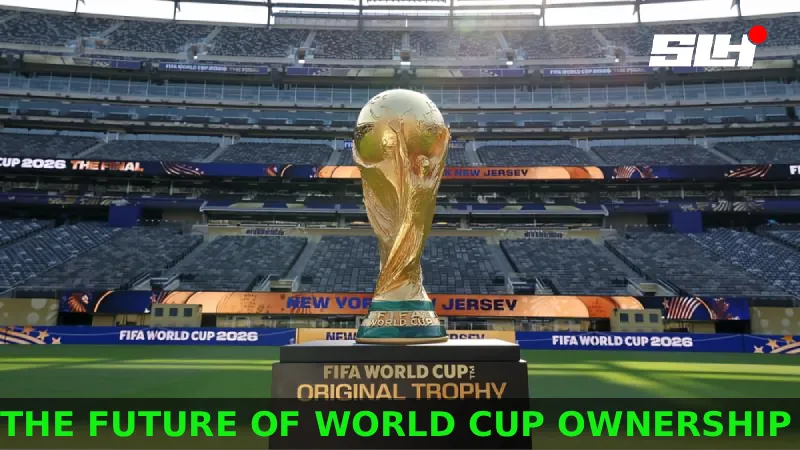


FIFA’s scrapped $4.2 billion plan would have sold private investors a 20 percent stake in World Cup commercial rights for 2030 and 2034, while Infantino’s organisation kept 80 percent control. The structure collapsed on August 1 after member federations revolted over how it was pitched to them. Thrive Capital, run by Joshua Kushner, was lined up as lead investor through a vehicle called Thrive Eternal, advised by JPMorgan. Real questions remain about how close football’s governing body came to selling a piece of its biggest asset.
FIFA Forward Enterprise was the subsidiary at the centre of this saga, a proposed entity built to take over commercial operations for the 2030 and 2034 tournaments. The plan valued that operation at $20 billion, with FIFA keeping an 80 percent controlling share while investors bought the remaining fifth for $4.2 billion. JPMorgan was brought in to advise on the structure, and Thrive Eternal, a vehicle tied to Thrive Capital, was positioned as the expected lead investor.
Every one of FIFA’s 211 associations was asked to approve the plan by September 19, with a conditional $40 million payment attached per federation. The breakdown below shows what each stakeholder group stood to gain or lose.
| Stakeholder | Current Role | Change Under FFE | Stated Objection |
| FIFA and Infantino | Controlled all World Cup commercial rights | Kept 80 percent of FFE, gave up a 20 percent stake | Viewed internally as a plan driven by one individual |
| Thrive Capital and Kushner | Had no role in football | Took a 20 percent non-controlling stake in commercial revenue | No competitive tender was run; investor seen as unproven |
| 211 member associations | Held no direct ownership, received Forward distributions | Offered 40 million dollars conditional on approval by September 19 | The conditional payment was viewed as coercive |
| UEFA and national federations | Had a voice through Congress governance | Saw no structural change to their governance rights | Said the deal bypassed all consultation despite 5 billion dollars in reserves |
Thrive Capital was founded by Joshua Kushner, whose brother Jared is married to Ivanka Trump and served as a senior adviser in the previous Trump administration. That family connection fuelled speculation about political influence behind the deal, though a source close to Thrive dismissed any suggestion that Donald Trump himself was personally involved. No competitive bidding process was run before Thrive Eternal was positioned as lead investor, and Carlos Cordeiro, who resigned from his FIFA role over the plan, publicly asked whether any competitive process existed and what governance safeguards would apply.
Strip away the politics and the mechanics were straightforward. The 20 percent investor stake would have represented ownership in broadcasting revenue, sponsorship income, licensing and event logistics for the 2030 and 2034 cycles. FIFA’s own justification was that the $4.2 billion raised would unlock $10 billion in football development funding over four years. Critics picked that argument apart quickly, pointing out that the governing body already holds more than $5 billion in reserves and carries no debt, which made outside capital look unnecessary rather than essential.
Wales was first to break ranks, citing failures in good governance and formally withdrawing its nomination letter on August 3, days before the wider plan collapsed. UEFA described the arrangement as a back-room deal negotiated with little transparency, while CONCACAF said it had been advanced outside every established governance framework, without consultation or due process. Members of the US Judiciary Committee went further, framing the $40 million payments as an attempt to buy votes from all 211 associations.
FIFA pulled Forward Enterprise on August 1, acknowledging that the plan had created divisions rather than consensus among its membership. The September 19 approval deadline became irrelevant the moment the announcement landed.
UEFA and CONCACAF have already floated an alternative: a reformed Forward programme funded from FIFA’s existing reserves rather than outside capital. Whether that plan survives contact with Infantino’s administration depends on who wins the presidency at the March 2027 congress in Rabat. Set against reserves FIFA already controls, the FIFA World Cup stake sale explained above looks less like a funding necessity and more like a governance gamble that backfired.
Should FIFA member federations get real veto power over billion-dollar commercial deals like this one, or does Infantino’s inner circle still hold every card? Tell us where you land in the comments.
As football fans globally search for the most reliable platforms to witness history unfold—especially with Argentina currently attempting to join this exclusive list in the 2026 World Cup Final—Sports Live Hub (SLH) emerges as the ultimate destination for premium sports broadcasting.
Finding a secure, uninterrupted broadcast during major international tournaments can be incredibly frustrating due to complex regional restrictions and geo-blocks. The hub sports live stream feature available on SLH operates as a state-of-the-art intelligent aggregator. It seamlessly maps your location and automatically routes you to verified, official regional broadcast feeds. This ensures that fans can watch every crucial moment of the World Cup in stunning high-definition, completely free from the irritating buffering issues and dangerous malware threats associated with illegal, unverified streaming websites.
Modern football enthusiasts demand a highly analytical and interactive viewing experience. The sport hub live streaming interface on SLH serves as an elite second-screen companion for dedicated fans. As you watch the world’s best teams compete for international glory, the platform provides dynamic, real-time digital overlays. Viewers gain instant access to advanced tactical data, including live Expected Goals (xG), detailed passing networks, and comprehensive player heatmaps, empowering them to dissect the beautiful game just like a professional television pundit.
During monumental events like a World Cup Final, internet searches for how to watch Sports live for free inevitably skyrocket. SLH proactively solves this challenge by maintaining a meticulously curated, fully localized directory of legal, free-to-air (FTA) broadcasting networks. By specifically highlighting public broadcasters that legally air these premium matches without requiring expensive subscription paywalls, SLH guarantees that the unparalleled excitement of international football remains completely accessible, safe, and entirely legal for millions of passionate fans worldwide.
What was FIFA Forward Enterprise?
FIFA Forward Enterprise was a proposed subsidiary to manage World Cup commercial rights for 2030 and 2034. FIFA kept 80 percent; investors bought 20 percent for $4.2 billion, before it was scrapped on August 1.
Who is Joshua Kushner?
Joshua Kushner is the founder of Thrive Capital, the firm lined up as lead investor in the FIFA deal. His brother Jared Kushner is married to Ivanka Trump, though a source close to Thrive denied any direct Trump family involvement.
Why did Wales withdraw support for the FIFA plan?
Wales cited failures in good governance and pulled its nomination letter on August 3. It was the first of FIFA’s 211 member associations to formally reject the proposal before the wider plan collapsed.
How much would FIFA have raised from the investor sale?
FIFA aimed to raise $4.2 billion by selling a 20 percent commercial stake. The governing body claimed the money would generate $10 billion in development funding over four years.
Does FIFA still own the World Cup outright?
Yes, FIFA retains full ownership after scrapping the investor plan on August 1. The proposal would only have sold a 20 percent non-controlling commercial stake, not tournament ownership itself.
 football
 football
 cricket