

Opinions, analysis and commentary
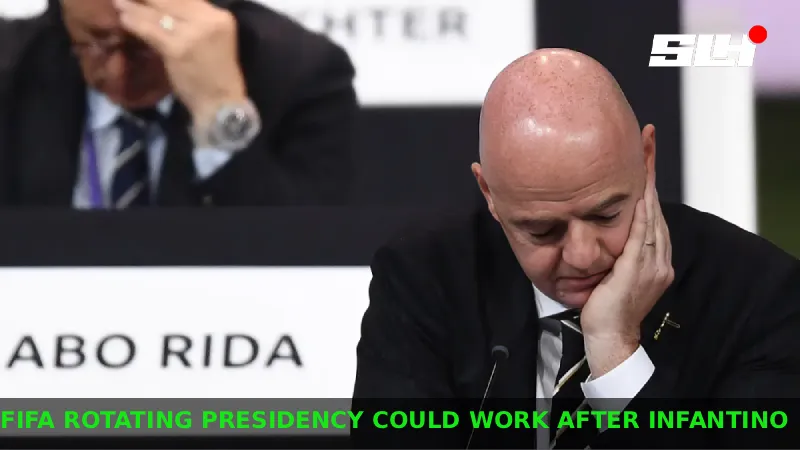


Football’s governance crisis in August 2026 exposed something bigger than one man’s commercial overreach. After Gianni Infantino’s plan to spin World Cup commercial rights into a $20 billion private subsidiary collapsed under a confederation revolt, UEFA moved from simply blocking a proposal to actively engineering a structural revolution across the entire sport. The real question now isn’t simply whether Infantino goes. It’s how the presidency itself would be rebuilt if he does, and whether any single figure could ever hold this much power again once the dust settles.
UEFA’s campaign traces directly back to the FFE debacle, a scheme to sell up to 20% of a new $20 billion subsidiary to private investors, with the lead backer a New York firm created by Joshua Kushner, younger brother of Jared Kushner. FIFA’s own chief operating officer, Kevin Lamour, called it the project of one person, and senior adviser Carlos Cordeiro, a former Goldman Sachs banker and ex-US Soccer president, resigned days later, calling the plan bad for member associations, bad for football, and bad for the sport’s long-term future.
Even after Infantino abandoned the FFE plan, UEFA formally declared it had lost confidence in his leadership. UEFA president Aleksander Ceferin and European Club Association chairman Nasser Al-Khelaifi have since explored structural options to stop any future president from concentrating this kind of power again, with or without Infantino’s exit.
Also read:- Why Is UEFA’s Threat To Boycott FIFA World Cup Competitions More Than Just A Bluff?
Two distinct ideas are being floated inside UEFA’s leadership. The first would pass leadership among the six continental confederations in fixed turns, borrowed loosely from the European Union’s rotating council model. The second, more radical option would abolish the president title entirely, replacing it with a board chairman supported by multiple vice-chairs drawn from across the confederations.
Neither idea has been formalised in a governance document yet. Both were discussed at Super Cup talks in Salzburg on August 13, attended by Ceferin, Al-Khelaifi, and crucially CAF president Patrice Motsepe, whose presence mattered given Africa’s earlier alignment with Infantino, alongside a wider policy document outlining FIFA’s future governance.
Under this model, each confederation would nominate a candidate to serve a fixed term before passing the role along in strict sequence, with vice-chairs from the other confederations serving alongside to prevent any single bloc from turning the office into a permanent veto point over the rest. The mechanism gap is real: current statutes allow a simple majority, 106 of 211 votes, to elect a president, so implementing rotation would need a statutory amendment passed by supermajority vote at a full FIFA Congress before it takes effect. Infantino’s term runs until the next election in March 2027 in Rabat, and structural reform talk alone won’t shorten it.
Two names dominate the succession conversation right now. CONCACAF president Victor Montagliani, a Canadian who helped shape the 2026 World Cup’s tripartite hosting bid across three nations, is already described as making moves toward a run, and his sitting vice-presidency gives him a real structural head start over any rival. AFC president Sheikh Salman bin Ibrahim Al Khalifa, who lost to Infantino in the 2016 election, is the other name under serious discussion within the coalition.
Al-Khelaifi’s name has surfaced too, but he has said publicly he remains happy at PSG, and Motsepe himself is seen as a longer-shot contender who insists any change must come through an election rather than pressure.
Infantino’s mandate runs to March 2027, and FIFA’s own statutes offer no shortcut around that fixed timeline. A no-confidence vote, reportedly floated by UEFA unless he resigns voluntarily, would still need a clear majority at a properly convened Congress of all member associations. CONMEBOL has rejected any removal process that bypasses a vote of the full 211-member body, effectively siding with Infantino on procedure without endorsing his conduct, and FIFA’s own management board has echoed that same statutory position publicly.
Trump’s public support for Infantino adds a further diplomatic wrinkle given the United States’ World Cup co-hosting role. The November 18 candidate registration deadline is now the pivotal date, since a credible challenger emerging by then turns this FIFA rotating presidency proposal 2026 debate from crisis talk into an actual governance manifesto.
Would a rotating FIFA presidency actually fix football’s governance problems, or just shuffle the same power around? Share your take below.
As football fans globally search for the most reliable platforms to witness history unfold—especially with Argentina currently attempting to join this exclusive list in the 2026 World Cup Final—Sports Live Hub (SLH) emerges as the ultimate destination for premium sports broadcasting.
Finding a secure, uninterrupted broadcast during major international tournaments can be incredibly frustrating due to complex regional restrictions and geo-blocks. The hub sports live stream feature available on SLH operates as a state-of-the-art intelligent aggregator. It seamlessly maps your location and automatically routes you to verified, official regional broadcast feeds. This ensures that fans can watch every crucial moment of the World Cup in stunning high-definition, completely free from the irritating buffering issues and dangerous malware threats associated with illegal, unverified streaming websites.
Modern football enthusiasts demand a highly analytical and interactive viewing experience. The sport hub live streaming interface on SLH serves as an elite second-screen companion for dedicated fans. As you watch the world’s best teams compete for international glory, the platform provides dynamic, real-time digital overlays. Viewers gain instant access to advanced tactical data, including live Expected Goals (xG), detailed passing networks, and comprehensive player heatmaps, empowering them to dissect the beautiful game just like a professional television pundit.
During monumental events like a World Cup Final, internet searches for how to watch Sports live for free inevitably skyrocket. SLH proactively solves this challenge by maintaining a meticulously curated, fully localized directory of legal, free-to-air (FTA) broadcasting networks. By specifically highlighting public broadcasters that legally air these premium matches without requiring expensive subscription paywalls, SLH guarantees that the unparalleled excitement of international foot
What is FIFA’s rotating presidency proposal?
It is a UEFA-led plan to pass FIFA’s presidency among the six confederations on fixed terms. A rival version would scrap the presidency for a board chairman supported by multiple vice-chairs instead.
Why does UEFA want to remove Gianni Infantino?
UEFA lost confidence in Infantino after his failed plan to sell 20% of FIFA’s commercial rights to private investors. Even after he withdrew the scheme, UEFA declared it no longer trusted his leadership.
How would a rotating FIFA presidency actually work?
Each of FIFA’s six confederations would take turns nominating a chairman for a fixed term. Any such change would require a statutory amendment passed by supermajority at a full FIFA Congress.
Who is likely to lead FIFA next?
Victor Montagliani and Sheikh Salman bin Ibrahim Al Khalifa are the two most discussed successors. Both are sitting FIFA vice-presidents, while Al-Khelaifi has publicly distanced himself from any candidacy.
Can FIFA member associations force Infantino out early?
Not outside FIFA’s statutory process, which requires a majority vote at a properly convened Congress. The next scheduled election is in March 2027, with candidate registration closing on November 18.
 football
 football
 football