


Opinions, analysis and commentary
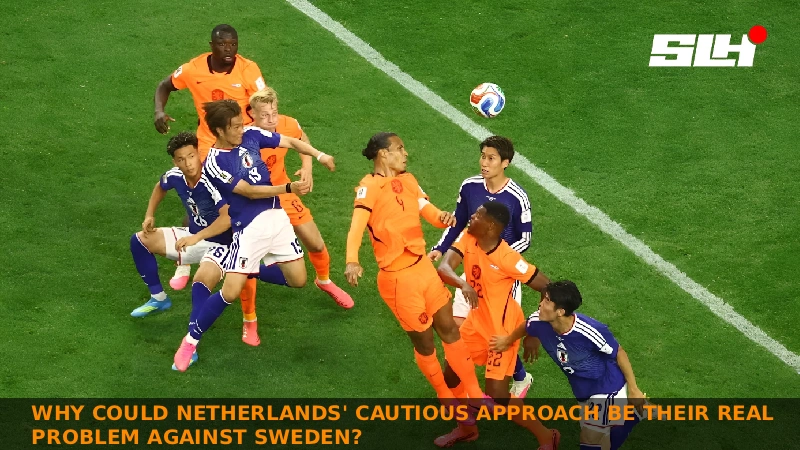


Sweden’s Gyokeres and Isak are the story every preview has led with before Houston, but after the Netherlands dropped two points against Japan by retreating from a 2-1 lead, the more pressing question is about Koeman’s tactical instinct rather than Sweden’s firepower. A side that held 69 percent of the ball in the first 45 minutes against Japan finished controlling only 48 percent of the second half. Sweden’s vertical pace will find the same space if Koeman repeats that retreat.
Van Dijk headed in from Ryan Gravenberch’s delivery on 50 minutes to restore a lead Netherlands had already ceded once, then Crysencio Summerville curled the ball in off the post at 64 minutes to make it 2-1. Within seven minutes of that second goal, Koeman withdrew Summerville for Nathan Ake and quickly added two further defensive changes. The second-half numbers show what followed.
| Metric | First Half | Second Half | Change |
| Netherlands Possession | 69% | 48% | Down 21 points |
| Netherlands Shots | 4 | 3 | Dutch output fell after going 2-1 up |
| Japan Shots | 3 | 7 | Japan more than doubled their shot volume |
| Japan Possession | 31% | 52% | Japan controlled the ball after Netherlands retreated |
Japan’s Keito Nakamura had pulled the score to 2-1 in 57 minutes, but Koeman’s move to protect the lead rather than press for a third cost the Netherlands dearly. Daichi Kamada’s deflected 88th-minute corner goal completed the comeback.
Koeman’s 4-3-3 is built around ball retention, with Frenkie de Jong and Gravenberch providing the tempo and van Dijk captaining the back four. When the system works at the controlled pace the Dutch set in the opening 45 minutes against Japan, it’s difficult to play through. When the Netherlands abandons that structure and sits in, the same system offers a mid-block without the pressing intensity to sustain it.
Sweden leads Group F with three points, and the Netherlands sits on one, which makes June 20 in Houston critical for both sides’ qualification picture. A win moves the Dutch to four points before a final group game against Tunisia on June 26. A second consecutive draw would leave them needing a result against Tunisia to be certain of advancing.
Sweden’s 5-1 win over Tunisia on June 15 was built on rapid vertical movement as soon as possession was recovered. Their third goal captured the pattern cleanly: Tunisia captain Ellyes Skhiri surrendered the ball in his own half, Alexander Isak threaded a first-time pass to Viktor Gyokeres, and the Arsenal striker finished without hesitation.
Isak scored once and provided two assists, while Gyokeres added his own goal; the two forwards were directly involved in three of Sweden’s five. A Netherlands side that handed Japan 52 percent of second-half possession and allowed seven shots in those 45 minutes is offering a very different threat profile than the team that controlled the first half.
The Japan draw is consistent with a pattern that has followed Koeman’s Netherlands across tournaments. In World Cup qualifying, the Dutch twice dropped points to Poland, with Matty Cash’s 80th-minute strike in Rotterdam the most visible example. After one of those draws, De Jong acknowledged the team’s energy had dropped, and they failed to press hard enough in the closing stages.
At Euro 2024, the Netherlands led England 1-0 through Xavi Simons’ seventh-minute strike, lost control of the midfield, and conceded Ollie Watkins’ 90th-minute winner to go out 2-1. The common thread across all three results is not a defensive collapse in isolation. It’s what happens to the team’s shape and forward ambition the moment a lead appears.
Gravenberch has the range and energy to press higher from deep rather than drop into a passive position, and Cody Gakpo’s directness offers a way to release pressure through counter-pressing rather than retreating into shape. The tools to stay high and keep Sweden’s forwards away from the transition spaces are already in the squad.
The Netherlands vs Sweden FIFA World Cup 2026 tactics question really comes down to one decision: whether Koeman trusts the possession structure that worked for 45 minutes against Japan, or defaults again to the defensive management that let Japan equalise in the 88th minute.
Stay updated on every twist and turn of the summer transfer window and catch all the live football action with Sports Live Hub (SLH).
Accessing a high-quality hub sports live stream is essential for fans following the matches of the World Cup season. SLH provides a verified directory of official broadcasting partners, ensuring you never miss a moment of the action from the Premier League or Liga Portugal or World Cup.
Our sport hub live streaming dashboard offers real-time tactical overlays, player fitness stats, and live transfer probability tickers. As the WC 2026 saga develops, SLH is the destination for integrated sports data and high-definition viewing.
If you are wondering how to watch Sports live for free, SLH maintains a curated list of official free-to-air (FTA) broadcasters and legitimate digital promotional windows. We help fans find legal, cost-free ways to enjoy global sports while ensuring safety from unauthorized streaming sites.
Why did the Netherlands draw with Japan in their World Cup opener?
Netherlands twice led but conceded through Nakamura (57′) and a deflected Kamada goal in the 88th minute. After going 2-1 up, Koeman made defensive substitutions, and Japan controlled 52 percent of second-half possession to snatch a point.
What formation does Ronald Koeman use for the Netherlands?
Koeman deploys a 4-3-3 with van Dijk anchoring the back four and De Jong and Gravenberch in midfield. Gakpo, Malen, and Summerville rotate across the front line.
How many goals have Isak and Gyokeres scored at the 2026 World Cup?
Isak scored once and provided two assists while Gyokeres also scored in Sweden’s 5-1 win over Tunisia. Between them, they were directly involved in three of Sweden’s five goals on matchday one.
What does the Netherlands need to qualify from Group F?
A win against Sweden would move the Netherlands to four points and place them in a strong position to advance. Sweden leads the group on three points after their 5-1 opening win over Tunisia.
Is Virgil van Dijk still the Netherlands captain?
Yes, van Dijk remains the Netherlands captain at the 2026 World Cup. The Liverpool centre-back scored the opening goal in the 2-2 draw against Japan in Dallas on June 14.
 football
 football
 cricket