


Opinions, analysis and commentary
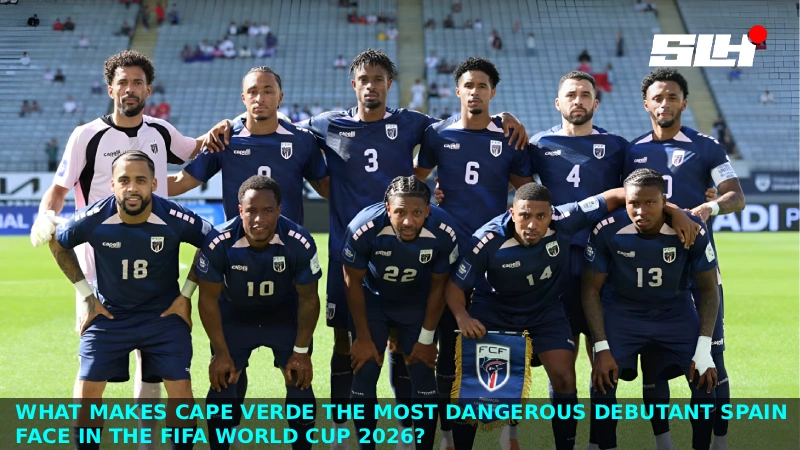


Spain enters the 2026 FIFA World Cup as the top-ranked side in the world and defending European champions. Their Group H opener in Atlanta on June 15 is being treated as a formality. It shouldn’t be. Cape Verde is competing in their first ever World Cup after topping a CAF group that included Cameroon and Angola, and they bring a tactical blueprint specifically designed to hurt teams like Spain.
Coach Bubista organises the Blue Sharks in a compact 4-2-3-1 that drops into two disciplined defensive blocks. Jamiro Monteiro and Kevin Pina operate as a double pivot, screening the backline and limiting the space between the lines that Pedri, Fabián Ruiz, and Zubimendi thrive in. Full-backs hold narrow, protecting the half-spaces rather than tracking width. The shape forces Spain wide, reduces vertical passing lanes, and invites pressure to release it rapidly.
Cape Verde conceded eight goals in ten CAF qualifying matches (0.8 per game) and kept a clean sheet in every home game. Their 47% average possession confirms they don’t chase the ball; they shape the space around it.
Georgia sat in a compact mid-block in their Euro 2024 round-of-16 clash, held 89% possession against Spain in the opening 17 minutes, then scored on the counter in the 18th minute. Spain won 4-1, but that early goal showed exactly what happens when their defensive line advances: diagonal balls in behind, late runners, backline caught in transition.
Albania made Spain labour to a 1-0 win earlier in that tournament. In the 2024-25 Nations League, the Netherlands held Spain to a 2-2 draw in the quarter-final first leg by compressing central lanes and exploiting space behind Spain’s full-backs. Cape Verde’s diagonal passes, 13-16% of total qualifying passes, are the primary mechanism to punish high lines.
What separates Cape Verde from other debutants is that their model is built specifically to create problems for possession-dominant, high-pressing sides. The 4-2-3-1 mid-block draws Spain into the final third, then uses the double pivot’s press resistance to win the second ball. Long-ball transitions from Vozinha bypass Spain’s press entirely, landing in the channels for Livramento and Garry Rodrigues to run onto.
| Team | Formation | Goals Conceded (Qualifying) | Counter-attack Style | Key Debutant Metric |
| Cape Verde (2026) | 4-2-3-1 | 8 in 10 (0.8/game) | Fast diagonal long-ball | 0 home goals conceded |
| Georgia (Euro 2024) | 4-2-3-1 | 8 in 10 (0.8/game) | Fast, Kvaratskhelia-led | Beat Portugal; led Spain 21 mins |
| Iceland (WC 2018) | 4-4-2 | 12 in 10 (1.2/game) | Set-pieces, long throws | Held Argentina 1-1 |
| Panama (WC 2018) | 5-4-1 | 10 in 10 (1.0/game) | Physical transitions | First CONCACAF WC debut goal |
The 25-year-old Rotterdam-born striker scored four qualifying goals: the decisive 1-0 winner against Cameroon on September 9, 2025, securing top spot, and the opener in the qualifying-clinching 3-0 win over Eswatini. At 1.85m, he combines physical presence with genuine pace in transition.
Against Spain’s high defensive line, Livramento runs in behind, forcing Le Normand or Huijsen to track back rather than press high. Garry Rodrigues and Ryan Mendes provide the wide threat to occupy Spain’s midfield before Livramento attacks depth.
Spain has not lost a competitive match since a 2-0 defeat to Scotland in March 2023. That record has bred an assumption of routine. The risk is the assumption itself. If Spain takes 15-20 minutes to find their rhythm against Cape Verde’s mid-block, they face a team fully prepared for the transition opportunity that follows.
The Cape Verde FIFA World Cup 2026 debut tactical analysis points to one conclusion: the Blue Sharks don’t need to win. A goal in the first 25 minutes, on the counter or via a Livramento run, changes the complexion of Group H. Cape Verde have nothing to lose and a blueprint built for this.
Stay updated on every twist and turn of the summer transfer window and catch all the live football action with Sports Live Hub (SLH).
Accessing a high-quality hub sports live stream is essential for fans following the matches of the World Cup season. SLH provides a verified directory of official broadcasting partners, ensuring you never miss a moment of the action from the Premier League or Liga Portugal or World Cup.
Our sport hub live streaming dashboard offers real-time tactical overlays, player fitness stats, and live transfer probability tickers. As the WC 2026 saga develops, SLH is the destination for integrated sports data and high-definition viewing.
If you are wondering how to watch Sports live for free, SLH maintains a curated list of official free-to-air (FTA) broadcasters and legitimate digital promotional windows. We help fans find legal, cost-free ways to enjoy global sports while ensuring safety from unauthorized streaming sites.
How did Cape Verde qualify for this World Cup?
Cape Verde topped CAF Group D with 23 points from ten matches (7W, 2D, 1L), finishing four points ahead of Cameroon. They sealed qualification on October 13, 2025, with a 3-0 win over Eswatini, keeping zero goals conceded at home across five qualifying matches.
What is Cape Verde’s formation and tactical setup?
Bubista deploys a 4-2-3-1, with Jamiro Monteiro and Kevin Pina as the double pivot and Ryan Mendes as the lead striker. Dailon Livramento and Garry Rodrigues provide counter-attack pace from wide.
Can Cape Verde cause an upset against Spain?
An outright win is unlikely, but Cape Verde’s mid-block and fast transition give them a realistic chance of scoring. The same model caused Spain problems against Georgia at Euro 2024, and a goal changes everything.
Who are the key players in Cape Verde’s squad?
Ryan Mendes leads Cape Verde’s all-time scoring with 22 goals in 94 caps; Dailon Livramento scored the qualifying-clinching goals against Cameroon and Eswatini. Goalkeeper Vozinha (39) and Logan Costa (Villarreal) anchor the defence.
How many people live in Cape Verde?
Cape Verde has a population of approximately 525,000, the third-smallest nation by population ever to participate in a FIFA World Cup. Only Curaçao (156,000) and Iceland (352,000 in 2018) were smaller.
 football
 football
 cricket