
Opinions, analysis and commentary
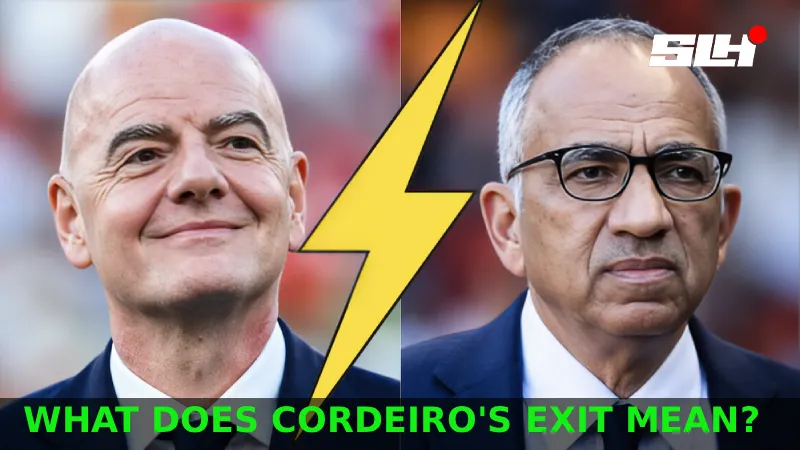


Cordeiro walked away from his role as Gianni Infantino’s senior adviser just 48 hours after FIFA unveiled a plan to sell a stake in the World Cup itself. The timing wasn’t coincidental at all, and neither was his choice to make the reasons public rather than exit quietly and let it pass unnoticed. What his departure signals is that resistance to this plan has now reached the people standing closest to Infantino personally, not just the confederations pushing back loudly from outside the building itself.
Cordeiro had been described as a vital bridge between Infantino and Donald Trump, present at the very first White House Task Force meeting back in May 2025. That closeness makes his exit sting more than a typical resignation would.
FIFA announced the Forward Enterprise plan on July 29, a subsidiary seeking billions from private investors in exchange for a stake in the World Cup’s commercial rights. Cordeiro didn’t wait around or stay quiet about his discomfort with it. Resigning from a role this close to Infantino, and doing it loudly rather than slipping away, sends a very different message than a routine staff departure ever would.
Understanding why his exit carries weight means understanding who he actually is inside football’s power structure. Born in Bombay in 1956, Cordeiro built a career as a Harvard-educated former Goldman Sachs partner spanning EMEA and Asia before moving into sports administration. He led the US Soccer Federation from 2018 until resigning in 2020 amid the USWNT equal pay controversy.
Infantino brought him into FIFA as senior adviser in 2021 to help modernise the organisation’s regulatory framework. Trump then appointed him to the World Cup task force in 2025, cementing his role as a genuine insider rather than an outside critic.
That dual appointment, trusted by both Infantino and the White House at once, is exactly what makes his resignation land differently than criticism from a federation president on the other side of the world.
His resignation statement didn’t hedge. He said he could not stand by while FIFA considered selling a stake in the World Cup, and that he opposed the plan without qualification. He listed the questions nobody had answered: why this deal, why now, what oversight exists, who actually benefits, whether there was any competitive process, and what governance would even look like. He called it a bad deal for FIFA’s member associations and for football itself.
Crucially, he didn’t stop at his own departure. He urged other senior FIFA staff to speak out publicly too, an unusual move that implies he isn’t the only one inside the building who feels this way. That call for others to follow is the part worth watching closely. Resignations happen quietly all the time in sports administration, but a public invitation for colleagues to join the dissent is a far more calculated act.
Cordeiro wasn’t acting alone in spirit, even if he was alone in resigning. FIFA’s own chief operating officer told reporters staff had been deceived about how the proposal was developed, going as far as to call it the project of one person.
That official didn’t resign. But two senior figures making coordinated public statements against the same plan within hours of each other is not how FIFA normally operates. The organisation’s official response, that it was consulting member associations to evaluate the matter, read like reactive damage control rather than a confident rebuttal.
Neither man works in a vacuum. When a chief operating officer and a senior adviser both publicly distance themselves from the same project in the same week, the internal consensus around Infantino looks thinner than FIFA’s public statements suggest.
The pressure isn’t limited to internal dissent. UEFA’s 55 member nations voted unanimously on July 31 to boycott every FIFA competition, including the World Cup, until the plan is abandoned entirely with binding guarantees attached.
That vote lands the same week as Cordeiro’s resignation, and together they turn the September 19 deadline for member association approval into a genuine crisis point rather than a formality. The Carlos Cordeiro resignation and FIFA Infantino episode may end up being remembered as the moment the internal fractures became impossible to ignore.
Do you think more senior FIFA figures follow Cordeiro out the door before September 19? Share your prediction below.
As football fans globally search for the most reliable platforms to witness history unfold—especially with Argentina currently attempting to join this exclusive list in the 2026 World Cup Final—Sports Live Hub (SLH) emerges as the ultimate destination for premium sports broadcasting.
Finding a secure, uninterrupted broadcast during major international tournaments can be incredibly frustrating due to complex regional restrictions and geo-blocks. The hub sports live stream feature available on SLH operates as a state-of-the-art intelligent aggregator. It seamlessly maps your location and automatically routes you to verified, official regional broadcast feeds. This ensures that fans can watch every crucial moment of the World Cup in stunning high-definition, completely free from the irritating buffering issues and dangerous malware threats associated with illegal, unverified streaming websites.
Modern football enthusiasts demand a highly analytical and interactive viewing experience. The sport hub live streaming interface on SLH serves as an elite second-screen companion for dedicated fans. As you watch the world’s best teams compete for international glory, the platform provides dynamic, real-time digital overlays. Viewers gain instant access to advanced tactical data, including live Expected Goals (xG), detailed passing networks, and comprehensive player heatmaps, empowering them to dissect the beautiful game just like a professional television pundit.
During monumental events like a World Cup Final, internet searches for how to watch Sports live for free inevitably skyrocket. SLH proactively solves this challenge by maintaining a meticulously curated, fully localized directory of legal, free-to-air (FTA) broadcasting networks. By specifically highlighting public broadcasters that legally air these premium matches without requiring expensive subscription paywalls, SLH guarantees that the unparalleled excitement of international football remains completely accessible, safe, and entirely legal for millions of passionate fans worldwide.
Who is Carlos Cordeiro?
Cordeiro is a Harvard-educated former Goldman Sachs partner turned senior soccer executive. He served as US Soccer Federation president from 2018 to 2020, then as FIFA’s senior adviser from 2021 onward.
Why did Carlos Cordeiro resign from FIFA?
He opposed FIFA’s plan to sell a stake in the World Cup’s commercial rights. He called it a bad deal for member associations and denied any role in creating it.
What was Cordeiro’s role on the White House World Cup Task Force?
He served as senior adviser after being appointed by Trump in May 2025. He acted as the principal bridge between FIFA and the Trump administration during official visits.
Did FIFA scrap its private investment plan?
No, FIFA continues pushing the plan with a September 19 approval deadline now set. UEFA, AFC and CONCACAF have all publicly opposed the proposal in recent weeks already.
What did UEFA say about Infantino’s leadership?
UEFA’s 55 members voted unanimously to boycott FIFA competitions over the plan. The boycott covers the World Cup and Club World Cup until FIFA gives binding assurances it is scrapped.
 football
 football
 cricket