



Opinions, analysis and commentary
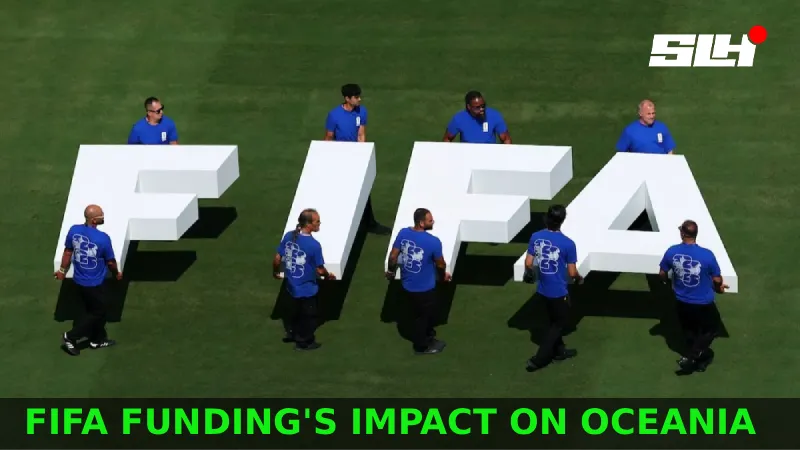


Every one of FIFA’s 211 member associations receives eight million dollars under the current Forward 3.0 cycle, and that single number means something completely different depending on where a federation sits. For a UEFA nation with broadcast deals and sponsorship income, it is one revenue stream among several. For an eleven-member Pacific confederation with almost no independent income, it can be nearly the entire football budget for four years running. That gap is the real story behind FIFA’s flagship funding programme, one that shapes governance politics far more than headline totals ever suggest.
FIFA Forward 3.0 allocates eight million dollars per member association for the 2023 to 2026 cycle, a 33.33 percent increase on Forward 2.0’s six million dollar figure. For the Oceania Football Confederation’s eleven members, that money is not supplementary income sitting alongside other budgets.
It is foundational. OFC Forward funding has already created 41 competitions, 32 infrastructure projects, 11 technical centres and 36 training camps across the region, none of which would exist without it. Remove that single Forward grant cycle and most of the region’s competitive football infrastructure simply disappears with it.
| Confederation | Forward 3.0 per Member | Change vs Forward 2.0 | Voting Members |
| UEFA | 8 million plus 60 million pool | Up 33.33 percent | 55 |
| CAF | 8 million plus 60 million pool | Up 33.33 percent | 54 |
| AFC | 8 million plus 60 million pool | Up 33.33 percent | 47 |
| CONCACAF | 8 million plus 60 million pool | Up 33.33 percent | 41 |
| CONMEBOL | 8 million plus 60 million pool | Up 33.33 percent | 10 |
| OFC | 8 million plus 60 million pool | Up 33.33 percent, but may be 80 to 100 percent of a Pacific budget | 11 |
The per-member figure is identical across every one of the six confederations, eight million dollars each. What differs entirely is the political weight that number carries. A UEFA member with professional domestic leagues treats it as one line item among many, while an OFC member with a population under 100,000 and no broadcast revenue treats it as the operational backbone of the entire federation.
A proposed Forward 4.0 cycle running 2027 to 2030 would raise the figure to 20 million dollars per member, though that plan was tied to FIFA’s now-scrapped commercial restructuring proposal. Whether that higher figure ever survives in any future form remains genuinely uncertain given how quickly that wider plan collapsed.
The eight million dollar base amount is broadly guaranteed by formula, but additional project proposals on top of that base require direct FIFA approval, creating a discretionary layer within the system. The Comoros football association has described a hypothetical 20 million dollar figure as transformative for its programme while also urging FIFA to avoid becoming a purely profit driven organisation.
The smaller a federation’s own independent revenue base is, the greater the implicit pressure to stay in FIFA’s good graces heading into governance votes, including presidential elections, where incumbents who oversaw grant increases carry an obvious structural advantage over any potential outside challenger.
Forward 1.0 in 2016 provided five million dollars per member association. Forward 2.0, covering 2019 to 2022, raised that to six million. Forward 3.0 then pushed the figure to eight million for the current cycle, a 60 percent increase across the three cycles combined. FIFA has directly linked that growth to reinforced governance and financial management since 2016.
For OFC members specifically, the political dependency carries an added edge, since the president who oversaw the funding that built their technical centres is seeking re-election in March 2027, a timeline that puts the funding relationship directly under the spotlight over the coming months.
New Zealand Football has said it would consult with fellow Oceania members before taking any position on FIFA’s wider commercial plans, a carefully calibrated stance that acknowledges funding dependency without endorsing anything specific. The OFC’s own statement on July 30 simply noted that consultation, rather than welcoming it outright.
A formula-based mechanism, similar to the June 2026 transfer rule reform that now requires consensus for future changes, could remove the discretionary leverage currently built into FIFA funding Oceania football nations’ decisions and replace it with something far more predictable for every federation involved, regardless of size or existing broadcast revenue streams.
Should Pacific football federations get guaranteed funding independent of FIFA politics? Share your take in the comments.
As football fans globally search for the most reliable platforms to witness history unfold—especially with Argentina currently attempting to join this exclusive list in the 2026 World Cup Final—Sports Live Hub (SLH) emerges as the ultimate destination for premium sports broadcasting.
Finding a secure, uninterrupted broadcast during major international tournaments can be incredibly frustrating due to complex regional restrictions and geo-blocks. The hub sports live stream feature available on SLH operates as a state-of-the-art intelligent aggregator. It seamlessly maps your location and automatically routes you to verified, official regional broadcast feeds. This ensures that fans can watch every crucial moment of the World Cup in stunning high-definition, completely free from the irritating buffering issues and dangerous malware threats associated with illegal, unverified streaming websites.
Modern football enthusiasts demand a highly analytical and interactive viewing experience. The sport hub live streaming interface on SLH serves as an elite second-screen companion for dedicated fans. As you watch the world’s best teams compete for international glory, the platform provides dynamic, real-time digital overlays. Viewers gain instant access to advanced tactical data, including live Expected Goals (xG), detailed passing networks, and comprehensive player heatmaps, empowering them to dissect the beautiful game just like a professional television pundit.
During monumental events like a World Cup Final, internet searches for how to watch Sports live for free inevitably skyrocket. SLH proactively solves this challenge by maintaining a meticulously curated, fully localized directory of legal, free-to-air (FTA) broadcasting networks. By specifically highlighting public broadcasters that legally air these premium matches without requiring expensive subscription paywalls, SLH guarantees that the unparalleled excitement of international football remains completely accessible, safe, and entirely legal for millions of passionate fans worldwide.
How much money does FIFA give to Oceania’s football federations?
Eight million dollars per member association under the current Forward 3.0 cycle. All eleven OFC members receive that same base figure alongside a shared 60 million-dollar confederation pool.
Why do small football federations depend so heavily on FIFA grants?
For Pacific Island federations with no broadcast revenue, FIFA grants can cover nearly the entire football budget. All eleven of OFC’s technical centres were built using this funding.
What does FIFA development funding actually get spent on?
Operational costs, infrastructure, coaching, competitions and grassroots programmes across each member federation. Up to five million of the eight million base can go toward core operational expenses alone.
Is FIFA’s Forward funding guaranteed or discretionary in nature?
The base amount is broadly guaranteed by formula for every member association. Additional project funding on top of that base requires individual FIFA approval on a case-by-case basis.
How could FIFA reform its Forward funding programme going forward?
A formula-based mechanism modelled on the 2026 transfer rule reform could remove discretionary leverage entirely. That reform already requires confederation consensus rather than unilateral FIFA decisions.
 football
 football
 football