

Opinions, analysis and commentary
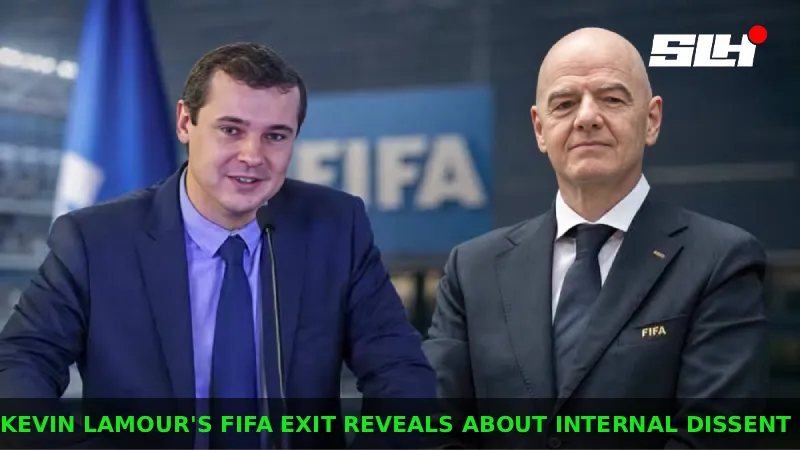


Kevin Lamour’s dismissal, confirmed on 17 August 2026, reopens a familiar question inside world football’s governing body: what actually happens to executives who challenge the president in public. His exit followed a late July statement accusing leadership of misleading staff over a major commercial plan, and it has drawn sharp criticism from federation leaders who call the move a warning shot to anyone weighing dissent inside an organization that prizes loyalty above almost everything else, especially at the top of its own hierarchy.
A French-Swiss administrator who had worked in the president’s inner circle since the 2016 election campaign, Lamour joined as chief operating officer in November 2024 after serving as UEFA’s deputy general secretary. His remit covered finance, legal affairs, communications, member associations, and operations across offices spread over three continents, giving him a rare view into nearly every corner of the organization’s day-to-day business.
In late July 2026, he broke publicly with leadership, describing the commercial plan as the project of one person and arguing the organization’s mission was to serve football rather than any individual’s interests. He had said he expected to lose his job for speaking out, and seventeen days later, he did exactly that, a turnaround fast enough to surprise even people used to the organization’s internal politics.
The organization’s official statement offered no reason for the departure, saying only that the working relationship had ended and thanking Lamour for his service. The secretary general told council members the split was mutual.
Norway federation president Lise Klaveness rejected that framing outright, describing it as a firing rather than a resignation and accusing leadership of governing through fear under pressure from the top. The organization has not disputed that characterization in any public statement since, which several federation officials have privately taken as a tacit admission that Klaveness was closer to the truth.
The proposed commercial subsidiary was valued at roughly twenty billion dollars, designed to run the organization’s major tournaments, including the World Cup, and sell a 20% stake to private investors reportedly led by Joshua Kushner for about 4.2 billion dollars. The funds were pitched as a way to hand each of the 211 member federations 20 million dollars.
The plan triggered a backlash from UEFA, the Asian Football Confederation, and CONCACAF, and prompted senior adviser Carlos Cordeiro to resign in protest, describing it as a bad deal for the sport. Facing that pressure, the plan was withdrawn within hours of Lamour’s public statement, though its underlying commercial ambitions remain unresolved and are widely expected to resurface in a different form before the next World Cup cycle begins.
Lamour’s removal fits a recurring pattern rather than an isolated incident. In 2016, audit committee chairman Domenico Scala resigned after alleging the council sought to strip his committee’s independence, and finance director Markus Kattner was dismissed the same year over disputed compensation amid a wider power struggle.
| Executive | Role | Year Departed | Reason |
| Domenico Scala | Audit & Compliance Chair | 2016 | Resigned after Council moved to curb committee independence |
| Markus Kattner | Deputy Secretary General | 2016 | Dismissed over disputed bonus payments |
| Carlos Cordeiro | Senior Adviser to Infantino | 2026 | Resigned in protest at the FFE plan |
| Kevin Lamour | Chief Operating Officer | 2026 | Fired weeks after publicly opposing the FFE plan |
The through-line critics keep pointing to is simple: senior figures who question presidential authority or commercial plans tend not to remain in post very long, regardless of how their departures get officially described afterward.
Klaveness has urged council members to resist directives they know run counter to the sport’s interests, while UEFA and several confederations that opposed the commercial plan continue pressing for stronger internal accountability. Support for the president, however, remains uneven across the organization’s member federations.
Some federations across Africa, South America, and the Arab world have stayed publicly loyal even as figures like Luis Figo have called for a resignation. With re-election due in March 2027, this FIFA Kevin Lamour Infantino dissent sacking episode is being read by many observers as an early test of whether internal disagreement gets treated as legitimate input or a threat to be removed.
Do you think Lamour’s sacking will change how executives speak up internally, or silence them further? Tell us what you think.
As football fans globally search for the most reliable platforms to witness history unfold—especially with Argentina currently attempting to join this exclusive list in the 2026 World Cup Final—Sports Live Hub (SLH) emerges as the ultimate destination for premium sports broadcasting.
Finding a secure, uninterrupted broadcast during major international tournaments can be incredibly frustrating due to complex regional restrictions and geo-blocks. The hub sports live stream feature available on SLH operates as a state-of-the-art intelligent aggregator. It seamlessly maps your location and automatically routes you to verified, official regional broadcast feeds. This ensures that fans can watch every crucial moment of the World Cup in stunning high-definition, completely free from the irritating buffering issues and dangerous malware threats associated with illegal, unverified streaming websites.
Modern football enthusiasts demand a highly analytical and interactive viewing experience. The sport hub live streaming interface on SLH serves as an elite second-screen companion for dedicated fans. As you watch the world’s best teams compete for international glory, the platform provides dynamic, real-time digital overlays. Viewers gain instant access to advanced tactical data, including live Expected Goals (xG), detailed passing networks, and comprehensive player heatmaps, empowering them to dissect the beautiful game just like a professional television pundit.
During monumental events like a World Cup Final, internet searches for how to watch Sports live for free inevitably skyrocket. SLH proactively solves this challenge by maintaining a meticulously curated, fully localized directory of legal, free-to-air (FTA) broadcasting networks. By specifically highlighting public broadcasters that legally air these premium matches without requiring expensive subscription paywalls, SLH guarantees that the unparalleled excitement of international foot
Who is Kevin Lamour at FIFA?
Kevin Lamour was FIFA’s chief operating officer, joining in November 2024 from UEFA’s deputy general secretary role. He oversaw finance, legal affairs, communications, member associations, and operations across three continents.
Why was FIFA’s COO fired?
He was dismissed weeks after publicly accusing leadership of misleading staff over the Forward Enterprise plan. FIFA has not officially confirmed the firing as disciplinary, describing it only as a mutual parting.
What was the FIFA Forward Enterprise plan?
It was a proposed twenty-billion-dollar commercial subsidiary to run FIFA’s tournaments, including the World Cup. The plan was withdrawn after Lamour’s public criticism and widespread federation backlash against it.
Is Gianni Infantino facing criticism from FIFA staff?
Yes, beyond Lamour, senior adviser Carlos Cordeiro resigned in protest and a federation president has gone public. Norway’s Lise Klaveness has publicly accused FIFA leadership of governing through fear.
Has FIFA removed executives before for criticizing leadership?
Yes, audit chief Domenico Scala resigned in 2016 after alleging the council curbed his committee’s independence. Finance director Markus Kattner was dismissed that same year amid a related internal power struggle.
 football
 football
 football