

Opinions, analysis and commentary



FIFA’s collapsed investment plan wipes out the prize increases clubs were promised for future Club World Cup editions, while the $1 billion already paid for 2025 stays untouched. Gianni Infantino scrapped the FIFA Forward Enterprise proposal on July 31, 2026, four days after announcing it, after UEFA’s 55 member federations voted unanimously to boycott FIFA competitions instead. The deal would have sold a 20% stake in a $20 billion commercial arm to fund associations and tournaments. FIFA now has no replacement, leaving clubs across six confederations facing an uncertain financial future.
UEFA moved first because its clubs stood to lose the most governance control. On July 30, 2026, all 55 UEFA federations voted unanimously to boycott FIFA events, including the 2027 Women’s World Cup, unless the Forward Enterprise plan was scrapped. UEFA called the World Cup not for sale and demanded guarantees against future private ownership.
The backlash carried a political edge too. Lead investor Thrive Eternal, run by Joshua Kushner, brother of Jared Kushner, fuelled suspicion of a political arrangement with the Trump administration. Carlos Cordeiro, Infantino’s senior adviser, resigned within hours of the vote, and FIFA’s own chief operating officer said the project skipped proper internal consultation.
FIFA unveiled the Forward Enterprise proposal on July 28, 2026, nine days after the World Cup final. The plan folded broadcast rights, sponsorships, ticketing, and tournament delivery into one subsidiary valued at $20 billion. JPMorgan was advising on a raise of up to $4.2 billion, and associations had a September 19 deadline to accept or remain at $8 million.
CONCACAF and the AFC rejected the proposal, though neither joined the boycott. By Friday, July 31, Infantino confirmed the project would not go ahead. He acknowledged the divisions it created no longer served FIFA’s original goal, regardless of support.
The pitch worked on two levels. Associations backing it were offered a one-off $20 million payment through the Fast Forward Programme, plus Forward funding rising from $8 million to $20 million for 2027-2030, then $22 million and $24 million after. Early backers could have banked $40 million in that first cycle alone.
None of that touches money already paid. The 2025 Club World Cup handed out a $1 billion prize fund across 32 clubs, split into a $525 million participation pillar and a $475 million performance pillar, with the winner earning up to $125.8 million. Those payments were settled before the collapse. What disappeared is the uplift for editions still to come.
The scale of what’s now off the table shows clearly by confederation. UEFA clubs earned the highest 2025 fees, followed by CONMEBOL, while CONCACAF, the AFC and CAF sat at the same rate. Every confederation reverts to the pre-FFE Forward structure, with CONCACAF and the AFC having rejected the plan before it collapsed.
| Confederation | 2025 CWC Participation Fee | Post-Collapse Status (Future CWC) |
| UEFA | $12.81-$38.19M per club | No FFE uplift; reverts to existing $8M Forward cycle |
| CONMEBOL | $15.21M per club | No FFE uplift; reverts to existing $8M Forward cycle |
| CONCACAF | $9.55M per club | Rejected FFE; stays on current Forward allocation |
| AFC | $9.55M per club | Rejected FFE; stays on current Forward allocation |
| CAF | $9.55M per club | No FFE uplift; reverts to existing $8M Forward cycle |
| OFC | $3.58M per club | No FFE uplift; reverts to existing $8M Forward cycle |
FIFA has offered no concrete alternative since the collapse. Infantino said only that he intends to bring interested parties back together in the coming weeks, without naming a new commercial vehicle.
The governing body is not short of resources. It carries close to $4 billion in reserves after the 2022 World Cup, and 2026 should generate roughly $15 billion across its 2023-2026 cycle, with associations already due $10 million each. Whether reserves and broadcast income alone can replace private equity is unresolved.
The $1 billion prize pool for 2025 leaned heavily on FIFA’s own DAZN broadcast deal, not outside investors, so matching it without a new structure is harder, not impossible. Infantino’s re-election bid now faces real scrutiny, and Victor Montagliani’s name is already circulating as a rival ahead of next March’s vote. Every confederation waits to see how the FIFA Club World Cup investment plan collapse gets resolved before the next cycle begins.
Which confederation gets hurt most if FIFA can’t find a replacement for the FFE money? Tell us your take in the comments.
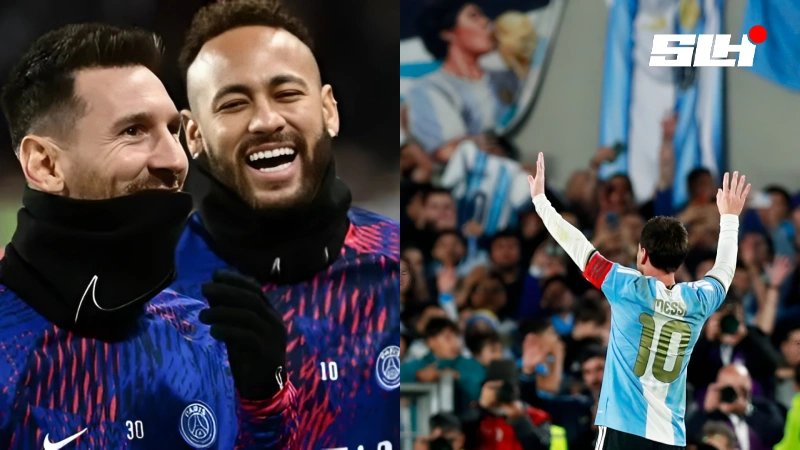
As football fans globally search for the most reliable platforms to witness history unfold—especially with Argentina currently attempting to join this exclusive list in the 2026 World Cup Final—Sports Live Hub (SLH) emerges as the ultimate destination for premium sports broadcasting.
Finding a secure, uninterrupted broadcast during major international tournaments can be incredibly frustrating due to complex regional restrictions and geo-blocks. The hub sports live stream feature available on SLH operates as a state-of-the-art intelligent aggregator. It seamlessly maps your location and automatically routes you to verified, official regional broadcast feeds. This ensures that fans can watch every crucial moment of the World Cup in stunning high-definition, completely free from the irritating buffering issues and dangerous malware threats associated with illegal, unverified streaming websites.
Modern football enthusiasts demand a highly analytical and interactive viewing experience. The sport hub live streaming interface on SLH serves as an elite second-screen companion for dedicated fans. As you watch the world’s best teams compete for international glory, the platform provides dynamic, real-time digital overlays. Viewers gain instant access to advanced tactical data, including live Expected Goals (xG), detailed passing networks, and comprehensive player heatmaps, empowering them to dissect the beautiful game just like a professional television pundit.
During monumental events like a World Cup Final, internet searches for how to watch Sports live for free inevitably skyrocket. SLH proactively solves this challenge by maintaining a meticulously curated, fully localized directory of legal, free-to-air (FTA) broadcasting networks. By specifically highlighting public broadcasters that legally air these premium matches without requiring expensive subscription paywalls, SLH guarantees that the unparalleled excitement of international foot
Why did European clubs threaten to boycott the Club World Cup?
UEFA’s 55 members voted unanimously to boycott FIFA events over the plan. The July 30, 2026 vote covered every competition, including the 2027 Women’s World Cup, until FIFA scrapped the scheme.
What was FIFA’s Kushner-backed investment plan?
It was FIFA Forward Enterprise, a plan to sell a 20% stake in a $20 billion commercial subsidiary. Thrive Eternal, run by Joshua Kushner, was lined up as the anchor investor before the deal collapsed.
Has FIFA scrapped its Club World Cup investment plan?
Yes, Infantino confirmed on July 31, 2026, that the plan would not proceed. He cited internal divisions that no longer served FIFA’s original goal, and no replacement funding structure has been announced since.
How much did FIFA promise associations under the scrapped deal?
Associations were offered up to $40 million combined for the 2027-2030 cycle before the plan fell apart. That included a one-off $20 million payment plus a Forward funding rise from $8 million to $20 million.
What does UEFA think about FIFA’s private investment plan?
UEFA called it anti-democratic and said football’s showcase event should never be treated as a commercial product. The AFC and CONCACAF also rejected the scheme formally, leaving every major confederation opposed to it.
 football
 football
 football