


Opinions, analysis and commentary
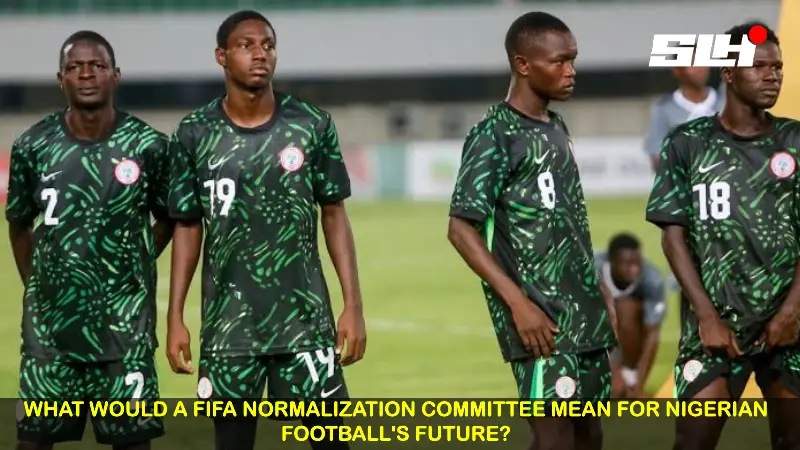


A FIFA and CAF delegation lands in Abuja expecting straightforward answers, but Nigerian football’s leadership crisis has none. The likeliest outcome is a temporary body imposed from Zurich, not a solution voted through by Congress. Ibrahim Gusau’s entire executive walked away after failed World Cup qualification and a damning governance report, leaving state federation chairmen scrambling to fill the vacuum themselves. Global football’s governing body has already frozen elections once. Whether it lets Nigerians finish the job, or takes over completely, will define the sport here for years.
Ibrahim Gusau stepped down as NFF president on 27 August 2026, citing stakeholder pressure. General secretary Mohammed Sanusi resigned alongside him, and the entire executive committee followed within days. The trigger was on the pitch: the Super Eagles missed the 2026 World Cup, and the Super Falcons missed the Women’s World Cup for the first time ever.
Off the pitch it was worse. A panel led by Fanny Amun had reported financial irregularities in the Falcons’ Morocco camp and interference in team selection. The Golden Eaglets had also missed three straight U-17 World Cups. Tinubu ordered a full reform, and the EFCC and ICPC opened financial probes. NFF then dissolved the NPFL board, leaving Nigerian football without elected leadership just as FIFA weighed how deeply to step in.
A FIFA normalisation committee is not elected by any member association. FIFA appoints it directly, hands it day-to-day control, and gives it four jobs: run affairs in the interim, rewrite statutes to match FIFA’s rules, check whether Congress delegates are legitimate, and organise fresh elections before dissolving itself.
Nigeria would not be the first to go through this. Ghana had its executive scrapped by FIFA in 2018 after a corruption documentary, and the replacement committee rewrote statutes before new elections. Zimbabwe stayed suspended until a normalisation committee restructured the federation in July 2023 and ran fresh polls. Egypt and Thailand have faced comparable processes.
Three paths now sit on the table, each with different consequences. The federation’s Congress, run by state chairmen, wants to act as an interim body under existing statutes. FIFA and CAF could instead impose an outside panel empowered to rewrite those statutes. A third route, a government takeover without FIFA’s blessing, carries the harshest risk.
| Governance Path | Appointed By | Key Powers | Suspension Risk |
| Congress interim body | State FA chairmen | Admin, elections under current rules | Low |
| FIFA-appointed committee | FIFA and CAF | Rewrite statutes, vet delegates, run elections | Removed once recognised |
| Government takeover | Nigerian state | Uncertain, risks interference charge | High |
Chairmen holding roughly 68.5 percent of Congress votes had scheduled Lafia elections for 27 September. FIFA and CAF froze that plan by letter on 7 September. Former presidents Sani Lulu Abdullahi and Aminu Maigari have petitioned separately for a six-month outside body, and a new $7.5 million NPFL deal with EuroMatch Group now hangs in the balance.
Yakubu Sarma, Gombe State FA chairman and the leading voice among the delegates, insisted after Monday’s FIFA meeting that Nigerian football was not in crisis and that Congress already had the power to fix its own gap. His position is specific: no outside panel should rewrite statutes, remove officials, or alter Congress membership without the chairmen’s sign-off.
That view puts them at odds with everyone else. Players, coaches, and referees back the outside-committee route, as does the National Sports Commission. Their preferred sequence would simply leave the same voting bloc in charge that caused the crisis.
If FIFA overrules the chairmen anyway, its authority sits above Congress and could rewrite the statutes, handing chairmen 68.5 percent of the vote. Nigeria’s government adds further risk. If it installs its own committee without FIFA’s consent, as Kenya’s ministry did in 2022, FIFA can respond with a suspension barring every team and club from international competition.
Such bans rarely last. Zimbabwe and Kenya saw suspensions lifted within months once a sanctioned body took over, and Nigeria’s size makes a long freeze costly for FIFA too. But the 7 September letter is unambiguous: there is no new electoral process without oversight, and the NFF FIFA normalisation committee question now sits with Zurich, not Lafia.
Should the chairmen be trusted to police their own crisis, or does the scale of the allegations demand a FIFA clean-up? Tell us where you land in the comments.
What is a FIFA normalisation committee?
A FIFA normalisation committee is a temporary body FIFA appoints to run a national federation in crisis. It rewrites statutes, checks delegate legitimacy, and organises fresh elections before dissolving itself, as seen in Ghana and Zimbabwe.
Why did the NFF president resign in 2026?
Ibrahim Gusau quit on 27 August 2026 under stakeholder pressure after Nigeria’s World Cup qualifying failure. A governance report the same month had also flagged financial irregularities and selection interference inside the federation.
Can FIFA suspend Nigeria from international football?
Yes, if Nigeria’s government installs its own committee without FIFA’s approval. That is exactly what triggered suspensions for Kenya in 2022 and Zimbabwe before its 2023 normalisation process.
Who is running Nigerian football’s day-to-day affairs right now?
Emmanuel Ikpeme and Ademola Olajire are serving as acting general secretary and deputy after the mass resignations. No permanent leadership structure has been confirmed while FIFA’s Abuja assessment continues.
When will FIFA decide Nigerian football’s next steps?
No public deadline exists yet for FIFA’s ruling on Nigeria’s crisis. Its assessment mission began a two-day consultation in Abuja on 14 September, following a 7 September letter that froze all elections.
 cricket
 cricket