
Opinions, analysis and commentary
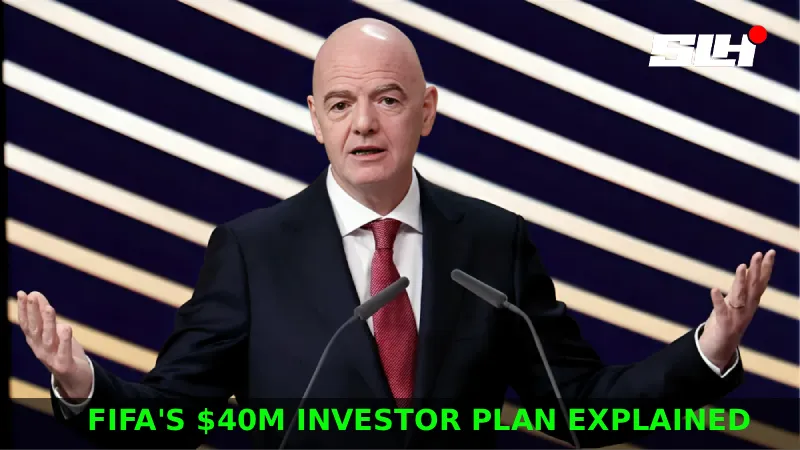


UEFA’s 55 members voted unanimously on July 31 to boycott every FIFA competition, including the World Cup, until a private investment plan gets scrapped entirely. Buried inside that headline sits a sharper detail: member federations who refuse to approve the plan by September 19 stand to lose a payout worth tens of millions of dollars each. The boycott is the visible fight everyone is covering. The conditional payment attached to it is the actual leverage driving the standoff, and understanding it changes what kind of dispute this really is.
Every European national team is now out of FIFA tournaments for as long as the disputed proposal stays alive, after UEFA’s emergency online meeting produced a unanimous vote across all 55 members. That headline is straightforward. The story underneath it is not.
On July 29, football’s governing body announced a plan to create a $20 billion subsidiary that would commercialise the World Cup, with outside investors buying a 20 percent minority stake. Member associations were given until September 19 to approve it. UEFA’s statement framed the objection in familiar terms, arguing the game’s future cannot be dictated by stakeholders chasing financial gain, and that the tournament belongs to the sport, not to any single shareholder. What came next moved the dispute somewhere else entirely.
The Associated Press and Forbes both reported the mechanism attached to that September deadline. Associations that fail to approve in time lose access to an immediate payout, plus a second instalment raised over the following three years. Combined, the two payments total roughly $40 million per federation.
The offer is conditional on approval. Reject the proposal, and the money disappears entirely for that federation. No specific denial of that mechanism has been issued by football’s governing body since the reporting emerged. One prominent political commentary account online described the arrangement bluntly, framing it as an attempt to buy support from every member country rather than earn it honestly through consensus and debate.
The new commercial entity keeps its parent organisation as controlling shareholder, with outside investors limited to a non-controlling 20 percent slice. Thrive Eternal, a fund run by Thrive Capital’s Joshua Kushner, is expected to lead that investor group, with JPMorgan advising on the structure.
Joshua Kushner is the brother of Jared Kushner, son-in-law to President Trump, a detail that has added political weight to an already contentious commercial story. The 20 percent stake is projected to raise close to $4.2 billion up front for the new entity. Reporting from ESPN suggests the full per-federation payout could eventually climb past $80 million by 2037 if the structure runs its full course as planned.
UEFA’s objection was always going to sound familiar: a governing body’s assets should not be sold off to outside financial interests. What makes this dispute different is the conditional payment attached to it. Losing tens of millions of dollars for voting no is a financial threat, not just a reputational one.
The Asian confederation called for an urgent review of decision-making processes within football’s governing body, describing the current approach as showing fundamental weaknesses that need addressing. CONCACAF’s response was notably softer by comparison, telling its members to engage directly with the governing body on using existing reserves rather than rejecting the proposal outright. That split in tone across confederations matters more than either statement reads alone.
A majority of the 211 member associations must approve the proposal by September 19 for it to pass. UEFA’s 55 votes represent just over a quarter of that total on their own, nowhere near enough to block anything without allies.
If the Asian confederation’s 47 members and CONCACAF’s 41 align with UEFA, the resulting coalition would comfortably clear a blocking majority among the full 211-member voting body. Football’s governing body insists no single confederation speaks for all 211 associations, and the plan reportedly remains on track regardless of the boycott threat so far. The FIFA investor plan 40 million threat now functions as leverage aimed squarely at the 156 associations sitting outside UEFA, and whether that sum is enough to fracture the opposing coalition is exactly what September 19 will settle.
Is a $40 million payout enough to make member federations look past where the money is coming from? Share your take in the comments.
As football fans globally search for the most reliable platforms to witness history unfold—especially with Argentina currently attempting to join this exclusive list in the 2026 World Cup Final—Sports Live Hub (SLH) emerges as the ultimate destination for premium sports broadcasting.
Finding a secure, uninterrupted broadcast during major international tournaments can be incredibly frustrating due to complex regional restrictions and geo-blocks. The hub sports live stream feature available on SLH operates as a state-of-the-art intelligent aggregator. It seamlessly maps your location and automatically routes you to verified, official regional broadcast feeds. This ensures that fans can watch every crucial moment of the World Cup in stunning high-definition, completely free from the irritating buffering issues and dangerous malware threats associated with illegal, unverified streaming websites.
Modern football enthusiasts demand a highly analytical and interactive viewing experience. The sport hub live streaming interface on SLH serves as an elite second-screen companion for dedicated fans. As you watch the world’s best teams compete for international glory, the platform provides dynamic, real-time digital overlays. Viewers gain instant access to advanced tactical data, including live Expected Goals (xG), detailed passing networks, and comprehensive player heatmaps, empowering them to dissect the beautiful game just like a professional television pundit.
During monumental events like a World Cup Final, internet searches for how to watch Sports live for free inevitably skyrocket. SLH proactively solves this challenge by maintaining a meticulously curated, fully localized directory of legal, free-to-air (FTA) broadcasting networks. By specifically highlighting public broadcasters that legally air these premium matches without requiring expensive subscription paywalls, SLH guarantees that the unparalleled excitement of international football remains completely accessible, safe, and entirely legal for millions of passionate fans worldwide.
What is FIFA Forward Enterprise?
It is a proposed $20 billion subsidiary designed to commercialise the World Cup and other events. Outside investors would hold up to a 20 percent minority stake in the new entity.
How much is the private investment plan actually worth?
The new entity carries a $20 billion valuation, with the minority stake expected to raise about $4.2 billion. Per-federation payouts could exceed $80 million by 2037 across the full term.
Who is Joshua Kushner?
He is the founder of Thrive Capital, the New York venture firm expected to lead the investor group. He is the brother of Jared Kushner, President Trump’s son-in-law, and JPMorgan is advising on the deal.
Why is UEFA threatening to boycott football’s biggest tournaments?
UEFA voted to boycott every competition unless the investment proposal is abandoned entirely. All 55 UEFA members backed the boycott unanimously in an emergency online meeting.
When did UEFA vote to boycott competitions?
The unanimous vote came on July 31, 2026, during an emergency online meeting of all 55 members. It followed the September 19 approval deadline that FIFA had announced just two days earlier.
 football
 football
 cricket