

Opinions, analysis and commentary
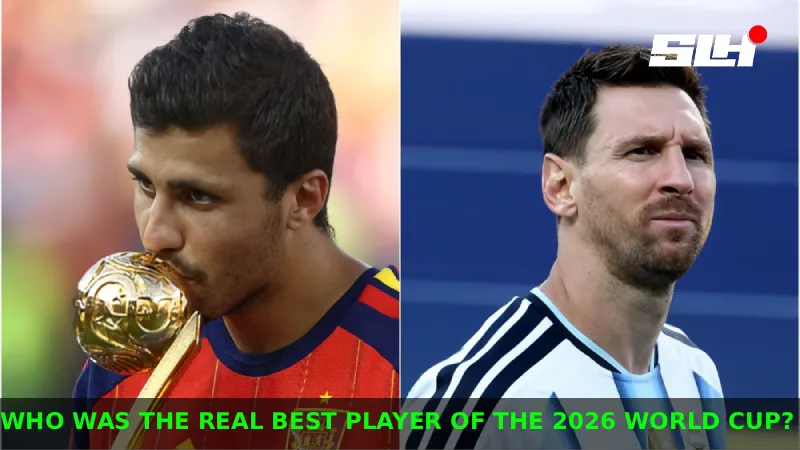


Rodri won the Golden Ball. Messi won the Silver Ball. Spain won the trophy that actually decided which case matters more in the end. Rodri completed a tournament-leading 790 passes and helped Spain concede just once in eight matches, while Messi scored eight goals and set up four more to drag Argentina to the final almost single-handedly. Both numbers are real. Both arguments hold up under scrutiny. The disagreement says less about either player and more about what football actually values when a trophy is on the line.
Spain beat Argentina 1-0 in extra time at MetLife Stadium on July 19, 2026. Rodri, the 2024 Ballon d’Or winner playing his way back from a ruptured right ACL, was named the tournament’s best player. Messi, the heavy favorite walking into the final, watched Argentina go out goalless in extra time and finished with a match rating of just 3 out of 10 on the day that mattered most. He still collected the Silver Ball. The numbers behind both honors tell two entirely different stories about what a great tournament actually looks like.
| Player | Goals | Assists | Passes Completed | Team Result |
| Rodri (Spain) | 0 | 2 | 790 (tournament-leading) | Champions – Golden Ball |
| Lionel Messi (Argentina) | 8 | 4 | 312 | Runner-up – Silver Ball |
| Kylian Mbappé (France) | 10 | 4 | 184 | 3rd place – Bronze Ball |
Across eight matches, Rodri led the entire tournament in successful passes and in line-breaking passes specifically. His 790 completed passes stood as a tournament record by the time the final whistle blew. In the final alone, he completed 101 of 105 attempts, a completion rate of 96.2 percent under the highest pressure of the competition.
Add 22 tackles, 34 recoveries and 11 clearances across the eight matches, plus more total touches than any other player in the tournament, and the picture that emerges is one of total control from start to finish. Spain conceded just a single goal in eight games, and Rodri sat at the base of every clean sheet while also running the tempo of every attack.
History cuts both ways on a debate like this one. In 2014, Messi won the Golden Ball despite Argentina losing the final to Germany, a decision widely criticized at the time for rewarding star power over actual tournament impact. In 2002, Oliver Kahn won it for Germany despite losing the final to Brazil, the only goalkeeper to ever claim the award. This year’s vote broke from that pattern and went the other way, back toward rewarding the team that actually lifted the trophy rather than the individual with the flashiest highlight reel of the competition. Voters clearly remembered how the 2014 decision was received.
Statistical outlets that weight goals and assists more heavily than passing volume saw the tournament rather differently. Messi contributed directly to 12 of Argentina’s 19 goals across the competition, 8 goals and 4 assists combined, a direct-involvement ratio no other outfield player came close to matching.
Across seven appearances, his match ratings were the highest of any non-goalkeeper in the entire field. The International Federation of Football History and Statistics, which runs its own independent rankings, rated him above every other candidate on that basis alone. The counterpoint writes itself just as easily. Conceding only a single goal across eight matches is also a ratio no other midfielder in the entire tournament came close to matching.
Messi’s contributions directly won matches for Argentina when the team needed exactly that. Rodri’s contributions directly prevented losses for Spain in every single minute he was on the pitch. The Golden Ball has favored a player from the winning side in thirteen of the fifteen editions that came before 2014, and the 2026 verdict restores that pattern rather than breaking new ground. Anyone searching World Cup 2026 Rodri vs Messi Golden Ball debates will find the same split.
What separates the two cases in the end comes down to framing more than fact. Messi delivered the goals Argentina needed just to reach the final. Rodri delivered the control Spain needed to win it. Spain lifted the trophy, and so did the man voted the tournament’s best player.
If you had a vote, would you have given the Golden Ball to Rodri’s control or Messi’s goal involvement? Make your case in the comments.
As football fans globally search for the most reliable platforms to witness history unfold—especially with Argentina currently attempting to join this exclusive list in the 2026 World Cup Final—Sports Live Hub (SLH) emerges as the ultimate destination for premium sports broadcasting.
Finding a secure, uninterrupted broadcast during major international tournaments can be incredibly frustrating due to complex regional restrictions and geo-blocks. The hub sports live stream feature available on SLH operates as a state-of-the-art intelligent aggregator. It seamlessly maps your location and automatically routes you to verified, official regional broadcast feeds. This ensures that fans can watch every crucial moment of the World Cup in stunning high-definition, completely free from the irritating buffering issues and dangerous malware threats associated with illegal, unverified streaming websites.
Modern football enthusiasts demand a highly analytical and interactive viewing experience. The sport hub live streaming interface on SLH serves as an elite second-screen companion for dedicated fans. As you watch the world’s best teams compete for international glory, the platform provides dynamic, real-time digital overlays. Viewers gain instant access to advanced tactical data, including live Expected Goals (xG), detailed passing networks, and comprehensive player heatmaps, empowering them to dissect the beautiful game just like a professional television pundit.
During monumental events like a World Cup Final, internet searches for how to watch Sports live for free inevitably skyrocket. SLH proactively solves this challenge by maintaining a meticulously curated, fully localized directory of legal, free-to-air (FTA) broadcasting networks. By specifically highlighting public broadcasters that legally air these premium matches without requiring expensive subscription paywalls, SLH guarantees that the unparalleled excitement of international football remains completely accessible, safe, and entirely legal for millions of passionate fans worldwide.
Who won the Golden Ball at the 2026 World Cup?
Rodri of Spain was named the tournament’s best player. The Silver Ball went to Argentina’s Lionel Messi, and the Bronze Ball went to France’s Kylian Mbappé.
Why were some Argentina fans unhappy with the award ceremony?
Many felt Messi deserved the top individual honor instead of the Silver Ball. He finished the tournament with 8 goals and 4 assists, numbers that made the decision feel harsh to his supporters.
What is the IFFHS Best Player award?
It is an independent global ranking run by a football history and statistics federation. It weighs goals, assists and match ratings, which often produces a different result than the official pick.
How many goals did Messi score at the 2026 tournament?
He scored eight goals with four assists across seven appearances. Those numbers accounted for 12 of Argentina’s 19 goals in the competition, though he didn’t score in the final.
Has Messi ever won the tournament’s best player award before?
Yes, twice, in 2014 and again in 2022. He remains the only player in the competition’s history to win the top individual honor on two separate occasions.
 cricket
 football
 football