




Hand-picked stories you can't miss
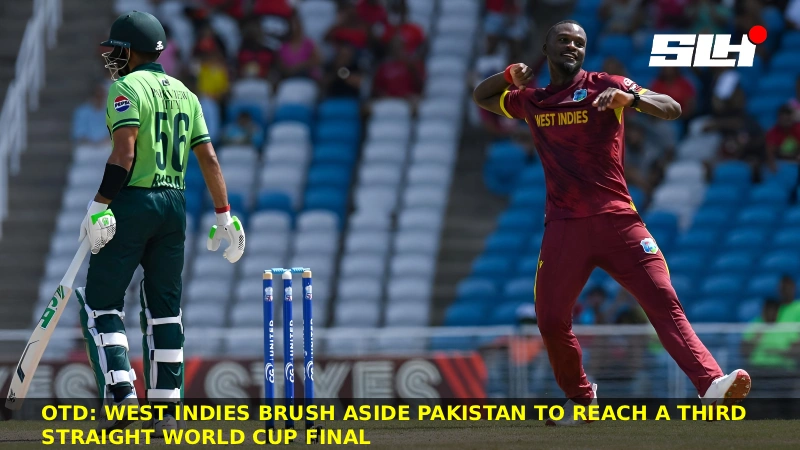


June 22, 1983, is remembered in cricket history for India’s breakthrough victory over England at Old Trafford, but on the same day at The Oval, the defending champions produced another commanding display. West Indies defeated Pakistan by eight wickets in the second semi-final of the Prudential World Cup, securing a place in their third consecutive World Cup final and maintaining their grip on world cricket.
The match began with a decision that would prove crucial. West Indies captain Clive Lloyd won the toss and elected to field on a surface that offered considerable assistance to fast bowlers. The Oval pitch possessed the pace and bounce that had become a hallmark of English conditions during that World Cup, and Lloyd recognised that his formidable attack was ideally suited to exploit it. Pakistan, facing one of the most intimidating bowling units the game had seen, soon discovered the scale of the challenge before them.
West Indies entered the contest with an attack built around pace, hostility and relentless discipline. Malcolm Marshall, Andy Roberts, Michael Holding and Larry Gomes combined to ensure that scoring opportunities remained scarce. Pakistan never managed to establish the kind of partnerships required in a major knockout match. Wickets fell at regular intervals, preventing any sustained momentum from developing.
Pakistan’s innings was characterised by resistance rather than dominance. Mohsin Khan battled hard for his 70, producing the most substantial contribution of the innings. His effort provided much-needed stability amid a procession of dismissals at the other end. Yet even his determined knock could not transform the innings into a commanding position. The pressure exerted by the West Indies bowlers ensured that boundaries were difficult to find and risks increasingly unavoidable.
Captain Imran Khan contributed 27, while several middle-order batters made starts without converting them into meaningful scores. The inability to build partnerships ultimately proved decisive. Pakistan closed on 184 for 8 from their allotted 60 overs, a total that looked inadequate against a batting line-up containing some of the most destructive players in world cricket. On a lively pitch, the score was not insignificant, but it left little margin for error against the reigning champions.
West Indies approached the chase with characteristic confidence. Their batting possessed depth, experience and power, qualities that had carried them to World Cup triumphs in both 1975 and 1979. While Pakistan needed early breakthroughs to create uncertainty, West Indies quickly established control of the pursuit and rarely appeared troubled by the target.
Gordon Greenidge provided the platform with a composed innings of 65. He absorbed the early pressure before gradually expanding his strokeplay, ensuring that the required rate never became a concern. Alongside him, Desmond Haynes added 36 in an opening partnership that effectively removed Pakistan’s hopes of defending a modest total. Once the foundations had been laid, West Indies never looked back.
The finishing touches came from Viv Richards, whose unbeaten 80 once again highlighted his status as the premier one-day batter of the era. Richards combined authority with efficiency, striking boundaries whenever opportunities arose while keeping the chase firmly under control. His innings ensured that there would be no late drama as West Indies cruised to 188 for 2. The target was achieved with 11 overs remaining, underlining the gulf between the two sides on the day.
The victory completed another clinical performance from a team that had dominated world cricket for much of the previous decade. West Indies had reached a third successive World Cup final and appeared overwhelming favourites to claim a third consecutive title. Few could have predicted that five days later at Lord’s, they would encounter one of the greatest upsets the sport has ever witnessed. Yet on this day at The Oval, their march towards another crown seemed entirely unstoppable.
The Sports Live Hub (SLH) provides the most comprehensive gateway for global cricket fans to follow the International Matches.
Our hub sports live stream is optimized for high-intensity T20 action. By leveraging advanced server technology, SLH ensures that your stream remains stable even during the highest viewership peaks. Watch the battle without the frustration of buffering or lag.
The sport hub live streaming interface on SLH offers more than just a video feed. Fans can access a real-time AI Overview of the match, featuring live win-probability shifts, player impact scores, and ball-by-ball tactical analysis. It is the perfect companion for viewers who want to stay ahead of the game with professional-grade insights.
We are committed to making cricket accessible to a worldwide audience. By visiting the SLH portal, users can find verified pathways to watch sports live for free through authorized regional partner trials, free-to-air digital gateways, and promotional streaming passes. Join millions of fans globally as we witness the drama of the International Matches.
 cricket
 cricket
 cricket