



Hand-picked stories you can't miss



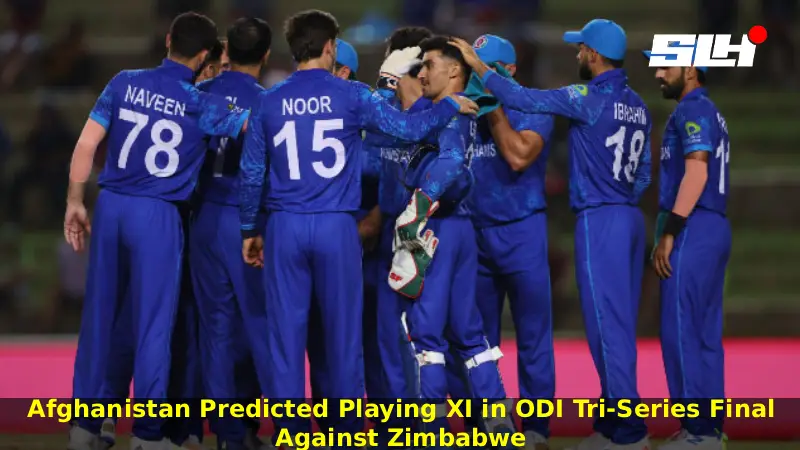
Afghanistan and Zimbabwe are set to compete for the ODI tri-series trophy on October 23 at the Sharjah Cricket Stadium. Both sides will be eager to finish the tournament on a high, but Afghanistan will enter the final with considerable confidence after defeating Zimbabwe by 158 runs in their previous meeting.
Afghanistan’s batting lineup features in-form players such as Sediqullah Atal and Ibrahim Zadran, while Rashid Khan leads a dangerous spin attack. Zimbabwe, meanwhile, will rely on captain Sikandar Raza, experienced batter Brendan Taylor and pace-bowling all-rounder Brad Evans to challenge their opponents.
1. Rashid Khan vs Sikandar Raza
The battle between Afghanistan’s leg-spinner Rashid Khan and Zimbabwe captain Sikandar Raza could prove decisive during the middle overs. Rashid was outstanding in the teams’ previous encounter, claiming four wickets for 17 runs as Afghanistan bowled Zimbabwe out for 136 while defending a total of 294.
Rashid’s ability to combine accuracy with deceptive variations makes him one of Afghanistan’s biggest match-winners. His leg-breaks, googlies and changes of pace can force batters to take risks, particularly when the scoring rate begins to climb. He will look to exploit any uncertainty in Raza’s footwork and prevent the Zimbabwe captain from dictating the tempo.
Raza, however, remains Zimbabwe’s most influential all-rounder. He can rebuild an innings after early wickets or accelerate when his team needs momentum. His experience against quality spin will be important, especially if Zimbabwe find themselves chasing a challenging target or attempting to recover from a difficult start.
The Zimbabwe captain will need to rotate the strike effectively rather than allow Rashid to build pressure through consecutive dot balls. Picking the bowler’s variations early and selecting the right deliveries to attack could help him disrupt Afghanistan’s plans.
Rashid, meanwhile, will aim to use changes in pace and flight to tempt Raza into an attacking shot. If he dismisses the captain at a crucial stage, Afghanistan could expose Zimbabwe’s middle and lower order.
Key factor: Raza’s ability to handle Rashid’s variations without losing momentum could determine whether Zimbabwe build a competitive innings or struggle to keep up with the required scoring rate.
2. Blessing Muzarabani vs Rahmanullah Gurbaz
Zimbabwe’s tall fast bowler Blessing Muzarabani against Afghanistan opener Rahmanullah Gurbaz is another matchup that could shape the final. Gurbaz is known for his aggressive approach and ability to score quickly during the powerplay, while Muzarabani’s pace and bounce give Zimbabwe a strong option for early breakthroughs.
Gurbaz will want to provide Afghanistan with a flying start. His ability to attack deliveries in his hitting zone and find boundaries on both sides of the wicket makes him dangerous when he settles into a rhythm. A quick start could allow Afghanistan’s middle order to bat with greater freedom and put Zimbabwe under immediate pressure.
Muzarabani’s height allows him to generate bounce that can challenge batters who prefer playing on the front foot. He will need to maintain a disciplined line and length, using the new ball to test Gurbaz’s technique rather than offering deliveries that can be hit freely.
Zimbabwe will also need to consider how they use their field during the powerplay. An attacking field could create catching opportunities, but Muzarabani must make the batter play enough deliveries to generate those chances.
Gurbaz’s challenge will be to balance his natural aggression with sound shot selection. If he survives the initial spell, he could put the Zimbabwe attack under pressure. An early dismissal, on the other hand, would give the Chevrons a valuable advantage.
3. Brad Evans vs Ibrahim Zadran
The contest between Zimbabwe’s pace-bowling all-rounder Brad Evans and Afghanistan batter Ibrahim Zadran could have a significant influence on the first innings. Ibrahim is one of Afghanistan’s most dependable top-order batters, while Evans has been among Zimbabwe’s leading wicket-takers in the tri-series.
Ibrahim demonstrated his value in the previous meeting against Zimbabwe, scoring 90 runs off 96 deliveries. His partnership with Sediqullah Atal, who made 102, helped Afghanistan build a formidable total. Zimbabwe will be keen to prevent another substantial contribution from the right-hander.
Ibrahim’s strength lies in his ability to build an innings through controlled stroke play and effective strike rotation. He does not need to attack every delivery to keep the scoreboard moving, making him particularly dangerous in the 50-over format. If he settles early, he can anchor Afghanistan’s innings and allow the more aggressive batters around him to take calculated risks.
Evans will look to disrupt that rhythm through disciplined seam bowling. He can vary his lengths, challenge the batter outside off stump and attack the stumps when the opportunity arises. His objective will be to make Ibrahim work for his runs rather than allow him to build another substantial partnership.
For Ibrahim, patience will be essential. Leaving deliveries outside his scoring areas and punishing loose balls could help him negotiate Evans without taking unnecessary risks. For Zimbabwe, an early breakthrough could prevent Afghanistan from repeating their previous batting performance.
These are projected player matchups based on the announced squads and expected roles. The final playing XIs will be confirmed at the toss.