



Hand-picked stories you can't miss



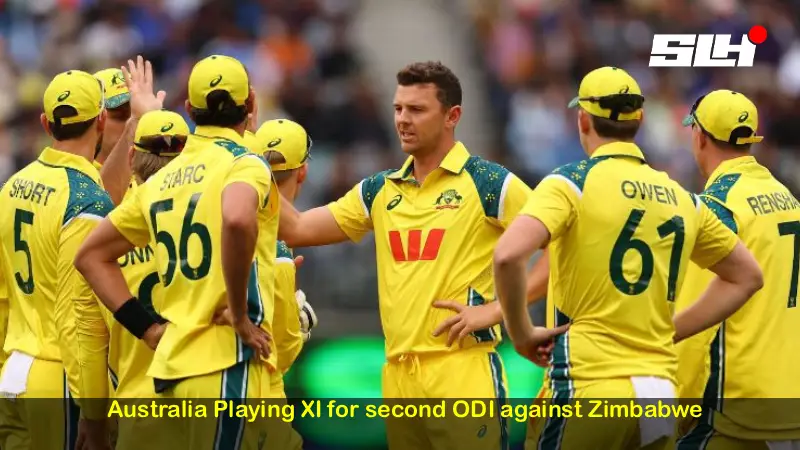
Zimbabwe will look to level the three-match ODI series when they face Australia in the second ODI at Harare Sports Club on Friday, September 18. The hosts went down by 59 runs in the opening game despite producing several encouraging individual performances. Australia posted 294/8 after Matt Renshaw’s maiden ODI century, before Nathan Ellis’ five-wicket haul helped the visitors bowl Zimbabwe out for 235 in 45.1 overs.
Zimbabwe’s batting showed considerable resistance through Craig Ervine and Sikandar Raza, who added 98 runs for the fifth wicket. Raza eventually scored 57, while Ervine made 59, but the hosts struggled to maintain the required run rate after their early wickets. On the bowling side, 20-year-old Newman Nyamhuri was the standout performer, claiming 5/62 and becoming only the second Zimbabwean bowler to take a five-wicket haul against Australia in men’s ODIs.
With the squad already dealing with several injury absences, Zimbabwe are unlikely to make wholesale changes. Richard Ngarava, Tanaka Chivanga and Clive Madande remain unavailable, while the squad includes experienced campaigners such as Brendan Taylor and Graeme Cremer.
Brian Bennett is likely to retain his place at the top of the order. The young batter made 25 from 32 balls in the opening ODI and showed flashes of his attacking ability before being dismissed by Ellis.
Bennett’s ability to score quickly makes him an important part of Zimbabwe’s powerplay strategy. The hosts will hope he can convert his starts into a substantial contribution in the second ODI.
Ben Curran is expected to continue opening the innings. However, he will be looking for a much better performance after being dismissed for a two-ball duck in the first ODI.
Curran has been included among Zimbabwe’s main top-order options for the series and should receive another opportunity to establish himself against Australia’s formidable pace attack.
Innocent Kaia could retain his position at No. 3 after scoring 18 off 19 balls in the series opener. Although he was unable to play a long innings, Kaia’s ability to rotate the strike and attack loose deliveries makes him a useful option in the top order.
Zimbabwe will need greater contributions from their top three if they are to put Australia under pressure.
Craig Ervine remains one of Zimbabwe’s most experienced batters and is likely to continue at No. 4. He top-scored for the hosts in the first ODI alongside Raza, scoring a patient 59 from 66 balls.
His 98-run partnership with Raza briefly brought Zimbabwe back into the contest. Ervine’s ability to absorb pressure and build partnerships will again be crucial against Australia’s bowling attack.
Brendan Taylor should continue behind the stumps and occupy an important middle-order position. The veteran returned to Zimbabwe’s ODI squad after more than a year away and has been brought back partly because regular wicketkeeper Clive Madande is unavailable.
Taylor made four runs in the first ODI but his experience remains valuable in a young Zimbabwean lineup.
Sikandar Raza will continue to lead Zimbabwe and is arguably the hosts’ most important all-round option. The captain scored 57 in the opening game and formed a crucial partnership with Ervine.
Raza’s off-spin also gives Zimbabwe another bowling option. He bowled 10 overs in the first ODI and claimed the wicket of Cooper Connolly, although he conceded 62 runs.
Wessly Madhevere is expected to retain his place as a batting all-rounder. He bowled three overs in the opening game and also contributes useful middle-order batting.
His ability to provide both spin and batting depth gives Zimbabwe flexibility, particularly if Raza wants to rotate his frontline bowlers.
Brad Evans should continue as Zimbabwe’s pace-bowling all-rounder. He made an impact with the ball in the first ODI, dismissing both Travis Head and Alex Carey.
His two wickets came at a crucial stage of Australia’s innings, and his ability to bowl useful medium-fast spells makes him an important part of the attack.
Newman Nyamhuri is a near-certain selection after his spectacular five-wicket haul in the first ODI. The 20-year-old left-arm quick finished with 5/62 and accounted for Mitchell Marsh, Josh Inglis, Matt Renshaw and two other Australian batters.
His ability to generate movement and attack the stumps makes him a genuine wicket-taking threat. Australia will be aware of the danger he poses in the second game.
Wellington Masakadza is likely to retain his place as Zimbabwe’s specialist left-arm spinner. He bowled six overs in the first ODI and conceded 36 runs without taking a wicket.
Zimbabwe could expect the Harare surface to offer some assistance to spin as the match progresses, making Masakadza’s control during the middle overs important.
Blessing Muzarabani should spearhead the pace attack. The tall quick bowled economically in the first ODI, finishing with 0/46 from his 10 overs.
Although he did not take a wicket, his height and bounce can trouble Australia’s batters. Zimbabwe will need him to make early breakthroughs with the new ball in the second ODI.
Brian Bennett, Ben Curran, Innocent Kaia, Craig Ervine, Brendan Taylor (wk), Sikandar Raza (c), Wessly Madhevere, Brad Evans, Newman Nyamhuri, Wellington Masakadza, Blessing Muzarabani
 football
 cricket