



Opinions, analysis and commentary
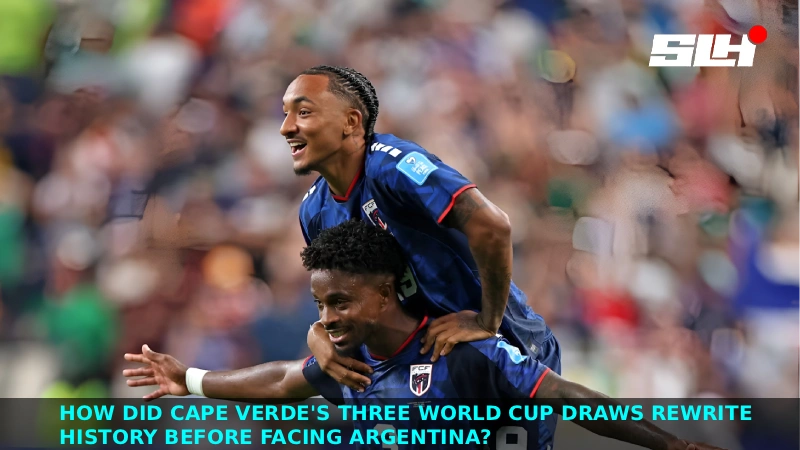


Cape Verde is not supposed to be here. A nation of roughly 530,000 people, making its World Cup debut, has reached the round of 32 without winning a single game so far. Three draws against Spain, Uruguay and Saudi Arabia were enough to get them there. Now the Blue Sharks face Lionel Messi’s Argentina in Miami, and the real question isn’t whether the fairytale was real, but whether the mechanism behind it can survive one more test against a far sharper attacking side.
Group H looked like a trap: two-time champions Uruguay, 2010 winners Spain, and a determined Saudi Arabia side. Instead, the Blue Sharks opened with a stunning 0-0 draw against Spain in Atlanta, weathering 27 shots behind heroic goalkeeping. They then came from behind twice to draw 2-2 with Uruguay, scoring their first-ever World Cup goal through a Kevin Pina free kick.
A final 0-0 draw with Saudi Arabia sealed second place on three points, making Cape Verde the smallest nation ever to reach a men’s World Cup knockout round, and the first debutant since Slovakia in 2010.
Three draws is an unusual currency for advancement, saying as much about a weak group as it does about resilience. By tying every match, Cape Verde becomes just the fifth nation in tournament history, and the first since Chile in 1998, to progress from the group phase without winning a game.
Crucially, this wasn’t a backdoor route through third-place rankings. Cape Verde finished second in Group H outright, a point clear of Uruguay, after neither Spain nor Uruguay could find a way past them.
| Team | Year | Group Stage Draws | Knockout Result |
| Wales | 1958 | 3 | Lost in quarter-finals (0-1 vs Brazil) |
| Netherlands | 1990 | 3 | Lost in round of 16 (1-2 vs West Germany) |
| Republic of Ireland | 1990 | 3 | Won round of 16 on penalties vs Romania; lost quarter-finals (0-1 vs Italy) |
| Chile | 1998 | 3 | Lost in round of 16 (1-4 vs Brazil) |
| New Zealand | 2010 | 3 | Eliminated in group stage despite going unbeaten |
| Cape Verde | 2026 | 3 | Faces Argentina in round of 32 (July 3, Miami) |
The mechanism behind three draws has a name: Vozinha. Cape Verde’s veteran goalkeeper, who only turned professional at 25, has been the single biggest reason the Blue Sharks are still standing. Across the group stage, he made nine saves from eleven shots on target, ranking among the tournament’s top defensive performers, and conceded only twice in three matches, both against Uruguay.
His display against Spain, seven saves in ninety minutes, turned him into a global sensation, with his Instagram following jumping from roughly 500,000 to more than 17 million. Center-back Roberto Lopes and midfielder Kevin Pina have absorbed pressure in front of him, but the last line has carried Cape Verde’s defensive identity.
Argentina arrives as the opposite proposition. The defending champions won Group J with a perfect record, scoring eight goals and conceding just one across wins over Algeria (3-0), Austria (2-0) and Jordan (3-1). Messi scored a hat-trick on his tournament opener and has six goals so far, taking his career World Cup tally to a record 19, the all-time leading scorer in the competition’s history.
That firepower, spread across Messi, Lautaro Martinez and Julian Alvarez, is a different order of threat than anything Cape Verde has faced. Where Spain and Uruguay created chances in spurts, Argentina generates them constantly, meaning Vozinha will need a near-flawless ninety minutes rather than isolated heroic moments.
History isn’t encouraging for teams that only draw through the group stage. Wales in 1958 and Ireland in 1990 both reached the quarter-finals, while the Netherlands in 1990 and Chile in 1998 fell in the round of 16. New Zealand went unbeaten with three draws in 2010 and still didn’t advance, eliminated on goal difference.
Of the four teams that actually progressed this way, only Ireland won a single knockout match, a penalty shootout against Romania, before losing their next game. The pattern behind Cape Verde’s three draws in the World Cup 2026 suggests the approach opens a door, but rarely more than one.
Stay updated on every twist and turn of the summer transfer window and catch all the live football action with Sports Live Hub (SLH).
Accessing a high-quality hub sports live stream is essential for fans following the matches of the World Cup season. SLH provides a verified directory of official broadcasting partners, ensuring you never miss a moment of the action from the Premier League or Liga Portugal or World Cup.
Our sport hub live streaming dashboard offers real-time tactical overlays, player fitness stats, and live transfer probability tickers. As the WC 2026 saga develops, SLH is the destination for integrated sports data and high-definition viewing.
If you are wondering how to watch Sports live for free, SLH maintains a curated list of official free-to-air (FTA) broadcasters and legitimate digital promotional windows. We help fans find legal, cost-free ways to enjoy global sports while ensuring safety from unauthorized streaming sites.
How did Cape Verde qualify for the World Cup 2026 knockout stage?
Cape Verde finished second in Group H after drawing 0-0 with Spain, 2-2 with Uruguay and 0-0 with Saudi Arabia. That gave them three points, enough to edge out Uruguay on the tiebreaker.
What is Cape Verde’s FIFA ranking in 2026?
Their last official FIFA ranking, dated 11 June 2026, had them at 67th. Unofficial live estimates after their group-stage results place them closer to 64th, with the next official update due 20 July 2026.
Has any team ever won a World Cup after drawing all group games?
No team has won the World Cup after drawing all its group games. The furthest any side has gone is the quarter-finals, reached by Wales in 1958 and Ireland in 1990.
When do Cape Verde play Argentina in the World Cup 2026 round of 32?
Cape Verde play Argentina on Friday, 3 July 2026, in Miami. Kickoff is set for 6:00 pm ET, with Cape Verde looking to defy history as one of the tournament’s smallest-ever participants.
Who is Cape Verde’s goalkeeper Vozinha?
Vozinha, real name Josimar Jose Evora Dias, is Cape Verde’s 40-year-old goalkeeper. Born in Mindelo, he turned professional at 25 and has kept two clean sheets in three group games so far.
 football
 football
 cricket