


Opinions, analysis and commentary
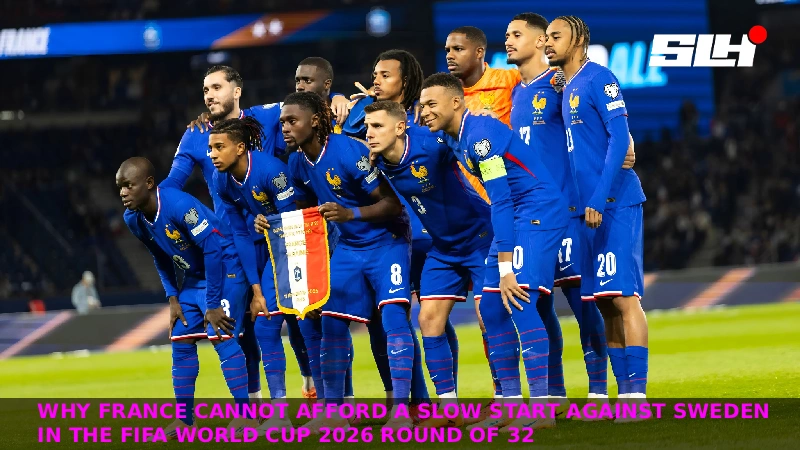


France arrive at MetLife Stadium having swept Group I without dropping a point, their first clean group stage at a major tournament since 1998. Sweden scraped through as one of the best third-placed teams after a group stage that swung between impressive and brittle. The gap in class is real, but Sweden’s only route to an upset is specific and narrow: their front two need to be running at stretched defenders from the first whistle, not chasing a game France are already controlling.
Didier Deschamps’ side beat Senegal 3-1, Iraq 3-0, and Norway 4-1, scoring ten goals and conceding just two. Both came from the same source: space behind Theo Hernández and Jules Koundé once France pushed numbers forward. William Saliba and Dayot Upamecano have looked solid, but neither has been tested by a side with genuine pace in behind.
Against Senegal, Nicolas Jackson struck the post and Ismaila Sarr fired over an open net before France settled and won. The Ivory Coast friendly in June produced two counter-attack goals, France’s xG 0.88 against 1.31 after ten second-half changes. Neither result is damning, but the pattern is the same.
| Match | Counter-Attack Chances | xG Against | Opponent System | Key Threat |
| vs Senegal (Group) | 2 clear first-half chances | 0.50 | 4-3-3 high press | Jackson (post), Sarr beat high line |
| vs Iraq (Group) | Minimal | Low (3-0 win) | Defensive block | No sustained threat |
| vs Norway (Group)* | 1 (Aasgaard, 21′) | N/A (4-1 win) | Rotated Norway XI | Quick edge-of-box finish |
| vs Ivory Coast** | 2 goals conceded (53′, 84′) | 0.88 (France) | 4-3-3, pace on counter | G. Doué surge, Amad Diallo finish |
*Rotated XI, dead rubber. **Pre-tournament friendly, June 4; France made 10 second-half changes.
Graham Potter’s 3-5-2 relies on wing-backs Alexander Bernhardsson and Gabriel Gudmundsson to provide width and cover France’s advancing full-backs. With Isak Hien sidelined, Victor Lindelöf drops into the back three, and Lucas Bergvall fills the midfield gap, adding strain to a defence that conceded five against the Netherlands.
Viktor Gyökeres runs centrally, Alexander Isak cuts in from the left, and Anthony Elanga triggers the counter once Sweden win possession. The shape sits compact through the middle and releases pace into the half-spaces the moment Hernández or Koundé are caught upfield. Pre-match win probability models give France a 75.1% chance of advancing.
Sweden’s 5-1 win over Tunisia showed exactly what Gyökeres and Isak can do when space opens: they directly assisted each other’s goals through quick combinations rather than structured build-up. The other side of that record is just as revealing. The Netherlands beat them 5-1. The 1-1 draw with Japan came via an Elanga transition goal, not any period of control.
Sweden scored seven and conceded seven across the group stage. A team that needs broken play to function faces a different problem against France’s defensive discipline when they’re organised.
France’s one uncomfortable passage this tournament was the opening 20 minutes against Senegal, where a timed press opened the high line twice before France controlled the second half to win 3-1. The Ivory Coast friendly reinforced the same point: a reactive France, chasing a game rather than dictating one, is the version Sweden need.
If Sweden score early, Mbappé and Dembélé, with four goals each in the group stage, are pushed further forward, and the spaces behind them grow. Gyökeres and Isak have shown they can punish that.
France’s depth means a slow start rarely defines them. They trailed Senegal for 20 minutes before winning 3-1 without conceding. The issue isn’t whether France recover; it’s whether Sweden should be handed the conditions where their threat becomes relevant.
Score first and Sweden’s counter-attacking shape becomes redundant. They can’t press high in a 3-5-2 and hold structure simultaneously. The game opens up, and that suits Deschamps. He confirmed he’ll step down after the tournament and faces the Germany vs Paraguay winner in the Round of 16 if France advance. The France vs Sweden FIFA World Cup 2026 round of 32 tactics question isn’t whether France are better; it’s whether they allow the one scenario where that gap stops mattering.
Stay updated on every twist and turn of the summer transfer window and catch all the live football action with Sports Live Hub (SLH).
Accessing a high-quality hub sports live stream is essential for fans following the matches of the World Cup season. SLH provides a verified directory of official broadcasting partners, ensuring you never miss a moment of the action from the Premier League or Liga Portugal or World Cup.
Our sport hub live streaming dashboard offers real-time tactical overlays, player fitness stats, and live transfer probability tickers. As the WC 2026 saga develops, SLH is the destination for integrated sports data and high-definition viewing.
If you are wondering how to watch Sports live for free, SLH maintains a curated list of official free-to-air (FTA) broadcasters and legitimate digital promotional windows. We help fans find legal, cost-free ways to enjoy global sports while ensuring safety from unauthorized streaming sites.
Can Sweden realistically upset France in the Round of 32?
It would be a major upset; pre-match models give France a 75.1% win probability after their perfect group stage. Sweden’s only route involves scoring early and forcing the counter-attacking game that suits Gyökeres and Isak.
What formation does Graham Potter use with Sweden at the 2026 World Cup?
Potter lines Sweden up in a 3-5-2 with Viktor Gyökeres and Alexander Isak as the front two. Anthony Elanga plays as the advanced outlet who triggers transitions when Sweden win possession.
How many goals did France score in the 2026 World Cup group stage?
France scored ten goals in three group games, beating Senegal 3-1, Iraq 3-0, and Norway 4-1. Kylian Mbappé and Ousmane Dembélé led the attack with four goals each.
What is Viktor Gyökeres’ record at the FIFA World Cup 2026?
Gyökeres scored once and provided one assist across Sweden’s three group-stage matches. His goal came in the 59th minute of Sweden’s 5-1 win over Tunisia.
Who did France concede goals to in the 2026 World Cup group stage?
Both goals France conceded in the group stage came from counter-attacks when Hernández and Koundé were caught upfield. The Senegal opener showed the same pattern before France took control.
 football
 football
 cricket